

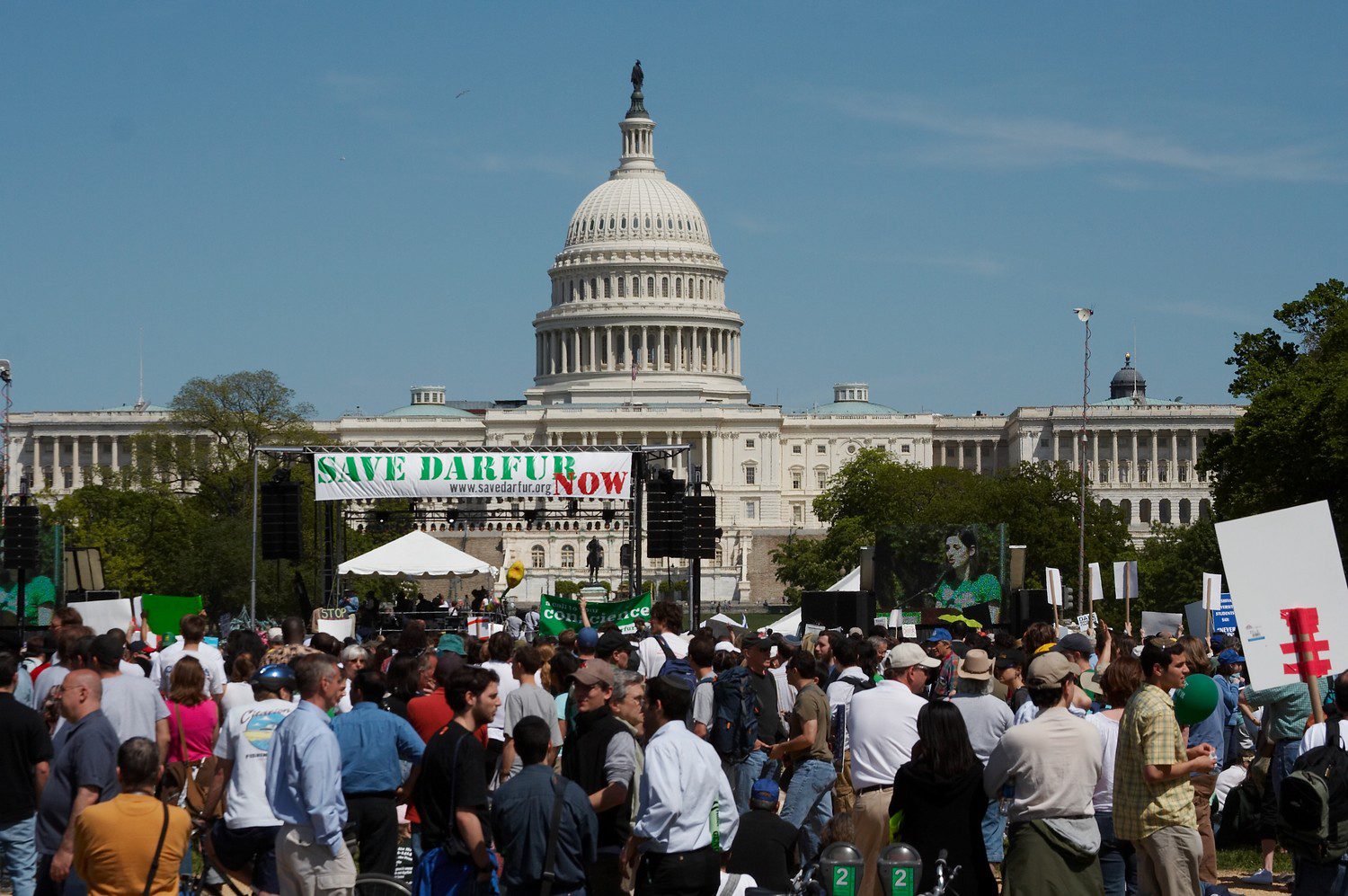
This post is part of our online roundtable on Christopher Tounsel’s Bounds of Blackness.
Christopher Tounsel begins his book with a recounting of Sudan’s independence in 1956. This introduction, in many ways, reflects what is important about a book which examines African American engagement with the North African country of Sudan. Typical examinations of Black American relationships with Africa have tended to privilege West Africa, South Africa, and more recently West Central Africa. Tounsel has broken away from this tradition to examine African American engagements with another region of the continent. He shows that despite the strong connection Black Americans feel to parts of West Africa because of the history of the slave trade and the fact that many can now trace their ancestry to those regions, Sudan was also an important site of engagement for African Americans.
Furthermore, unlike many works which examine this engagement in the nineteenth and early twentieth centuries, Tounsel highlights post-independence encounters between African Americans and Sudan, observing the complexities of that relationship. In revealing the complex relationship African Americans have had with Sudan, Tounsel interrogates what he calls the “bounds of blackness,” asking who can and cannot be included within those bounds, and questioning what Blackness itself can mean in this history. African Americans so often transport their notions of Blackness to other parts of the world, including Africa. What happens when they encounter a society where those notions don’t work or are complicated by religion, culture, or a reluctance to adhere to American ideas about race and Black American ideas about what Blackness is?
In this original and ambitious book, Tounsel makes his points across six chapters, beginning with Booker T. Washington’s venture into Sudan under Anglo-Egyptian rule. As he had done in other parts of Africa, Washington sent Tuskegee graduates to Sudan to engage in agricultural projects. The second chapter brings us into the early twentieth century, showing the way Black artists and writers engaged with Sudan. Here the bounds of Blackness were recognized as African Americans used the phenotype of some Sudanese (Black) to highlight their affinity. Chapter Three takes us into the post-independence era. Like other newly independent nations around the world, Sudan established diplomatic relations with the United States. Black American men, and for the first time women, made their way to Sudan as diplomats and representatives of a government and country that still considered them second-class citizens. In the fourth chapter, Tounsel considers Black press coverage of the First Sudanese Civil War, which straddled the colonial and post-colonial era. The bounds of Blackness were challenged as the Arab north, hitherto welcomed within those bounds, increasingly was constructed as oppressors of “Black” southern Sudanese. Chapter Five outlines the conflict between Black American Christians and Muslims, and we are shown the different functions “Arabness” came to have for Black Americans. The following chapter looks at the role of Black Americans in diplomatic relations with Sudan, with Tounsel arguing that Black Americans were crucial to U.S. policy decisions in region. His final chapter reiterates the importance of understanding the relationship between African Americans, Sudan, and the continent in general.
Tounsel begins his examination in the nineteenth century to show us the longstanding place Sudan has had in African American life and history. In telling this story, he complicates African American constructions of race and understandings of Blackness. We are asked to answer the question of what happens when Black Americans encounter an African society which does not fit neatly into their ideas about Blackness and what it constitutes. Tounsel’s central aim is to examine the marginalization of Sudan in African American discourse. Perhaps because of the close relationship between the history of African Americans and West Africa, rooted in the slave trade and slavey, scholars have often privileged West Africa as the main site of encounter, influence, and engagement. South Africa, too, because of its history of apartheid, which mirrored Jim Crow in the United States, has also drawn the attention of Black Americans. But what of other regions on the continent? The Egypt and Africa debates and discourses of the 1980s and 1990s did draw the attention of some African Americans as the debates about whether Egyptians were Black animated some scholars. In his examination of Black American encounters with Sudan and its people, Tounsel asks many questions about this relationship. How did African Americans understand Sudan’s racial and religious makeup? Were the Sudanese Black or Arab? Under what conditions are Arabs Black? How were Black Americans to engage with a country whose Muslim population was implicated in violence against Black and sometimes Christian Sudanese? We find within the pages of the book different answers to these questions depending on which era we look at, which African Americans are being discussed, and what the political climate in the United States and Sudan was at any given time. Although Bounds of Blackness looks at the early presence of Black Americans in Sudan, the author’s concern is largely with the period after the country achieved its independence from Britain, and the resultant tension and conflicts between the “Arab north” and the “Black” Sudanese of the south.
The book explores African American engagement with post-independence Sudan, highlighting how different groups of African American women and men came to understand the country and its people as well as their relationship to this sometimes-unfamiliar nation and its inhabitants.
It contributes to the historiography on Pan-Africanism as it shows how Black Americans and Sudanese worked together for the advancement of African descended people. Likewise, Tounsel shows that African Americans, as they did with West Africa, tended to engage with the ancient and precolonial past of Sudan. Ancient Nubia, like Egypt, loomed large in their imagination as they took pride in the rich history of these ancient civilizations. Tounsel argues that in the case of Sudan, African Americans continued to engage with the region throughout the colonial and post-colonial period into the modern era. Black Americans, he maintains, “refused to keep Africa and Africans in a noble past as contemporary developments beckoned” (6).
In the encounter between African Americans, Sudan, and its people, we see the myriad ways ideas about Blackness are challenged. As Sudan ushered in independence, African Americans had to contend with a population comprised of “Arab” northerners and those they would consider “Black” Sudanese in the south of the country. With northern dominance, conflict and civil war resulted in the new nation of South Sudan, largely Black, in the eyes of African Americans, being formed. How then to engage the population of Sudan? Complicating the relationship was also the fact of the largely Muslim north. In the disagreement between Louis Farrakhan–supporting the northern Sudanese and claiming kinship–and other African American leaders–accusing the north of racism–Tounsel shows us the limitations of Black American ideas about Blackness. In this scenario we are asked to see who falls into the bounds of Blackness, and whether Arabs and Muslims in this case are within those bounds. In that sense the book not only examines African American engagement with Africa but also with the Arab world.
The cast of characters in the book are varied. From Booker T. Washington—whose alliance with American businessman Leigh Hunt results in Tuskegee graduates being the first Black Americans to set foot in Sudan for agricultural and economic enterprise—to artists and intellectuals such as Langston Hughes and Leo Hansberry, and even the women of Delta Sigma Theta sorority who made their way to Sudan in the early twentieth century. These cultural brokers, Tounsel maintains, made some of the biggest inroads into Pan-African solidarity with Sudanese citizens. The discourse surrounding Black American presence in Sudan mirrors those made earlier in the nineteenth century–the opportunities afforded to Black Americans which they lacked at home, the idea that their African heritage made them better suited to the climate in Africa, and sometimes the argument that they were kith and kin to people on the continent.
In the twentieth and twenty-first century, we find that the benefits to African Americans of going to Africa were not connected to racial solidarity. Barack Obama, the first Black president of the United States, and two of his female representatives, Susan Page and Susan Rice, take center stage in the narrative of Black American engagement with Sudan and South Sudan in this era. As representatives of the United States government, Tounsel sees an “absence of race in their public discourse concerning the Sudanese” (170). Their “Blackness” was secondary, if considered at all. Insofar as they were of African descent, it made sense for them to be appointed to these diplomatic posts, as it was historically important for the U.S. government to make those kinds of appointments, but their Blackness appears to be irrelevant to their political work. Indeed, we have historically seen the contradictions and conflict among African Americans who want to engage with Africa on the basis of race while representing their government. When taken together with an understanding that “Africans”—or more accurately, men and women living on the continent we call Africa—have not always understood African Americans to be in any way related to them and have not always been interested in engaging with Black Americans because of any kind of racial affinity, should we expect anything different?
The many men and women who encountered the Sudanese over at least a century illustrate the different ways Black Americans came to understand the country and its history. In this case study, we see what can be observed elsewhere in African American engagement with the continent, and that is how they have often engaged with a symbolic, versus “actual,” Africa. As scholars examining African American engagement with other parts of Africa have shown, Black American approaches to the continent and its people have often been less about the concerns of those places and the African populations inhabiting them, and more about attempting to understand themselves and defining Blackness within the American context. Thus, Tounsel notes, “Black American approaches to Sudan show how blackness operated as an imagined identity linked to evolving realities of oppression, liberation, and sociopolitical status.” The bounds of Blackness, he maintains, are continually shifting.
This fine book tackles many themes—including a discussion of African American engagement with the Arab-Israeli conflict as it relates to Sudan in the twentieth century—but of particular interest to me is Christopher Tounsel’s expansion of the lens through which we view African American engagement with, influence on, and interest in Africa. The ancestral connection with West and West Central Africa has always animated Black American ties with the continent. During the eighteenth and nineteenth century, it generated interest in a “Back to Africa” movement, and the desire to “return” to the ancestral land from where their ancestors had been taken. Likewise, South Africa captured the interest and engagement of Black Americans who saw parallels in the racial systems of the United States and South Africa. They could see elements of segregation in South Africa’s system of apartheid. Indeed, in the twentieth century African Americans were at the forefront of the Anti-Apartheid Movement, calling on the United States to divest in companies doing business with South Africa and to cut ties with the nation itself. Sudan, however, so distant from African American interests–or so it seemed–arguably did not capture Black American interest so fully. From Tounsel, we learn otherwise. He makes a persuasive argument that Sudan, ancient and modern, loomed large in Black American consciousness, and asks us to engage with the continent outside the usual bounds. “Africa’s importance to Black Americans’ self-conception,” he maintains “will be more complete when our historical relationships with more African countries are considered” (176).
Additionally, this book forces us to contend with some of the stickiness in the relationship between African Americans and the continent from which their ancestors were taken. In his narrative, he illustrates the limitations of racial solidarity by showing us how African Americans in Sudan, beginning in the nineteenth century and into the present, failed to engage in substantive ways with Sudanese people. As we have seen repeatedly, it has sometimes been easier for African Americans to engage with an imagined Africa than with the realities of life lived on the continent—i.e. to engage with “Africans” in the flesh. Tounsel asks us to see this and go beyond romantic ideas about Africa to engage with the reality of real women and men on the continent, with real concerns. We cannot confine ourselves to connecting only with the African past but must also engage with the sometimes messy and unpalatable aspects of post-independence African countries, even those with whom we might not have a historical connection. Tounsel asks us to go beyond an African American-centric view of how Blackness should be defined. In the end, the book is a call for Pan-African solidarity and a reminder that Black Lives Matter no matter where African descended peoples are. As Tounsel declares, “At a time when Black people the world over are still suffering from systemic racism, solidarity and activist efforts should be chiefly considered in light of whether or not they are effectual in advancing Black liberation” (180). We would be well served to pay heed and expand the bounds of Blackness, making it as capacious as we can.
*This essay appears in Vol. 3, Issue 1 (Spring 2027) of Global Black Thought. Copyright
Share with a friend:
Copyright © AAIHS. May not be reprinted without permission.
