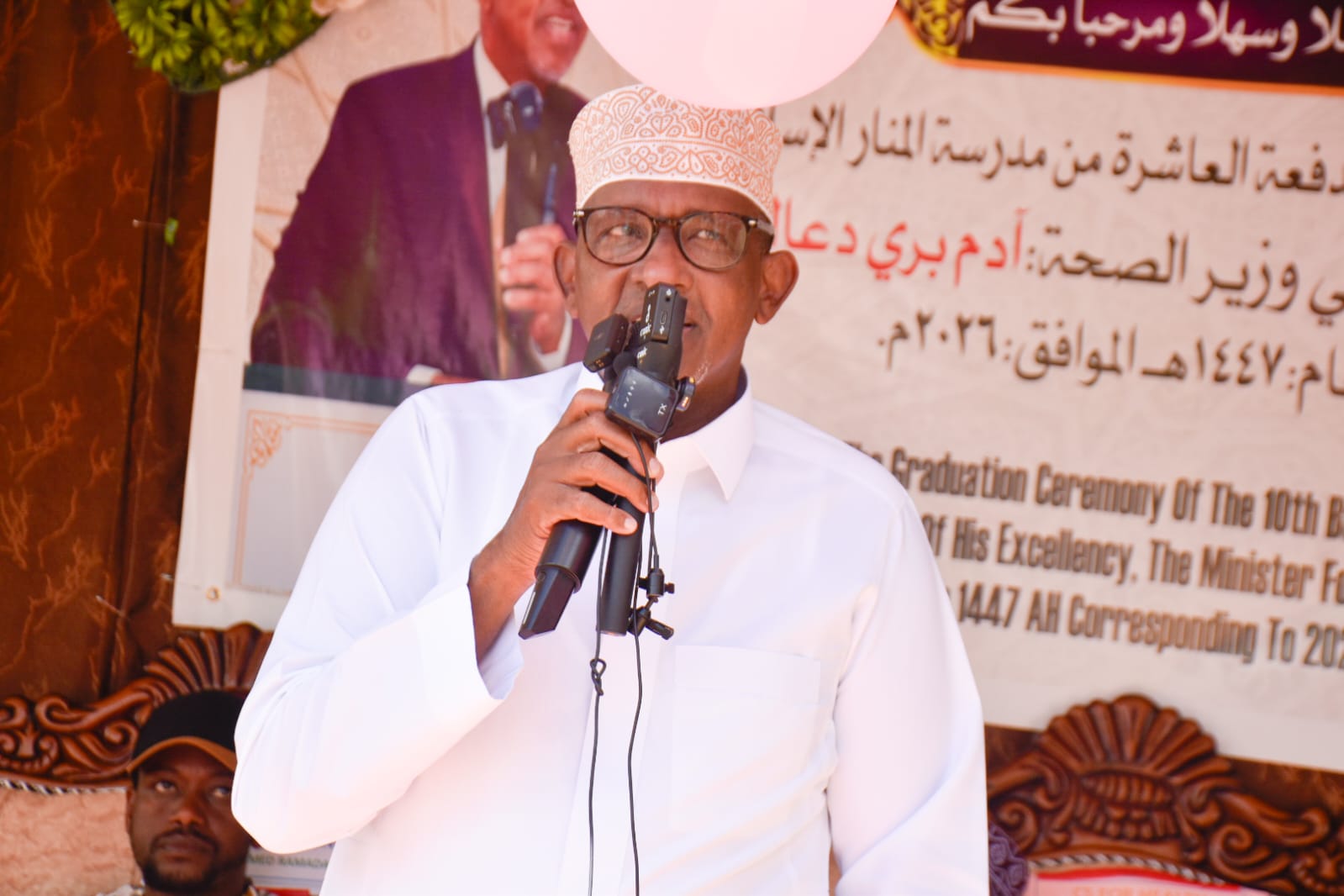

Health Cabinet Secretary Aden Duale/ FILE

Health Cabinet Secretary Aden Duale has renewed calls for Kenya to adopt a parliamentary system of government, arguing that it would ensure the party with the majority of Members of Parliament forms the government and help eliminate what he described as the country’s “tyranny of numbers” politics.
Speaking on Tuesday during the 2026 Devolution Sensitisation Week in Garissa County, Duale said he and the late ODM leader Raila Odinga had previously supported the introduction of a parliamentary system but the proposal was rejected.
“The other one that they could not allow us to do was that Raila Odinga and us believed in a parliamentary system of government. But those who believe in the tyranny of numbers refused us a parliamentary system of government,” Duale said.
“And before I die, I hope one day there will be a parliamentary system of government.”
He said Kenya should move away from electing leaders through a winner-takes-all presidential contest and instead allow governments to be formed based on the outcome of parliamentary elections.
According to Duale, under such a system, voters would elect Members of Parliament in their constituencies, after which the political party or coalition commanding the highest number of MPs would form the national government.
“We devolve the election in our country from Bomas to the constituencies. Like in India, like in the UK, like in Ethiopia, where elections are won at the constituency level. The party with the highest number of MPs will form the next government,” he said.
Duale argued that the current presidential model encourages ethnic alliances centred on population size because victory depends on securing the highest number of votes nationally.
“Today if two or three of the largest communities connive and form a coalition, they will take over the presidency,” he said.
He linked the current system to what he termed the “tyranny of numbers”, saying it disadvantages communities with smaller populations.
Referring to pastoralist communities in northern Kenya, Duale said they would also seek to increase their numerical strength if elections continued to be determined largely by population.
“And that is why the people of North Eastern Kenya, the pastoralists, will make sure in the next election and in subsequent elections we will be number one in terms of the tyranny of numbers. We will marry four wives and produce many children,” he said, drawing laughter from the audience.
He maintained that a parliamentary system would reduce political tensions because governments would be formed through parliamentary representation rather than a single nationwide presidential vote.
“If you have a parliamentary system, there will be no post-election violence because all the votes will be counted in the constituency. Whoever has the highest number, or the coalition of parties with the highest number, will form the government,” Duale said.
Kenya currently operates under a presidential system established by the 2010 Constitution. Under the system, citizens directly elect the President, who serves as both Head of State and Head of government.
To be declared President, a candidate must secure more than half of all votes cast nationally and at least 25 per cent of the votes in a minimum of 24 counties.
Members of Parliament are elected separately to represent constituencies and counties, while the President appoints Cabinet Secretaries from outside Parliament.
Unlike a parliamentary system, the executive does not depend on maintaining the support of a parliamentary majority to remain in office.
Duale made the remarks during the 2026 Devolution Sensitisation Week held in Garissa County under the theme, “Devolution for Better Health, Empowered Communities.”