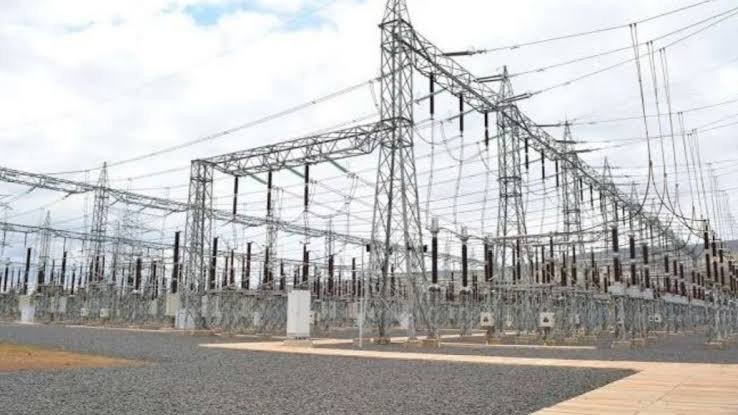
High-voltage electricity transmission towers stretch across the countryside, illustrating the infrastructure required to expand regional power grid capacity in East Africa|Mjengo Hub
Regional power transmission coverage falls drastically short of international benchmarks, creating massive infrastructure development demands across four nations.
The East African region faces a steep hurdle in expanding its electrical transmission infrastructure to match international benchmarks. Data released by energy expert Dr. Eng. John Mativo highlights the sharp gap between local network density and global standard power grids.
Global electricity grids currently encompass roughly seven million circuit kilometers of high-voltage power lines. This expansive global network supplies energy to a worldwide population of approximately 8.3 billion people, establishing a clear international benchmark for transmission density.
The current high-voltage transmission network breakdown across the four East African nations shows:
To reach the level of an average global country, the regional transmission footprint must reach 163,000 circuit kilometers. Achieving that coverage requires adding approximately 138,100 kilometers of new high-voltage lines, which represents a massive construction requirement for the region.
Network expansion remains critical for state utilities like the Kenya Electricity Transmission Company (KETRACO). Building long-distance high-voltage lines allows utilities to move bulk power efficiently from remote generating stations to major consumer and industrial hubs.
The Kenya Electricity Transmission Company (KETRACO) continues working on regional cross-border interconnectors, which enable bulk power trading between neighboring countries. However, persistent funding shortfalls and prolonged land acquisition negotiations often delay crucial high-voltage line construction projects across the country.
Tanzania, Uganda, and Rwanda experience similar financial and logistical constraints as their respective energy agencies attempt to expand high-voltage coverage. While power generation capacity in East Africa has increased significantly, weak transmission links limit effective power distribution to end users.
Industry analysts emphasize that expanding transmission infrastructure requires sustained capital allocation and disciplined project execution. Without adequate high-voltage transmission corridors, power utilities cannot evacuate energy efficiently from newly constructed generation plants to growing industrial zones.
High-voltage transmission lines reduce electrical energy losses over long distances, which improves grid reliability for commercial and residential consumers. Upgrading existing lines to higher voltage levels also helps stabilize regional power networks during periods of peak electricity demand.
The regional coordination body Eastern Africa Power Pool (EAPP) promotes grid interconnections across member states to optimize energy distribution. However, successful regional power trading depends heavily on constructing robust cross-border interconnectors that can accommodate large high-voltage electricity transfers.
Governments across East Africa are actively exploring public-private partnerships to finance costly transmission line infrastructure projects. Private sector participation could supply necessary capital, provided governments establish transparent regulatory frameworks and provide clear revenue guarantees to investors.
In Kenya, expanding high-voltage transmission infrastructure remains vital for evacuating clean electricity from remote geothermal and wind generation facilities. Major industrial manufacturers in urban centers require steady power, which depends directly on grid resilience and extended transmission line capacity.
Addressing this vast regional transmission deficit requires coordinated policy action and sustained development partner funding. Regional leaders must prioritize power transmission line investments alongside generation projects, if they hope to achieve balanced long-term energy grid growth.
Until high-voltage transmission networks expand significantly, East African nations will struggle to support industrial expansion goals. Strategic transmission grid investments remain essential for lowering energy supply costs, improving grid stability, and supporting sustained regional economic growth.