ANI | Updated:Jul 29, 2026 16:57IST


Join our Whatsapp channel
Addis Ababa [Ethiopia], July 29 (ANI): India and African leaders, policymakers, diplomats, and development experts have called for a stronger and more action-oriented partnership between India and Africa to advance the interests of the Global South and play a greater role in shaping the emerging global order.
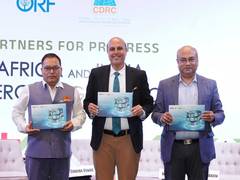
The call came during the conference, “Partners for Progress: Africa and India in the Emerging Global Order,” held in Addis Ababa on July 28.
Organised by the Observer Research Foundation (ORF) in partnership with the Centre for Dialogue, Research and Cooperation (CDRC), the event brought together policymakers, diplomats, business leaders, researchers, and development practitioners from across India and Africa to discuss avenues for strengthening bilateral cooperation and amplifying the voice of the Global South.
Opening the conference, CDRC Executive Director Abdeta Beyene and ORF Vice President Nilanjan Ghosh underscored the need for the India-Africa relationship to evolve beyond historical solidarity into practical collaboration driven by innovation, technology, development finance, and institution building.
Delivering the keynote address, India’s Ambassador to Ethiopia and Permanent Representative to the African Union, Anil Kumar Rai, highlighted the convergence between Africa’s Agenda 2063 and India’s Vision 2047, describing the two frameworks as complementary roadmaps for inclusive growth, sustainable development, and innovation.
“Africa has Agenda 2063. India has Vision 2047. Together, these are not just national roadmaps–they are complementary pathways for shared development,” Rai said, as quoted in a release.
Discussions throughout the conference focused on how India and Africa can leverage their expanding representation in multilateral platforms, including the G20, BRICS, and the African Union, to strengthen their collective influence on global governance. Participants also deliberated on development finance, trade and connectivity, Digital Public Infrastructure (DPI), healthcare, food security, artificial intelligence, climate resilience, and investment-led partnerships.
Speakers emphasised that stronger institutions, resilient infrastructure, digital innovation, and human capital development would be essential to translating the India-Africa partnership into tangible development outcomes.
The conference also featured insights from the report, Breaking Convention: How CareEdge Global Ratings is Redefining Global Credit Risk Assessment, followed by a spotlight session titled Reframing Risk, Unlocking Growth.
During the session, CareEdge Group Managing Director and Group Chief Executive Officer Mehul Pandya highlighted the need to improve perceptions of investment risk, strengthen investor confidence, and expand access to transparent financing frameworks to unlock Africa’s long-term growth potential.
Former Ethiopian Deputy Prime Minister and Founder of the Yadam Foundation, Ato Demeke Mekonnen, in his keynote address, advocated an integrated development approach linking healthcare, nutrition, food security, climate resilience, and governance.
He also stressed the importance of digital public infrastructure, affordable healthcare, coordinated financing, and climate adaptation in building resilient societies.
“The global order is dynamic and evolving. In this context, practical, dynamic, and pragmatic partnerships between Africa and India are not only timely–they are essential for the global good,” Mekonnen said, as quoted in the release.
The conference concluded with a shared consensus that the next phase of India-Africa engagement should move beyond dialogue to implementation through stronger institutions, practical cooperation, and collaborative solutions that promote sustainable development and a more inclusive global order.
The deliberations reflected the growing strategic convergence between India and Africa, with participants stressing that deeper cooperation between the two regions would be central to advancing the priorities of the Global South in an increasingly multipolar world. (ANI)