With coastlines on both the Arabian Gulf and Gulf of Oman, Sharjah is wagering that faster ports, new rail links and business-friendly rules will keep pulling foreign investment its way
- PUBLISHED:Tue 28 Jul 2026, 6:00 AM
- By:
- Somshankar Bandyopadhyay
A single day’s delay in a supply chain can shave more than 1 per cent off trade volumes Multiply that across thousands of shipments a year, and the cost of a slow port stops being an operational nuisance and becomes a reason companies choose one country over another
That calculus is now shaping where global logistics firms put their money. A DP World survey found 51 per cent of logistics executives plan to diversify their supply chains this year, while 42 per cent expect future growth to hinge on investment in infrastructure and transport capacity. For businesses scouting new operational bases, the strength of a location’s logistics network has moved from a supporting factor to a deciding one.
Stay up to date with the latest news. Follow KT on WhatsApp Channels.
Sharjah is positioning itself to capture that shift. It is the only emirate with ports on both the Arabian Gulf and the Gulf of Oman, giving it a maritime reach its neighbours can’t match. Deep-water ports, adjacent free zones, dry ports, road corridors and an upcoming rail link now form a single connected network — one designed to move a container from ship to warehouse to final destination with as few pauses as possible. Companies operating in Sharjah’s six free zones can manufacture, store and export without paying customs duties.
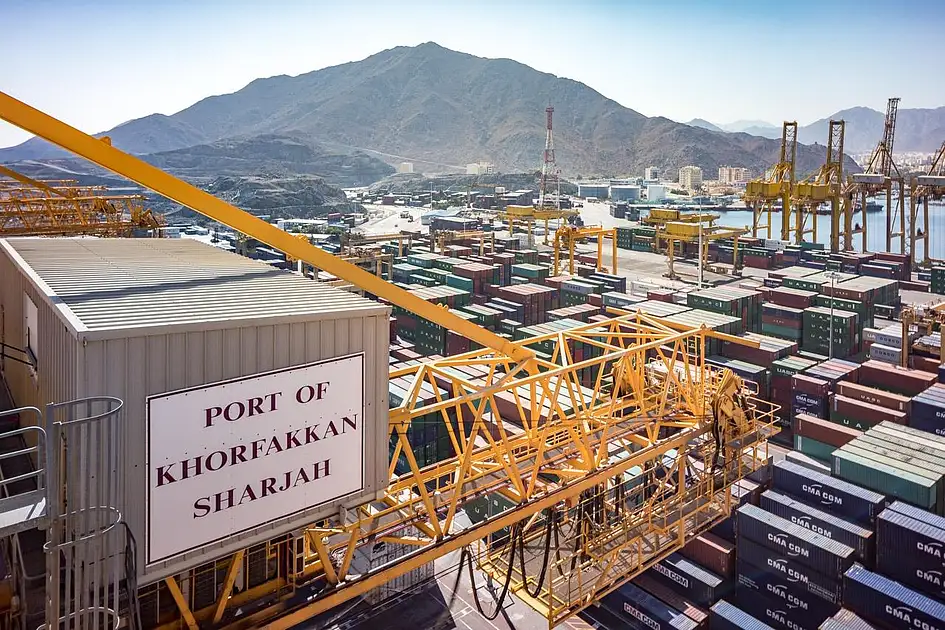
The centrepiece of that network sits on Sharjah’s east coast, in Khorfakkan. What was once a regional port has become, in the space of a few years, the anchor of the emirate’s entire logistics strategy — and its main selling point is geography.
Khorfakkan Commercial Terminal (KCT) is the only commercial terminal in the UAE located outside the Strait of Hormuz. That single fact lets vessels calling there bypass one of the world’s most congested and geopolitically sensitive shipping chokepoints, cutting the time it takes cargo to reach inland UAE destinations compared with any other entry point in the country.
The terminal, operated by Gulftainer, is being built out for scale, with planned capacity exceeding 10 million TEUs (twenty-foot equivalent units) and a consistent ranking among the world’s top-performing commercial terminals. Gulftainer is backing that up inland too, adding 2.3 million TEUs of combined logistics capacity across the Al Dhaid Logistics Park and Sajaa Logistics Park.
“This is more than an expansion of our business — it is the launch of a new chapter in Gulftainer’s history,” said Farid Belbouab, Group CEO of Gulftainer. “For five decades, Gulftainer connected ports. The next 50 years will be about connecting economies. Global trade is changing fundamentally. Customers are no longer looking for isolated logistics services — they are looking for resilient, intelligent and fully integrated supply chain solutions.”
He framed the shift as one away from standalone infrastructure and toward networks. “The future of trade will no longer be determined by individual ports or isolated logistics assets,” Belbouab said. “It will be defined by connected ecosystems that seamlessly integrate maritime infrastructure, shipping, inland logistics, industrial development and digital intelligence into a single customer experience.”
“Gulftainer is powering the next era of trade by connecting government-to-government corridors to real-world logistics,” he added.
That ambition is already taking physical shape. KhorfakkanCommercial Terminal is set to integrate with Etihad Rail, a link expected to handle up to 2 million TEUs a year once it becomes operational — pushing the terminal’s reach further inland and reducing reliance on road haulage alone.
Khorfakkan doesn’t operate in isolation. It connectsich is now the subject of a Dh750 million expansion project aimed at maximising cargo flow between the emirate’s ports, free zones and wider regional markets
The investment numbers behind the infrastructure
The logistics build-out is showing up in Sharjah’s investment figures. The emirate was the UAE’s fastest-growing destination for foreign direct investment in the first half of 2025, recording 74 new projects — a 57 per cent jump from the 47 logged over the same period in 2024. Those projects translated into 2,578 new jobs, a 45 per cent increase year-on-year.
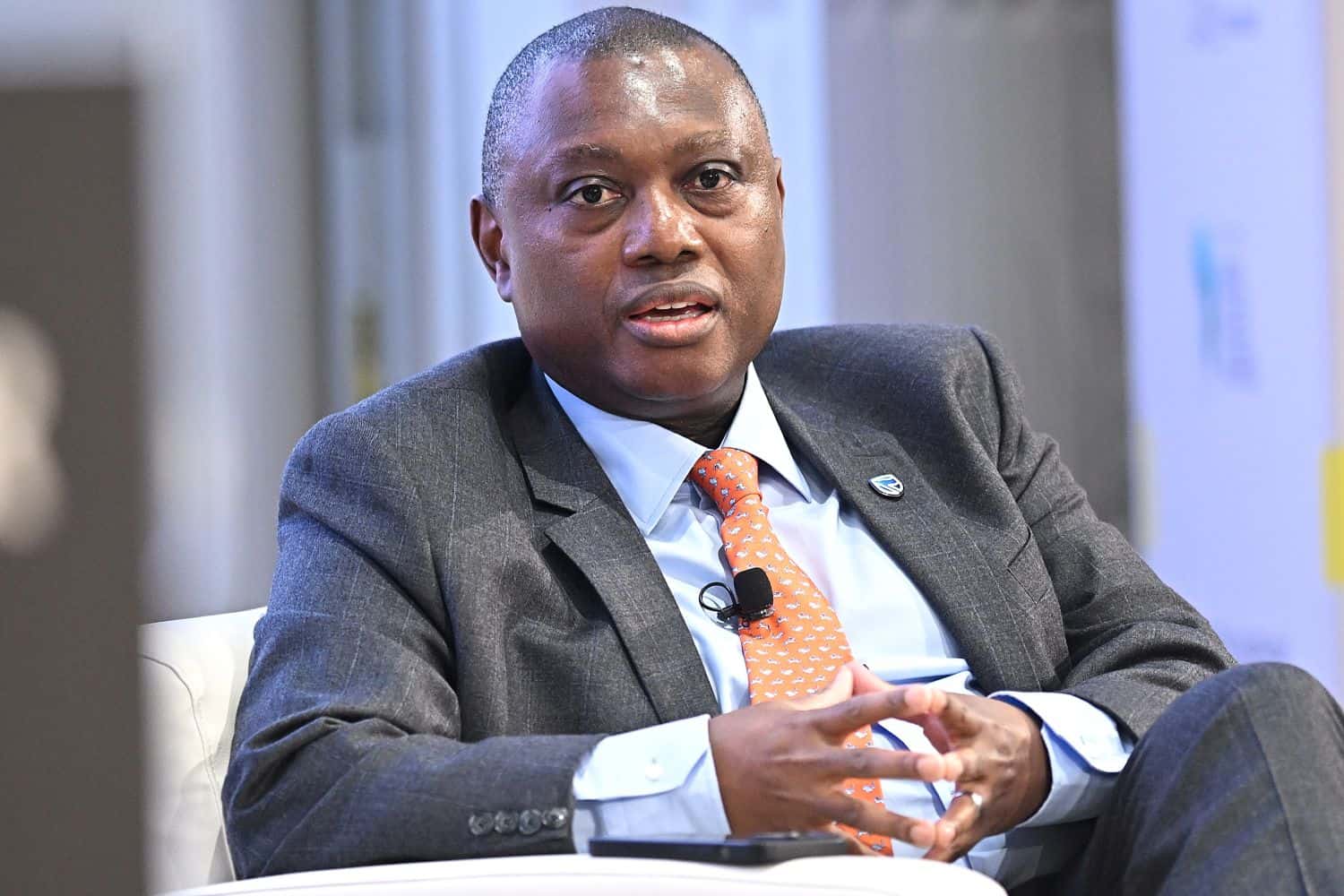
“These results highlight Sharjah’s growing role as a competitive investment destination,” said H.E. Mohamed Juma Al Musharrkh, CEO of Invest in Sharjah. “Companies are capitalising on the emirate’s cost-effective and highly efficient logistics ecosystem.”
The scale of that capital shift is stark: FDI inflows into Sharjah surged 361 per cent to reach $1.5 billion in the first half of 2025 the emirate’s investment promotion agency. The agency says it has now attracted firms from more than 70 countries. “Our emphasis on speed mirrors the same efficiency that global businesses now demand,” Al Musharrkh said
That emphasis extends beyond ports and roads into the paperwork of setting up a business. The Sharjah Investors Services Centre (SAEED), launched by Invest in Sharjah, lets investors complete business-setup formalities under one roof — often, the agency says, in under 60 minutes.
For companies whose location decisions increasingly come down to how predictably and quickly their goods can move, Sharjah is betting that the combination of geography, port capacity and streamlined bureaucracy will keep tipping the scales in its favour.