


Michelle Thorne,Aurora Gomez Delgado,Fieke Jansen,Rosi Leonard /Jul 28, 2026Republish
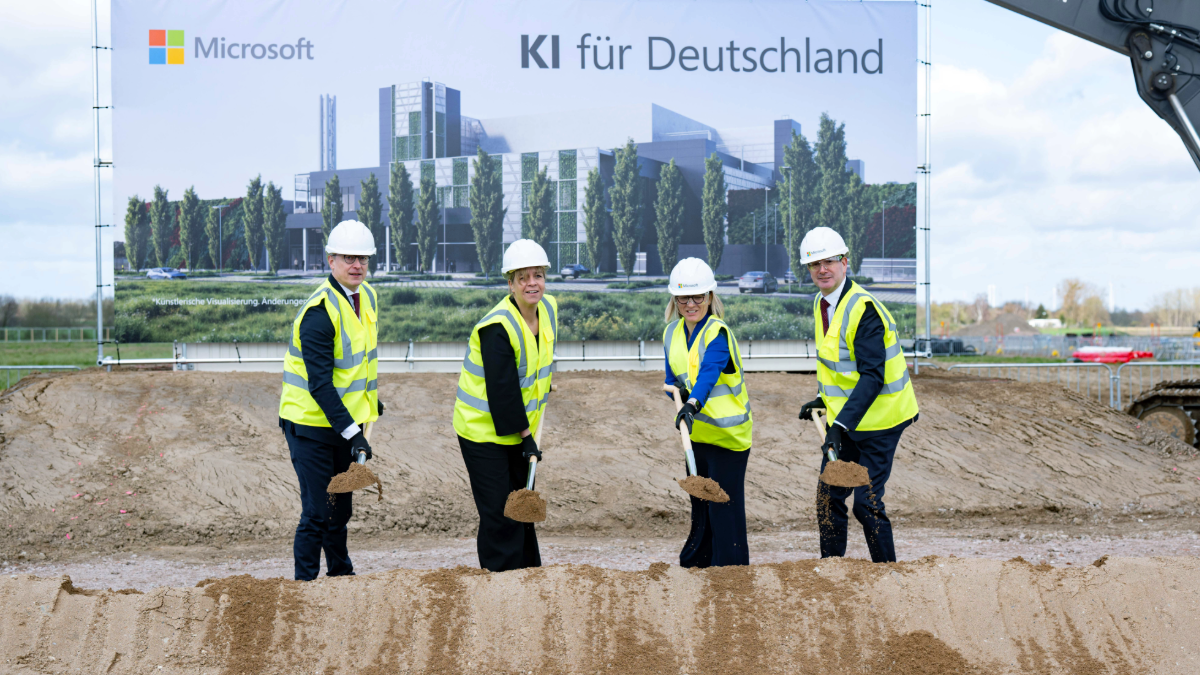
The European Commission says expanding AI infrastructure is essential to Europe’s technological sovereignty. Yet, it has not shown why Europe needs to triple data center capacity, nor how existing infrastructure is being used, nor how rapid expansion can be reconciled with Europe’s climate, energy and democratic commitments.
There is no solid evidence for the need to triple data center capacity, with evidence to suggest that many data centers in Europe are underutilized and that new data center development will be dominated by US tech and co-location firms who prioritize serving the largest multinational corporate cloud providers, most of which are US-based.
Nevertheless, the European Commission is aggressively dismantling environmental protections and democratic oversight to achieve this target. We believe that instead of scrambling behind superpowers in a race with no clear finish line, Europe needs to make clear-headed decisions backed by solid evidence. Europe should not rush into an infrastructure race simply because other global powers are doing so. It should make evidence-based decisions about its actual digital needs and pursue an industrial strategy that balances technological ambitions with environmental limits, social impacts, jobs and workers’ rights.
Until these questions are answered, we believe Europe should pause the construction of new large-scale data centers. A Europe-wide moratorium would create the space to assess whether this expansion is necessary, sustainable and in the public interest.
1. Exacerbating the cost of living crisis for Europeans everywhere
Evidence supporting the need for data center expansion for economic growth is scarce. We do, however, have examples from across Europe of how data centers make life more expensive for residents, not less.
Take Ireland. The growing number of data centers in Ireland last year used23% of the country’s electricity, more than all urban homes combined. Data center energy demand added hundreds of euros to household electricity bills (a cumulative average of €360 between 2015 and 2023) and drained €715 million from the Irish economy. Yet only 0.1% of the Irish workforce (3,300 people) are directly employed in data centers.
This pattern is set to be replicated across Europe. In the Netherlands, much-needed housing and 50 schools and daycares could not be builtbecause a large data center got priority access to the electricity grid. Meanwhile, the Dutch national high-voltage grid operator, TenneT, warns that the high energy demands of data centers are threatening the security of the grid.
One of Spain’s largest regions is constructing data centers that would consume nine times more electricity than all other current economic activities combined. These data centers would occupy up to 32% of the land set aside for renewable energy generation—energy that would not be added to the grid but rather exclusively allocated to powering these facilities. Furthermore, contractual clauses give these data centers priority access to water in areas already grappling with severe droughts, a situation that has drawn warnings from the United Nations. As a result, energy and water gentrification is occurring, increasing the price of utility bills throughout the country.
In France, the government announced 63 new data centers in the coming years, adding 28.6 GW of demand to the grid — the equivalent of 28 nuclear power plants. A scientific report by the national NGO the Shift Project shows that this directly conflicts with the need for electrification in several sectors in line with the green transition. In Marseille, the growth of data centers has put a halt on the electrification of the port and its associated ferries, delaying much-needed transition away from fossil fuels and marine pollution.
Overall, Europe’s acceleration plan only serves to heighten tensions between the economic areas that benefit from data centers, and those home to the most vulnerable that are turned into sacrificial zones.
2. Lock in dependencies on US tech power and fossil fuels
As colleagues have pointed out, Europe’s AI sovereignty problem runs far deeper than frontier access. The current “AI First” approach in Europe means building on a borrowed model andkeeping Europe hooked on US cloud. This lock-in further entrenches dependencies on US tech power at the expense of European industries, households, schools and hospitals. Large data centers compete for limited energy and water resources while our governments allow them to burn fossil fuels with impunity as they build new fossil gas plants, operate in secrecy, and extract our data and expertise without fair compensation.
The data center industry openly admitted that the only way we can triple our data center capacity is by burning fossil fuels, effectively ”choosing between AI and climate goals” while Europe experiences historic heatwaves and is the fastest warming continent.
Europe currently spends €264 billion a year on cloud computing run by the three US tech giants. It also imports more than €400 billion in fossil fuels from the US as well as Russia and the United Arab Emirates. The energy demands from data centers and the associated climate and environmental costs are significant, yet poorly addressed.
3. Sacrificing Europe’s democracy and climate goals
Europe already has the Energy Efficiency Directive, intended to reduce emissions across the EU by 55% by 2030. However, growing evidence shows that expansion of data centers is incompatible with this target, and lack of compliance with the Directive causes a significant regulatory blind spot.
In Ireland, agencies have stated that the pace and scale of data center growth “will make it very challenging to meet both the EED and RED targets.” Energy demand from data centers in Ireland grew by 412% from 2015 to 2024. During the same time period, demand from other sectors grew by only 2.8%. Even in the most ambitious scenarios, Ireland couldovershoot its EED targets by nearly 20%, with all gains in wind energy in the country between 2017 and 2023 outstripped by growth in data center demand. The country’s Climate Change Advisory Council has gone so far as to state that rapid growth from data centers is “cannibalizing” growth in clean power.
To triple data center capacity, the EU will force member states to build “acceleration zones” yet allow data centers to continue operating in secrecy, in a move overriding basic democratic principles. Existing data centers fail to comply with minimal transparency requirements, and instead of tightening enforcement, the EU has succumbed to US tech lobbyists who successfully pushed to classify all individual information about data centers as confidential. Decision-makers, journalists and citizens cannot access numbers about individual data centers through freedom of information requests.
As research from Beyond Fossil Fuels shows, over the next six years, Europe is on track to “drive a 121 million-tonne surge in CO2 emissions—nearly equivalent to the total emissions from all gas power plants in Italy, Germany, and the UK in 2024 combined,” as data center power demand soars in the EU.
If Europe is unable or unwilling to gather basic information about the effects of its expansion plan, nor enforce compliance with its Directive about how existing infrastructure operates, how can the EU have an evidence-based approach to policy? How will Europe meet its climate goals if it allows data centers to burn fossil fuels on-site, outstrip the growth of renewables and claim priority access to our grids? What is the implication of this on the electrification of other sectors?
European-wide moratorium on large data centers
Fast-scaling computing is breaking non-scalable infrastructures all across Europe. The return on investment is speculative, but the real costs to households, local industries and our natural environment are high and the employment prospects low. Meanwhile, every new data center intensifies a global supply chain of extractivism. When Europe embarks on a race to build more and more data centers without proper justification or democratic deliberation, we validate an exploitative model that hurts poorer regions in Europe and vulnerable communities across the entire planet.
The EU argues it has to create the demand for AI to justify the data center buildout. Yet building bigger and faster will primarily benefit US tech power—while further entrenching Europe’s digital and energy dependencies and sacrificing its commitments to democracy and decarbonization. US tech power heavily lobbied EU policy spaces to impose their deregulation agenda. Data center operators prey on poor and marginalized communities to force the fast deployment of data centers before any meaningful contestation can be made.
While we criticize Europe’s reliance on US tech power, simply replicating the same models but with a European stamp is not enough and would actively harm communities and undermine broader development. Instead, a break from the extractive, bloated and financially risky models of the past is needed.
Europeans deserve clear answers before more large data centers are approved. The Commission should demonstrate how much additional capacity is needed, who will benefit, how projects will avoid environmental harm, how data center buildout is compatible with legally binding climate commitments, how they will support new renewable generation rather than compete for existing supplies, and how households will be protected from higher costs.
Until then, Europe should adopt a moratorium on new large-scale data centers.
Support Tech Policy Press
If you’ve found our work helpful, consider supporting us.
Donate
Authors


Michelle ThorneMichelle Thorne is the Director of Strategy at the Green Web Foundation working towards a fossil-free internet by 2030. She’s a co-initiator of the Green Screen Coalition for digital rights and climate justice and a visiting professor at Northumbria University. She served 12 years at the Mozilla Fou…

Aurora Gomez DelgadoAurora Gomez Delgado is a psychologist and social justice activist. Tu Nube Seca Mi Río, a collective that aims to raise awareness of the eco-social impact of data centers in Spain, especially on water re

Fieke JansenFieke Jansen is a co-principal investigator with the critical infrastructure lab at the University of Amsterdam and a postdoc researcher at the media studies department.

Rosi LeonardRosi Leonard leads Friends of the Earth Ireland’s data center campaign. Her work focuses on supporting communities who are affected by big tech’s buildout in Ireland and building the case for an energy transition which benefits people and nature. She lives in Dublin.















/health-and-multilateral-partnerships-(hmp)/cso-sf4h-dialogue-1-panelists_10-dec-2025.tmb-768v.jpeg?sfvrsn=fc5c629e_1 "Civil Society Urges Action on Health Financing Crisis")