

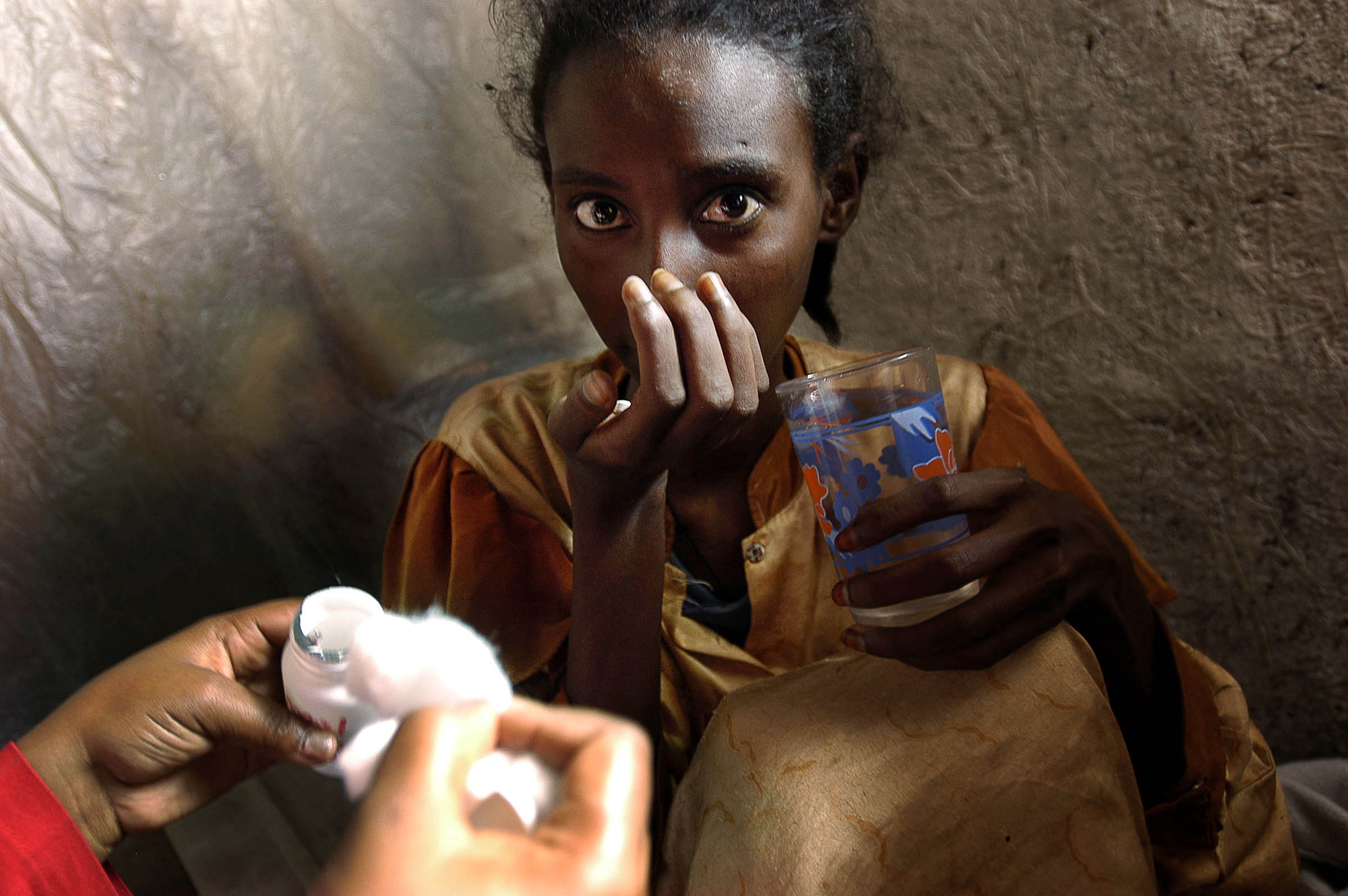
On Sunday, July 26, before AIDS 2026’s opening had sounded, health activists interrupted Acting U.S. Global AIDS Coordinator Jeff Graham’s address at Riocentro’s pre-conference sessions in Rio de Janeiro, chanting “You lie, people die, restore our PEPFAR now.” The disruption lasted several minutes. It was not spontaneous theater. Two peer-reviewed studies released in the days before the conference’s formal opening — the 26th International AIDS Conference, running July 26–31 under the banner Rethink. Rebuild. Rise. — put hard numbers on exactly what activists say they are mourning: 77,163 fewer children on HIV treatment globally in fiscal year 2025 than in 2024, a 14.2% decline tied directly to PEPFAR disruptions, and 1,714 HIV service sites shuttered worldwide after terminated or delayed PEPFAR payments. The conference’s formal opening ceremony is scheduled for Monday evening, July 27 ET, with UNAIDS releasing its “United to End AIDS” report today at a press conference that begins at 1 p.m. ET.
The paradox that defines this moment: HIV science has never been more capable, and the delivery infrastructure that gets those advances to people who need them has never been more fragile.
Tens of Thousands of Children Lost HIV Treatment in a Single Year
The pediatric treatment data, analyzed by Ramona Godbole of the Heidelberg Institute of Global Health and the Clinton Health Access Initiative, examined PEPFAR program records from 21 high-burden countries. Of those 21 countries, 20 recorded declines — and children’s treatment numbers fell faster than adults’ in the same period. South Africa recorded the steepest absolute drop: 30,880 fewer children receiving PEPFAR-supported HIV treatment, a 45% reduction compared with fiscal year 2024, according to the International AIDS Society’s pre-conference press release. In five countries — South Africa, Uganda, Haiti, Zambia, and Kenya — the declines departed from historical trajectories in ways that cannot be attributed to the background downward trend in children on treatment at PEPFAR-supported sites, according to the researchers.
The U.S. State Department disputed those findings, as It characterized South Africa’s numbers as consistent with historical trends and blamed South Africa for “prioritizing state-sponsored racial discrimination over PEPFAR assistance.” Researchers said the State Department’s snapshot — drawn from one quarter of FY2025 data, which showed treatment broadly stable — obscures a larger decline that only becomes visible across the full fiscal year
The State Department’s own data, released in April 2026, complicates its defense: PEPFAR-supported HIV testing fell from 23.7 million to 19.6 million; new antiretroviral therapy enrollments dropped 16%; new PrEP initiations fell 41%; adolescent girls completing the PEPFAR prevention package fell 86%. Those figures come from the U.S. government’s own Panorama data system.
1,714 Sites Gone — Including Clinics, Drop-in Centers, and Mobile Units
The second study, the PEPFAR Pulse Study, was conducted by amfAR’s Public Policy Office in collaboration with the Johns Hopkins Bloomberg School of Public Health, Funders Concerned About AIDS, and Data Etc. It surveyed 166 PEPFAR-funded organizations across 46 countries. The findings:
At least 1,714 HIV service sites closed entirely after terminated or delayed PEPFAR payments — among them 1,010 public health facilities, 325 access points, and 126 drop-in centers. More than half of all implementing partners (52%) had at least one award terminated. Seventy-seven percent were asked to restrict their work to comply with new U.S. policy requirements. Prevention services absorbed the deepest cuts: prevention spending fell 51% from FY2024 to FY2025. Among organizations that had been providing prevention services, 73% stopped at least one key-population service, 67% stopped outreach, and 43% permanently ended at least one prevention activity — including distributing condoms and providing PrEP, per the full PEPFAR Pulse Study report.
Elise Lankiewicz of amfAR, presenting the Pulse Study findings, said the evidence demonstrates that “recent United States funding and policy changes have triggered widespread disruptions throughout the PEPFAR programme, with local organisations and populations at greatest risk of HIV infection suffering the most severe consequences.”
“Science is moving fast, giving us more powerful HIV prevention and treatment tools,” said IAS President and AIDS 2026 Co-Chair Prof. Beatriz Grinsztejn. “But these advances cannot save lives if they never reach the people who need them. That requires robust, stable financing and steadfast political commitment.”
What the U.S. Government Says Is Happening
Graham pushed back in his Sunday address. No government had been coerced into signing non-health agreements in order to receive PEPFAR funding, he said; all the MOUs were solely health-related, and all the U.S. sought from recipient governments was co-investment. He cited Kenya — the first country to sign an MOU, in December 2025 — as the model: Kenya has committed $850 million in domestic investment alongside a U.S. pledge of $1.53 billion over five years to 2030, according to BusinessDay South Africa.
Graham said the U.S. intends to spend all of the global health funding appropriated by Congress for 2026, while directing more rend reducing administrative costs. “We are helping countries to build the capacity to solve their own challenges instead of perpetuating dependency,” he said, as
Anele Yawa, general secretary of the Treatment Action Campaign, offered a direct rebuttal: “The U.S. government must be held accountable for the ongoing, global public health emergency they are causing.”
Health GAP Executive Director Asia Russell accused the administration of “creating a public health emergency through changes to PEPFAR and global health funding” that have “reduced access to HIV prevention, testing and treatment for some of the world’s most vulnerable populations.”
What is not in dispute: Congress approved $6 billion for PEPFAR for fiscal year 2025. The Office of Management and Budget made only $2.9 billion available, listing the remainder as “unallocated” and conditional on further spending plans — a gap that independent analysts and Congressional aides described as a de facto impoundment of funds appropriated by the legislature, as documented on the PEPFAR Wikipedia page citing NBC and KFF reporting.
Can Restoring Funding Undo the Damage?
This question cuts to the core of what the AIDS 2026 data actually proves — and it is the finding the conference’s opening numbers do not adequately surface.
PEPFAR was built as a U.S.-managed bilateral system, not a hand-off-ready one. The 1,714 service sites that have closed include trained healthcare workers who have since found other employment, physical infrastructure that has been vacated, and institutional supply chains that have been severed. Restoring the funding line does not automatically reopen a closed clinic. South Africa laid off approximately 8,000 healthcare workers starting in February 2025 following the USAID freeze — workers who are not waiting on a policy reversal, as documented by the Associated Press in October 2025. The country subsequently received $115 million in transitional bridge funding in October 2025, but only for six months.
The PEPFAR restructuring debate has also largely avoided a structural fact: even Project 2025, the conservative policy blueprint whose authors shaped much of the Trump administration’s agenda, praised PEPFAR as “America’s most successful aid program.” The program’s disruption thus goes beyond ideological coherence — it represents an idiosyncratic policy reversal that no transition-planning framework inside or outside the U.S. government had prepared for, as recorded in the PEPFAR Wikipedia article’s citation of CSIS analysis.
Activists at the conference have documented cases in which MOU negotiations included non-health conditions — including access to mineral wealth — as implicit prerequisites for funding. Graham denied this. Neither the MOU texts nor the negotiating records have been made public.
A July 2025 Lancet HIV modeling study estimated that fully discontinuing PEPFAR could generate up to 10.75 million new HIV infections and 2.93 million additional deaths — a scale the study authors compared to a major armed conflict or a global pandemic.
How Does the Weekly HIV Pill Work — and Why Does It Matter Now
On Wednesday, July 29, the conference’s late-breaking sessions will present full Phase 3 data from the ISLEND-1 and ISLEND-2 trials — the most detailed clinical results yet on what could become the world’s first once-weekly oral HIV treatment, announced by Merck and Gilead on July 21, 2026. The combination is a single tablet pairing Merck’s islatravir at 2 mg and Gilead’s lenacapavir at 300 mg, as detailed by Contagion Live.
Understanding what makes once-weekly dosing physically possible requires a brief look at how each drug works. Islatravir is a nucleoside reverse transcriptase translocation inhibitor — a distinct mechanism from older NRTIs, which block chain elongation. Islatravir blocks HIV replication by inhibiting reverse transcriptase translocation specifically, producing both immediate and delayed chain termination in HIV-1 RNA. The longer, slower action of translocation inhibition is part of what makes the molecule’s pharmacokinetic half-life long enough to support weekly dosing.
Lenacapavir is a first-in-class capsid inhibitor — the only approved antiretroviral that targets HIV’s protein capsid shell. It disrupts capsid function at nuclear import, at assembly, and at other stages of the virus’s lifecycle. Because it targets a completely different protein from every other existing drug class — NRTIs, NNRTIs, integrase inhibitors, protease inhibitors — lenacapavir has no known cross-resistance to any existing antiretroviral. That cross-resistance profile is significant: a once-weekly regimen built on lenacapavir can, in principle, work even in patients who have accumulated resistance to older drug classes.
Topline results, announced in June 2026, showed the combination met the primary noninferiority endpoint at Week 48 in both trials. In ISLEND-1, zero percent of participants who switched to ISL/LEN had HIV-1 RNA at or above 50 copies/mL at Week 48, compared with 0.3% of those who remained on Biktarvy — meeting the noninferiority threshold. ISLEND-2 compared ISL/LEN against a range of standard-of-care regimens; the ISL/LEN arm showed 0.3% of participants above 50 copies/mL versus 1.3% on standard of care. Gilead and Merck said the data will form the basis of regulatory submissions globally.
The same Wednesday sessions will also present 52-week open-label extension data from the PURPOSE 1 and PURPOSE 2 Phase 3 trials, which evaluated twice-yearly injectable lenacapavir for HIV pre-exposure prophylaxis — already FDA-approved under the brand name Yeztugo. In the PURPOSE 1 extension phase, which accumulated more than 7,178 person-years of follow-up, no new HIV infections were observed among participants on lenacapavir — including those who switched to it from daily oral PrEP. More than 95% of eligible participants in both trials elected to continue or switch to lenacapavir in the extension phase, a high-adherence signal from a real-world-adjacent population.
The clinical picture that emerges from ISLEND and PURPOSE together is of a pipeline shifting from daily oral to long-acting regimens across both treatment and prevention. The obstacle is no longer scientific. It is the same obstacle identified in the conference’s accountability data: the funding and delivery infrastructure that translates approved drugs into actual protection for the 9.2 million people living with HIV who are not currently on treatment.
What Happens at AIDS 2026 Through the Rest of the Week
The conference’s formal opening is scheduled for Monday evening, July 27 ET. Scheduled speakers at the opening ceremony include UNAIDS Executive Director Winnie Byanyima, WHO Director-General Tedros Adhanom Ghebreyesus, IAS President Beatriz Grinsztejn, South African Deputy Health Minister Mathume Joseph Phaahla, incoming UN Special Rapporteur on the Right to Health Mariângela Simão, and Francisco Ruiz, the former director of the White House Office of National AIDS Policy, per the Washington Blade’s preview of the conference.
UNAIDS is releasing “United to End AIDS” — its annual HIV data report covering 2025 — at a press conference at 1 p.m. ET today, before the formal ceremony. The report is expected to show, for the first time with official UNAIDS data, the full scale of funding disruption from 2025 and which countries have seen new HIV infections rise as a result.
Tuesday will see WHO present its mid-term assessment of the Global Health Sector Strategies on HIV, viral hepatitis, and sexually transmitted infections — the halfway-point evaluation of whether the world is on track for the 2030 goal of ending AIDS as a public health threat.
Thursday’s plenary will hear from Nobel laureate economist Joseph Stiglitz on the relationship between inequality and pandemic risk — a session that, if the current data is any guide, will have considerable empirical material to work with, according to the UNAIDS conference program.
What Should a Reader Do With This Information?
The conference’s two opening datasets — 77,163 children, 1,714 sites — are not abstractions for policy professionals. They have practical implications for people across three categories.
People living with HIV in PEPFAR-recipient countries: If you are in one of the 46 countries surveyed by the PEPFAR Pulse Study, verify the operational status of your treatment site. Many of the 1,714 closures involved public health facilities that were primary HIV care points for their communities. Country-level maps of closures are not yet publicly available; your national health ministry or local HIV advocacy organization may have the most current information.
Donors and foundation decision-makers: The structural gap between the science (once-weekly HIV treatment nearing approval, twice-yearly injectable PrEP already approved) and the delivery infrastructure is now quantified and peer-reviewed. Directed philanthropic funding to country-level HIV infrastructure — particularly in the five countries identified as showing anomalous declines (South Africa, Uganda, Haiti, Zambia, Kenya) — addresses a documented and specific gap, not a speculative one.
U.S. policymakers and their constituents: Congress appropriated $6 billion for PEPFAR in FY2025. The executive branch made $2.9 billion available. The mechanism for closing that gap — full appropriations disbursement, MOU transparency, and explicit rejection of non-health conditionalities in bilateral negotiations — is a matter of legislative oversight, not technical complexity.
Frequently Asked Questions
How many HIV service sites have closed because of PEPFAR disruptions, and what kinds of facilities are included?
According to the PEPFAR Pulse Study — the first large-scale survey of PEPFAR-implementing organizations, covering 166 partners in 46 countries — at least 1,714 service sites closed entirely following terminated or delayed PEPFAR payments. Among those closures were 1,010 public health facilities (clinics, health centers), 325 access points, and 126 drop-in centers serving key populations including sex workers, men who have sex with men, transgender people, and people who inject drugs. These are not satellite or supplementary services — many were primary HIV care points for their communities. Site closures involve loss of trained personnel, physical infrastructure, and institutional supply chains; restoring funding does not automatically reopen a closed site.
Why did 77,000 children lose HIV treatment access, and is the U.S. government’s explanation credible?
Researchers from the Heidelberg Institute of Global Health and the Clinton Health Access Initiative analyzed PEPFAR program data from 21 high-burden countries and found 77,163 fewer children received PEPFAR-supported HIV treatment in fiscal year 2025 than in FY2024 — a 14.2% global decline. The State Department attributed the decline to historical trends and challenged the South Africa data specifically, saying the drops reflect data limitations rather than real-world treatment losses. Independent researchers at AIDS 2026 responded that the State Department’s argument relied on a single-quarter snapshot that obscures the full-year picture, and that the declines in five countries — South Africa, Uganda, Haiti, Zambia, and Kenya — exceed what historical trajectory alone can explain. The State Department’s own reported FY2025 data also showed a 16% drop in new ART enrollments and an 86% drop in adolescent girls completing PEPFAR prevention packages.
What makes the once-weekly islatravir/lenacapavir pill different from existing daily HIV treatments, and how does the capsid inhibitor mechanism work?
Current gold-standard HIV treatment regimens — including Biktarvy (bictegravir/emtricitabine/tenofovir alafenamide) — require a pill every day. Missed doses erode protection. The ISL/LEN combination (islatravir 2 mg plus lenacapavir 300 mg) is designed to maintain viral suppression on a once-weekly schedule, made possible by the unusually long pharmacokinetic half-lives of both molecules, as analyzed by Contagion Live. Islatravir is a nucleoside reverse transcriptase translocation inhibitor that blocks HIV replication through a mechanism distinct from older NRTIs — producing both immediate and delayed chain termination in the virus’s reverse transcriptase enzyme. Lenacapavir is a first-in-class capsid inhibitor that disrupts the protein shell (capsid) the virus constructs around its genetic material at multiple stages of the HIV lifecycle: nuclear import, assembly, and others. Because the capsid is a completely separate target from any other existing antiretroviral drug class, lenacapavir has no known cross-resistance to NRTIs, NNRTIs, integrase inhibitors, or protease inhibitors — meaning the once-weekly pill can work even in patients with multi-drug resistance to older regimens. Phase 3 results showed the combination met the noninferiority threshold against Biktarvy at Week 48; full data will be presented at AIDS 2026 on July 29 and submitted to regulators.
If the U.S. restored PEPFAR funding tomorrow, would the damage be undone?
Not automatically, and not quickly. The 1,714 sites that have closed represent physical infrastructure that was vacated, trained healthcare workers who have moved on, and institutional supply chains that were severed. South Africa alone laid off approximately 8,000 healthcare workers in 2025 following the USAID freeze. PEPFAR was built as a U.S.-managed system over two decades; it was not designed as a hand-off-ready program. The MOU restructuring model assumes recipient countries can absorb service delivery into their own domestic financing and administrative infrastructure — but that infrastructure was intentionally not built to full independence during the program’s design. A Lancet HIV modeling study from 2025 estimated that if PEPFAR were fully discontinued, the result could be up to 10.75 million new HIV infections and 2.93 million additional deaths — effects the authors compared to a global pandemic or major armed conflict. Even partial restoration of funding would require years to rebuild the infrastructure that a single policy reversal dismantled in months.
AIDS 2026 runs July 26–31, 2026, at the Riocentro Convention & Event Center, Rio de Janeiro, Brazil, with full virtual access. All times in this article are Eastern Time (ET) unless otherwise noted. Sessions at the conference occur in Brasília Time (BRT, UTC−3), which is one hour ahead of ET.
ⓒ 2026 TECHTIMES.com All rights reserved. Do not reproduce without permission.
