

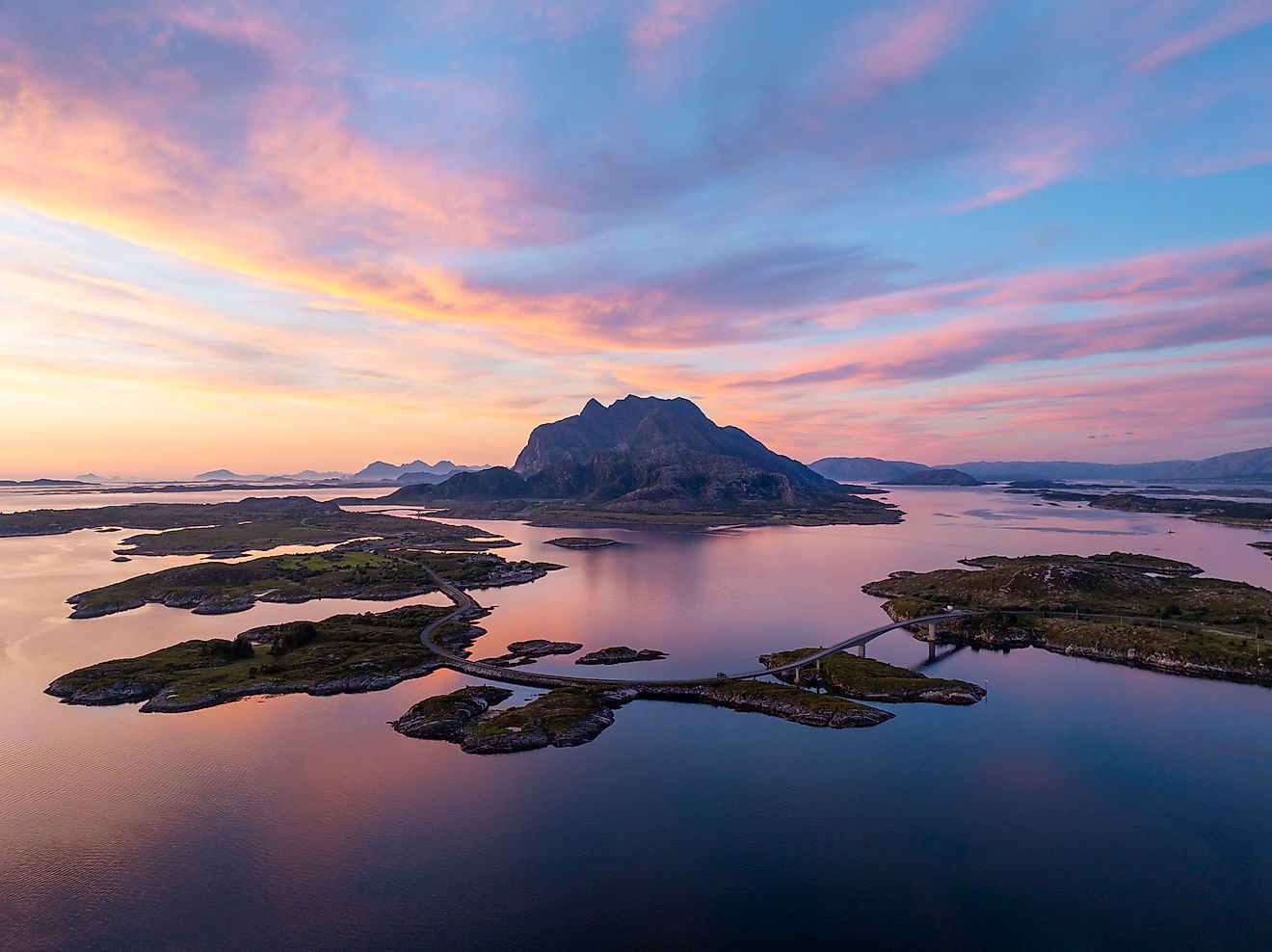
Here is a strange fact about coastlines: nobody can agree how long any of them actually are. Measure a coast with a long ruler and you get one number; measure the same coast with a shorter ruler that dips into every cove and inlet, and the total balloons. Mathematicians call this the coastline paradox, and it means every figure below is really just one reasonable answer among many. With that caveat firmly in place, these are the European countries with the longest coastlines, a list topped by a country so crinkled with fjords that measuring it is less a task than a dare. A couple of others are so broken into islands that no single number can pin them down, so they get their own mention at the end.
Norway
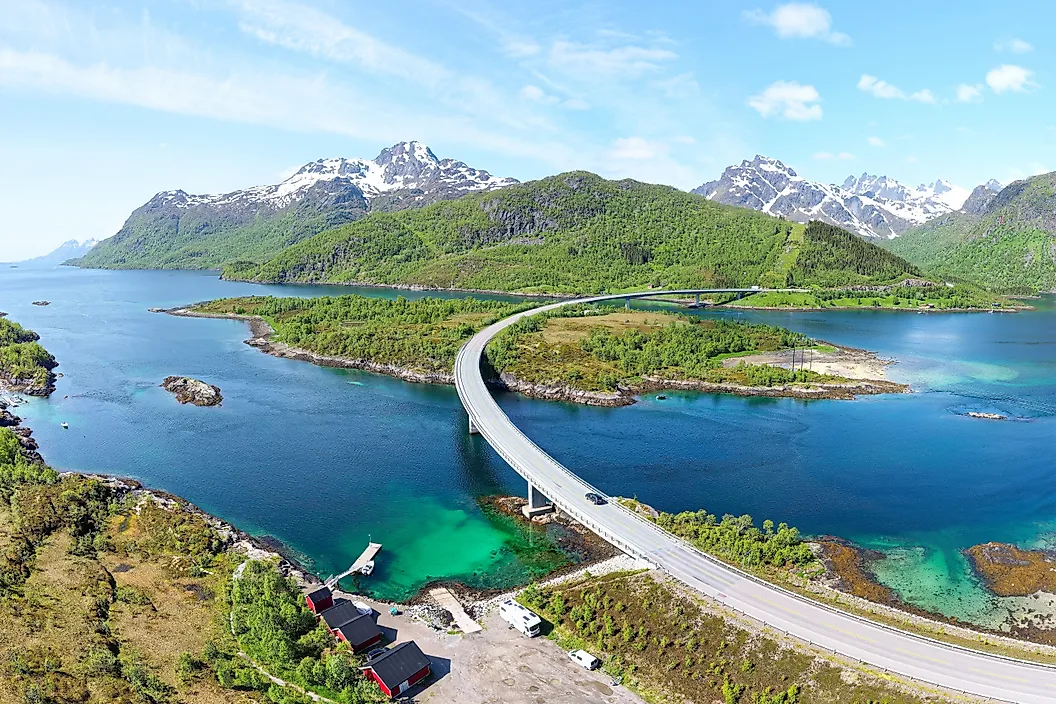
Norway has the longest coastline in Europe, and it is not close. By the measurement used here it runs 58,133 kilometers, which is longer than the coastline of most entire continents. The exact global rank depends on whose ruler you trust, but Norway always finishes near the top of the world list. The reason is fjords. Glaciers spent the last several ice ages gouging long, narrow slots into the coast, then flung tens of thousands of islands offshore for good measure. The result is a shoreline that folds back on itself so many times that a country you could drive across in a day ends up with more coast than nations many times its size. It should not add up. It does.
Greece
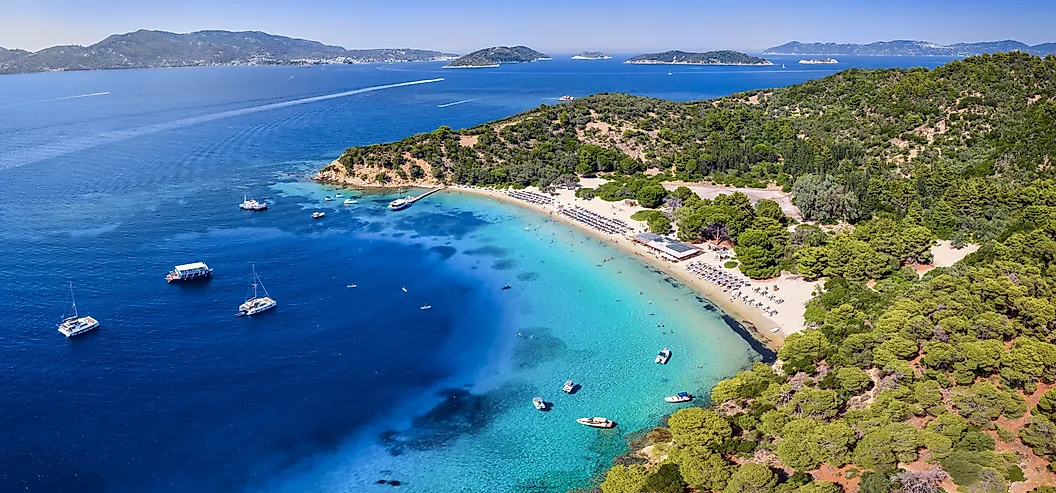
Greece has the longest coastline of any country on the Mediterranean, roughly 13,676 kilometers of it, and it owes almost all of that to islands, about 6,000 of them. Only a couple of hundred are inhabited, which leaves thousands of empty coves, sea caves, and beaches for the tourism industry to photograph without mercy. If you have ever seen a screensaver of impossibly blue water lapping a pale cliff, the odds are decent it was shot somewhere along this coast.
United Kingdom
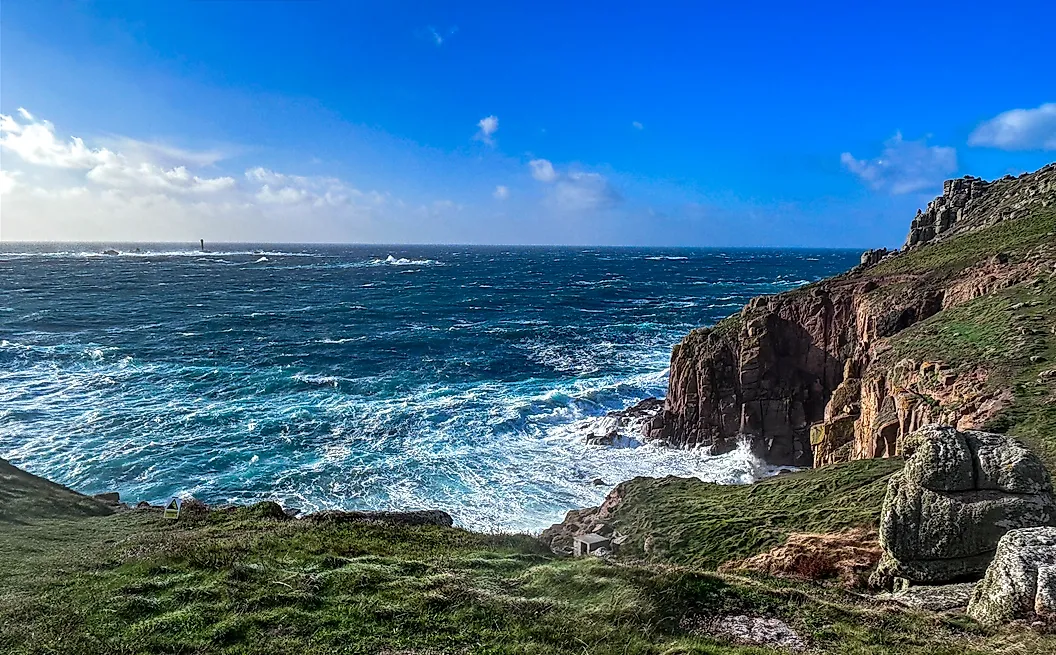
The United Kingdom crams about 12,429 kilometers of coastline onto its islands, which is roughly what happens when a country is basically all edge. Mind the “Northern” in Northern Ireland, by the way: the rest of the island of Ireland is a separate country and does not count toward the total, a distinction the UK takes seriously. All that shoreline is folded into a small footprint, which is why no point in Great Britain sits more than about 113 kilometers, roughly 70 miles, from the sea. For an island nation, that is not a fun fact so much as the entire premise.
Italy
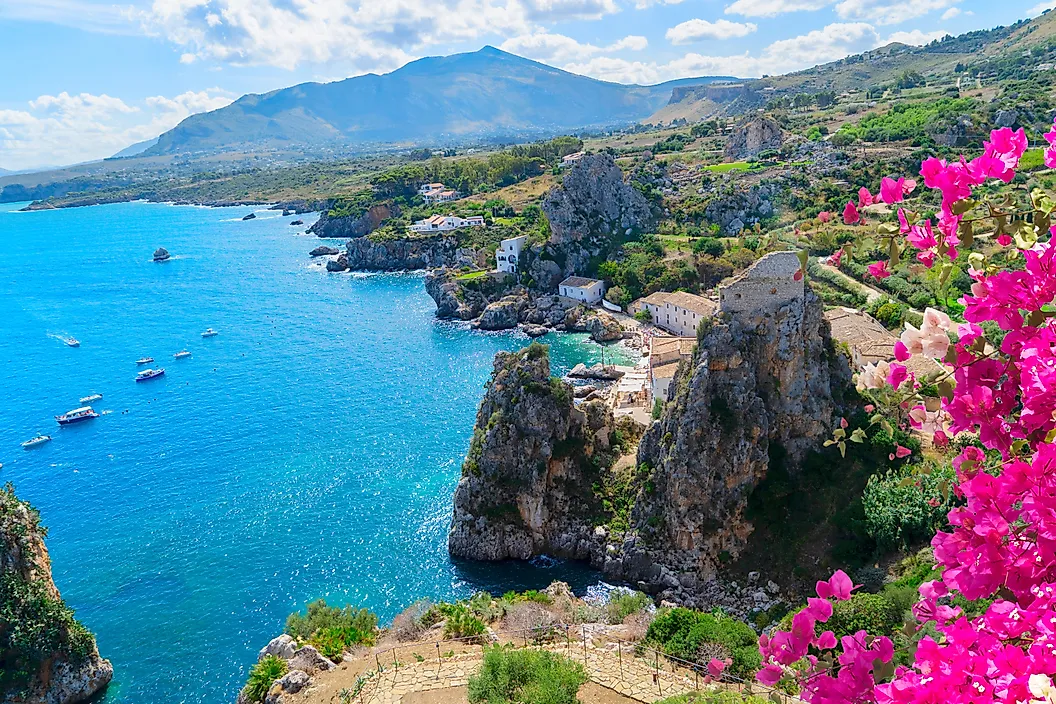
Italy’s coastline reaches roughly 7,600 kilometers, wrapped around a peninsula shaped, as every schoolchild is told, like a boot. It borders the Ionian, Adriatic, Ligurian, and Tyrrhenian seas and pads the total with big islands like Sicily and Sardinia, plus a long tail of smaller ones. Between the boot and the islands, almost nowhere in Italy is far from the water, which goes a long way toward explaining why the country treats its beaches as a national institution and its coastal roads as a competitive sport.
Croatia
Croatia squeezes about 7,368 kilometers of coastline out of a fairly short stretch of the Adriatic, and the trick, once again, is islands: more than a thousand of them, though only a few dozen are permanently inhabited. The mainland shore alone is only around 1,800 kilometers, so the islands, islets, and bare rocks more than triple the figure. It is often called the most indented coastline in the Mediterranean, which is the polite, technical way of saying it looks like someone took pinking shears to the map.
Denmark
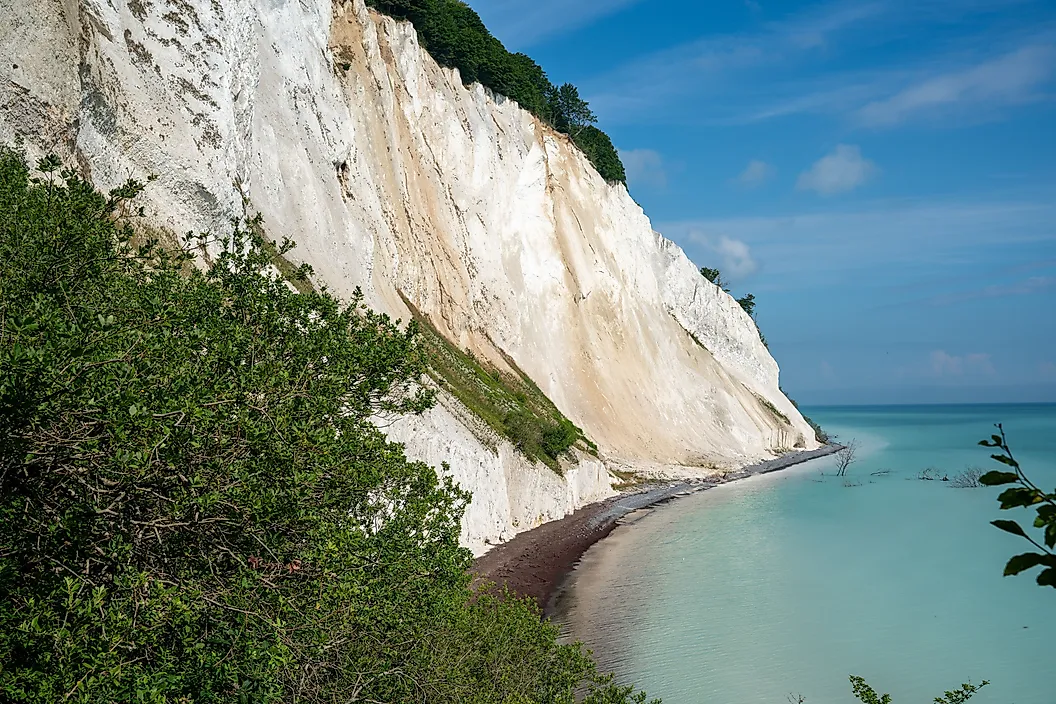
Denmark looks tiny on a map and still turns up about 7,314 kilometers of coastline, on the logic that it is less a country than a pile of coastline with some land attached. The mainland peninsula accounts for only around 1,700 kilometers; the country’s 1,419 islands cover the rest. Denmark is so narrow and so thoroughly surrounded by water that no spot in it sits more than about 52 kilometers from the sea. Danish engineers have also spent centuries reshaping stretches of that coast through land reclamation, so the official number keeps quietly drifting.
Iceland, Spain, France, and Estonia
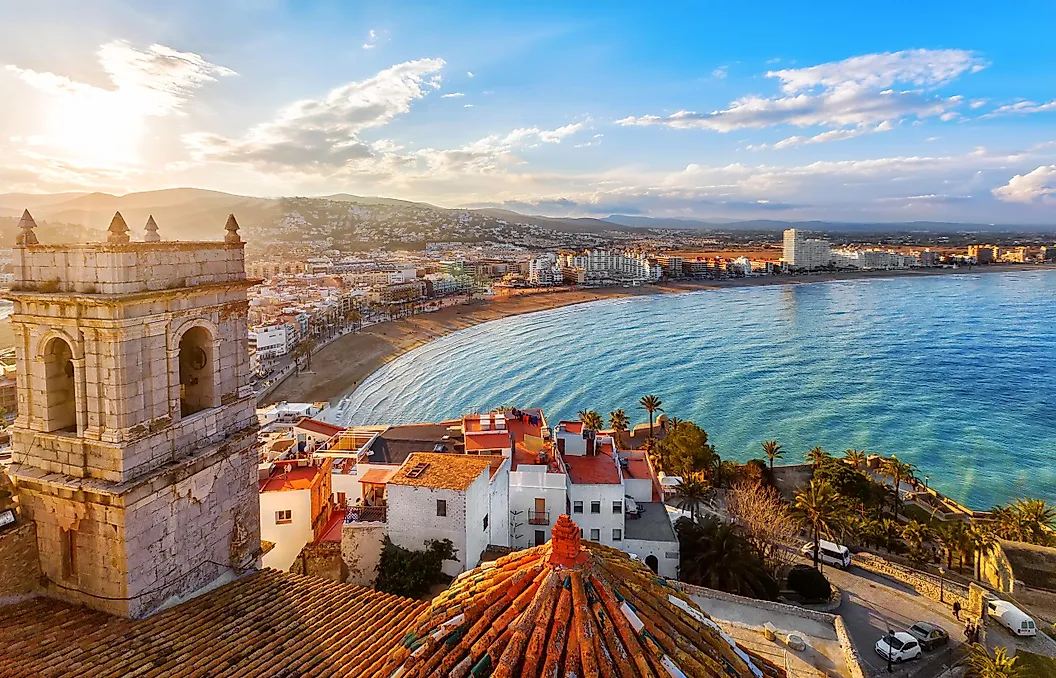
The bottom of the top ten is a photo finish decided by rounding. Iceland comes in around 4,970 kilometers, a slab of volcanic rock parked where the Arctic and the North Atlantic argue over it. Spain follows at about 4,964 kilometers, a heroic six kilometers back, most of it working overtime for a tourism industry that runs on Mediterranean sun. Metropolitan France lands at roughly 4,853 kilometers, with coast on the Atlantic, the Mediterranean, the English Channel, and even a sliver of the North Sea, which frankly feels greedy. Those three sit inside a hundred-kilometer span, close enough that a slightly finer ruler could reshuffle them and nobody would be the wiser. Estonia takes the last seat at about 3,794 kilometers, its notched Baltic shore dissolving into more than 2,000 islands, the largest of them Saaremaa. Which, given how this whole thing started, feels about right.
The Full Ranking
Here is the European top ten by coastline length, using one consistent set of measurements. Read the numbers as approximate: a finer-grained survey would push every figure higher and could easily swap a few positions.
| Rank | Country | Length of coastline (in km) |
|---|---|---|
| 1 | Norway | 58,133 |
| 2 | Greece | 13,676 |
| 3 | United Kingdom | 12,429 |
| 4 | Italy | 7,600 |
| 5 | Croatia | 7,368 |
| 6 | Denmark | 7,314 |
| 7 | Iceland | 4,970 |
| 8 | Spain | 4,964 |
| 9 | Metropolitan France | 4,853 |
| 10 | Estonia | 3,794 |
A Few Extra Mentions
Three coastlines get called out separately, because the ranking above simply cannot hold them honestly. One is a matter of geography, and two are the coastline paradox at its most unhinged.
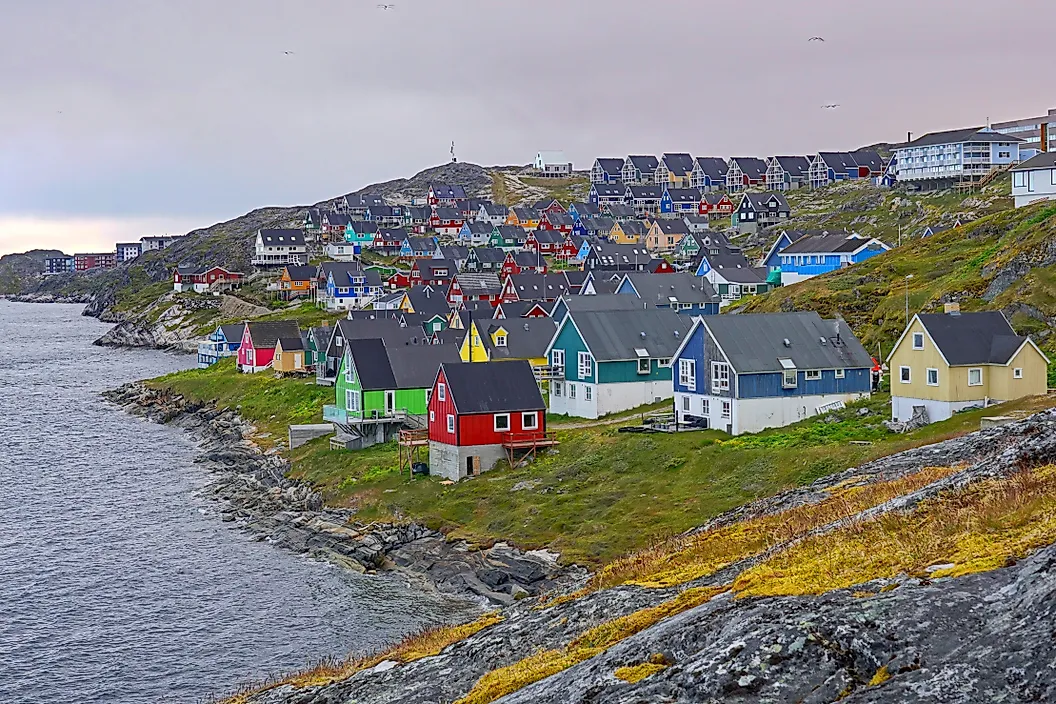
Greenland has a coastline of 44,087 kilometers, which would land it near the very top of any European list, except for one inconvenient detail: Greenland is not in Europe. Geographically it sits on the North American continent, closer to Canada than to any European capital. It turns up on European lists purely on paperwork, as a self-governing part of the Kingdom of Denmark. The coast itself is all ice-carved fjords and iceberg-choked bays wrapped around the world’s largest island, most of it so remote that the entire territory holds fewer people than a mid-sized town.
Sweden and Finland are the stranger case. Both are conspicuously absent from the ranking, and not because their coasts are short. It is because nobody can agree how long they are. By the standard comparative measure used for the list, Finland’s coastline is only about 1,250 kilometers and Sweden’s about 3,218, which keeps them out of the top ten. But both countries are shattered into staggering numbers of islands, Sweden alone claiming more than 220,000 of them and Finland tens of thousands more in its Archipelago Sea. Trace the shore of every last rock and skerry, as Finland’s own government does, and its coastline balloons to 31,119 kilometers, which would slot it second in Europe behind Norway. Sweden’s real figure climbs the same way. They are not left off because they lack coast. They are left off because there is no honest way to line them up against everyone else.
Which is the whole point. A coastline is not a fixed number waiting to be looked up. It is an argument about how closely you are willing to look.
