

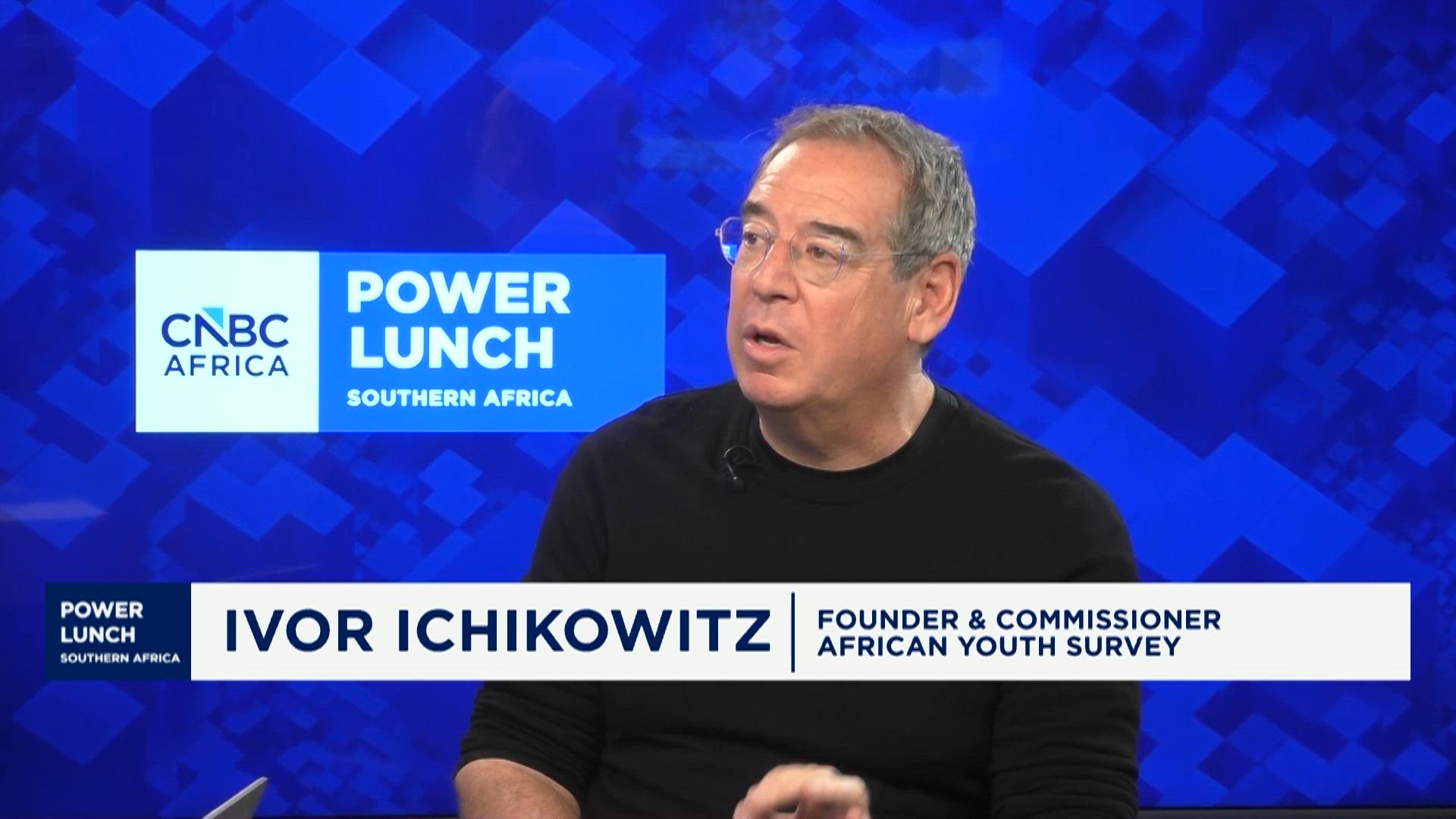
A new African Youth Survey paints a picture of a generation that’s more optimistic about the continent’s future than at any point since the pandemic. But while confidence is recovering, young Africans are making it clear that optimism alone isn’t enough — they want jobs, cleaner government, greater political inclusion and leaders who deliver tangible results. Joining CNBC Africa to unpack these findings further is Ivor Ichikowitz, Founder & Commissioner, African Youth Survey.
Wed, 29 Jul 2026 12:12:11 GMT
Disclaimer: The following content is generated automatically by a GPT AI and may not be accurate. To verify the details, please watch the video
AI Generated Summary
Key Points:
- Young Africans are more optimistic about the continent’s future than at any point since the pandemic, according to the African Youth Survey.
- The survey’s founder said that optimism reflects self-belief and agency rather than satisfaction with governments or current economic conditions.
- Jobs, cleaner government, reduced corruption and greater political inclusion emerged as recurring demands across countries.
- South Africa was described as an outlier with lower optimism, while countries including Rwanda and Somalia showed stronger sentiment in the survey.
- Nearly 30% of young respondents said they do not plan to vote, signaling dissatisfaction with formal democratic systems even as many still back democracy in principle.
- The survey points to opportunities for businesses and policymakers to support youth-led entrepreneurship through capital access, partnerships and enabling regulation.
Topics
AfricaAfrican Youth Surveyyouth optimismjobsgovernancedemocracyentrepreneurshipIvor IchikowitzAfrican economypolitical inclusion
- Young Africans are more optimistic about the continent’s future than at any point since the pandemic, according to the latest African Youth Survey.
- The survey’s founder said that optimism does not reflect satisfaction with governments, but rather a belief among young people that they can shape their own futures.
- Jobs, cleaner governance, political inclusion and better conditions for entrepreneurship emerged as core demands across the continent.
- Nearly 30% of young people surveyed said they do not plan to vote, highlighting frustration with formal democratic systems even as support for democracy remains strong.
Young Africans are more optimistic about Africa’s future than at any point since the pandemic, even as economic pressure, weak job creation and dissatisfaction with government performance continue to weigh on the continent, according to findings discussed from the latest African Youth Survey.
Speaking in a televised interview, African Youth Survey founder and commissioner Ivor Ichikowitz said the rise in optimism should not be read as an endorsement of current political and economic conditions. Instead, he said, it reflects a generation that increasingly believes it has the ability to take control of its own future.
“This optimism mustn’t be misunderstood,” Ichikowitz said. He added that young Africans are optimistic “not because their governments are delivering” and “not because they are happy,” but because they believe they can act independently to change their circumstances.
That distinction is central to the survey’s message. Rather than signaling broad confidence in public institutions, the findings point to a generation demanding jobs, lower corruption, greater political inclusion and an enabling environment to start businesses.
Ichikowitz said many young Africans no longer expect governments to create employment for them. Instead, they want conditions that allow them to build their own enterprises, gain access to capital and participate more directly in shaping policy and leadership outcomes.
He described the continent as being at “an inflection point,” arguing that the current generation is making its expectations more explicit. He pointed to 2026 as a particularly important period in Africa’s political and social transition, as a younger cohort becomes more vocal about the kind of continent it wants to inherit and lead.
The survey also underscores both the diversity of sentiment across Africa and the emergence of a shared youth identity. Ichikowitz said the research was initially designed to test whether it was meaningful to speak about a pan-African youth at all, given the continent’s linguistic, cultural and geographic diversity.
His conclusion was that such a cohort does exist, even if country-level differences remain wide.
South Africa, he said, stands out as an outlier, with lower levels of optimism than seen elsewhere on the continent. Rwanda also stood apart in the results, while Somalia produced more positive sentiment than some might expect given its starting point and long-running challenges.
Ichikowitz said Somalia’s results may reflect how young people respond when they begin to feel a sense of agency from a low base. In that setting, he said, optimism can rise not because conditions are already strong, but because people believe change is possible and that they can help drive it.
Even with those differences, he said one theme comes through consistently across markets: African youth “have found their voice.” He said they increasingly understand their significance as consumers, workers and agents of political and social change, and are beginning to exercise that power more openly.
Still, the survey points to a sharp gap between that growing self-belief and the systems that are supposed to absorb it.
Asked whether African youth are operating in environments that truly allow them to participate in decisions that shape their future, Ichikowitz’s answer was blunt: “Absolutely not.” He said the survey carries a near-universal message that governments are still failing to create the space needed for meaningful youth participation.
He argued that too many governments continue to treat young people as “a problem to be managed” rather than “a power to be harnessed.” In his view, countries making more progress are those where leaders recognise the economic and political value of youth participation rather than seeing it primarily as a stability challenge.
That generational shift, he said, is also historically distinct. The cohort now coming into political and economic maturity did not directly experience colonialism or apartheid, and is therefore less likely to see African identity as a handicap.
Instead, Ichikowitz said, this is a generation that increasingly sees its “Africanness” as a strength. Even where formal agency is limited, he said, young Africans are signaling that they intend to claim influence with or without state support.
The survey’s findings on democracy add another layer of complexity. Ichikowitz said most respondents still believe democracy is the right path forward. But he also flagged a significant warning sign: nearly 30% of the young people surveyed said they do not intend to vote.
That apparent contradiction, he said, reflects frustration with how democracy is practiced rather than a rejection of democratic ideals. For many young Africans, participation is no longer defined only by the ballot box.
He pointed to youth-led activism in Kenya as an example of how political engagement is evolving. In that context, street mobilization, public pressure and collective action are becoming part of how a distinctly African form of democratic participation may take shape.
Ichikowitz argued that the democratic systems in use across much of the continent were not organically developed by African societies, but were instead imposed through colonial rule and then maintained after independence. He said Africa now needs to develop a model of leadership and governance better suited to its own political, social, economic and cultural realities.
He stopped short of defining exactly what that model should look like, but said more work is needed with young people to understand what the next generation of African leadership should become.
For business leaders, investors and policymakers, the survey presents both a warning and an opportunity.
Ichikowitz said African youth are not waiting for governments or outside actors to solve unemployment. They are prepared to build businesses themselves, but require partnerships, capital and supportive regulation rather than handouts.
“They are not looking for handouts,” he said. “Access to capital, access to opportunities, legislation that creates an enabling environment — that’s what’s going to take us to the next level.”
That message could resonate strongly with investors tracking Africa’s long-term demographic story. Development finance institutions including the African Development Bank and the World Bank have repeatedly pointed to the continent’s rising share of the global workforce, a trend that could reshape consumption, labor markets and entrepreneurship over the coming decades.
The immediate question for governments and business is whether institutions can keep pace with that demographic reality. The survey suggests that confidence among Africa’s youth is rising, but so are expectations — and patience with underperformance appears to be wearing thin.
What comes next may depend less on whether young Africans believe in the future, and more on whether political and economic systems adapt quickly enough to meet them halfway.
ChooseCNBC Africaas your preferred in business news
Join readers across the continent. It’s free, and you can unsubscribe at any time.

