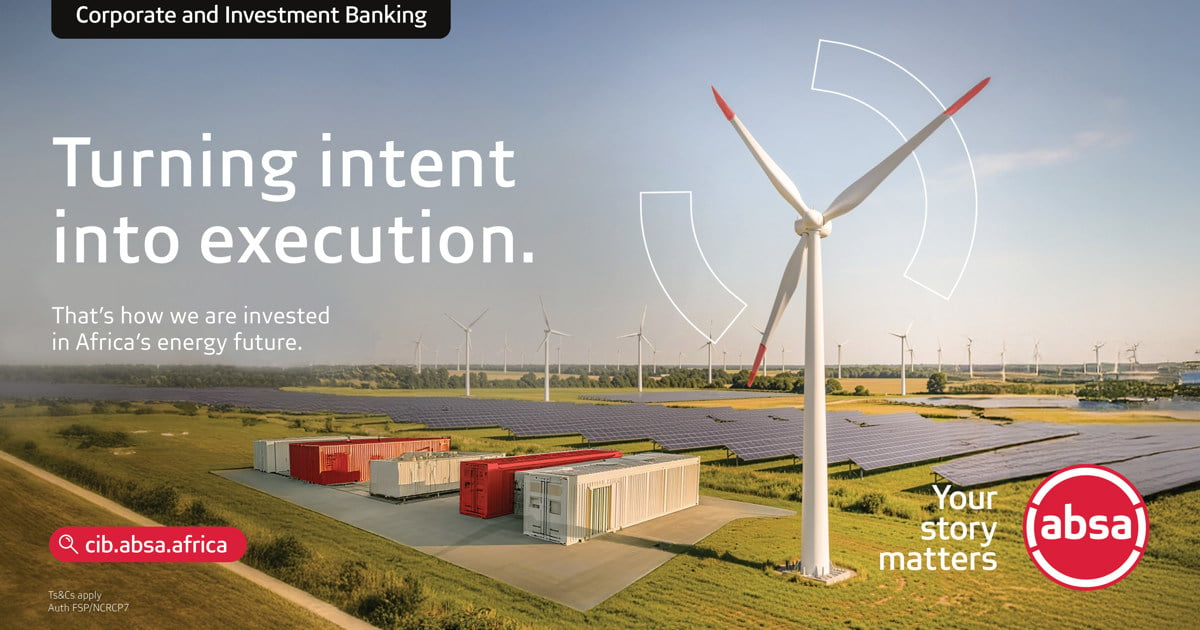
British power developer Gridworks recently signed two landmark agreements with the Government of Uganda to begin construction on the Amari Project, widely regarded as Africa’s first independent transmission project to reach this phase. It is a milestone that speaks to the growing momentum behind private-sector participation in grid infrastructure and electricity generation on the continent.
Over the last decade, the global push for climate transition, particularly following the Paris Agreement, together with far more accessible renewable-energy technologies, has helped reignite the market liberalisation agenda across African energy sectors. According to the Center on Global Energy Policy, nearly 87% of African countries now possess some form of regulatory framework governing public-private partnerships (PPPs), with around 80% of those claiming frameworks applicable to the energy sector, even if their depth and sophistication still vary considerably from one market to the next.
<a href="https://absafricatv9491.live-website.com/huawei-advances-ai-solutions-in-south-africa/" title="Huawei advances AI solutions in South Africa“>South Africa is a notable case, having over the last fifteen years undergone some of the most significant structural changes seen anywhere on the continent.
Last year, the government announced that it would pursue private investment for the construction of transmission lines through an Independent Transmission Programme (ITP), having acknowledged that the country needs to modernise and expand its transmission network by roughly 14,000km at a cost of around R440 billion – capital the state is not in a position to provide alone. The announcement came months after the long-awaited and heavily scrutinised Electricity Regulation Amendment Act came into effect, advancing the restructuring of
Eskom into separate generation, transmission, and distribution entities while introducing the foundations for a more competitive electricity market.
South Africa has also spent more than a decade developing what has widely been regarded as one of the most successful renewable-energy procurement programmes implemented in an emerging market through REIPPPP, which since 2011 has attracted roughly R272 billion in investment and supported the rollout of 95 projects producing more than 7 300 MW of electricity.
Zambia, too, is moving more aggressively towards diversifying its generation mix and strengthening energy security after one of the harshest droughts in recent memory exposed the vulnerability of a system heavily anchored on hydropower. The Electricity (Open Access) Regulations of 2024 now provide for non-discriminatory access to the national transmission and distribution network, allowing IPPs to sell electricity directly to large power users and regional markets.
Alongside this, the government has adopted a Competitive Procurement Framework for Private Sector Investment in Renewable Energy together with a liquidity mechanism intended to improve project bankability, while standardising procurement documentation in ways designed to reduce barriers to entry and shorten the time it takes for projects to reach implementation.
This is a market reform story that has captured the attention of investors searching for long-term opportunities across emerging markets, and there is little to suggest that momentum will slow.
The question now is where that investment will be directed.
Beyond renewable-energy generation itself, one of the first and most obvious areas is grid modernisation and expansion, whether through extending national transmission infrastructure into high-demand centres or through decentralised systems better suited to isolated rural areas where standalone power systems and mini grids are often more practical. Another area drawing growing attention is the energy aggregation market.
Africa installed a record 4.5 GW of solar capacity in 2025, according to the Global Solar Council, with roughly 44% of new additions coming from distributed, rooftop, commercial, and captive systems rather than purely utility-scale projects.
Outside South Africa, however, the market is still at a very early stage, largely because sophisticated electricity markets depend on institutional infrastructure that many are still developing, including transmission access, wheeling frameworks, settlement systems, interval metering, balancing mechanisms, and standardised market rules.
The real opportunity, though, does not stop at how power is generated or moved.
Across the continent, much of the underlying value sits in the commodities feeding into this system, particularly those linked to battery technologies and the wider renewable-energy industrial base. In many respects, that ecosystem is already beginning to take shape through the resources being developed, the infrastructure now being financed, and the way parts of the market are slowly starting to connect. For investors, the challenge is about recognising those linkages early enough to understand where value may ultimately accumulate across the chain.
The optimism around Africa’s energy sector over the coming decades is not entirely misplaced. Many markets are moving in the right direction, even if some are progressing faster than others.
There are still persistent challenges to overcome, particularly around the stubborn risk premium attached to African investment. But as regulatory reform continues lowering barriers to entry and making electricity markets more accessible to private capital, the broader direction of travel is becoming harder to ignore.
Get the whole picture 💡
Take a look at the topic timeline for all related articles.
Trending News
- 23 minutes ago
- 5 hours ago
- 14 hours ago
- 15 hours ago
- 16 hours ago
- 16 hours ago
- 19 hours ago
- 19 hours ago
- Yesterday
- Yesterday
- Yesterday
- Yesterday
More in The Money Show
Hidden costs that can turn rental property into a money pit
Crunch time: ITAC backs higher tariffs on imported peanut butter
Film industry calls for removal of DTIC incentive scheme leadership