


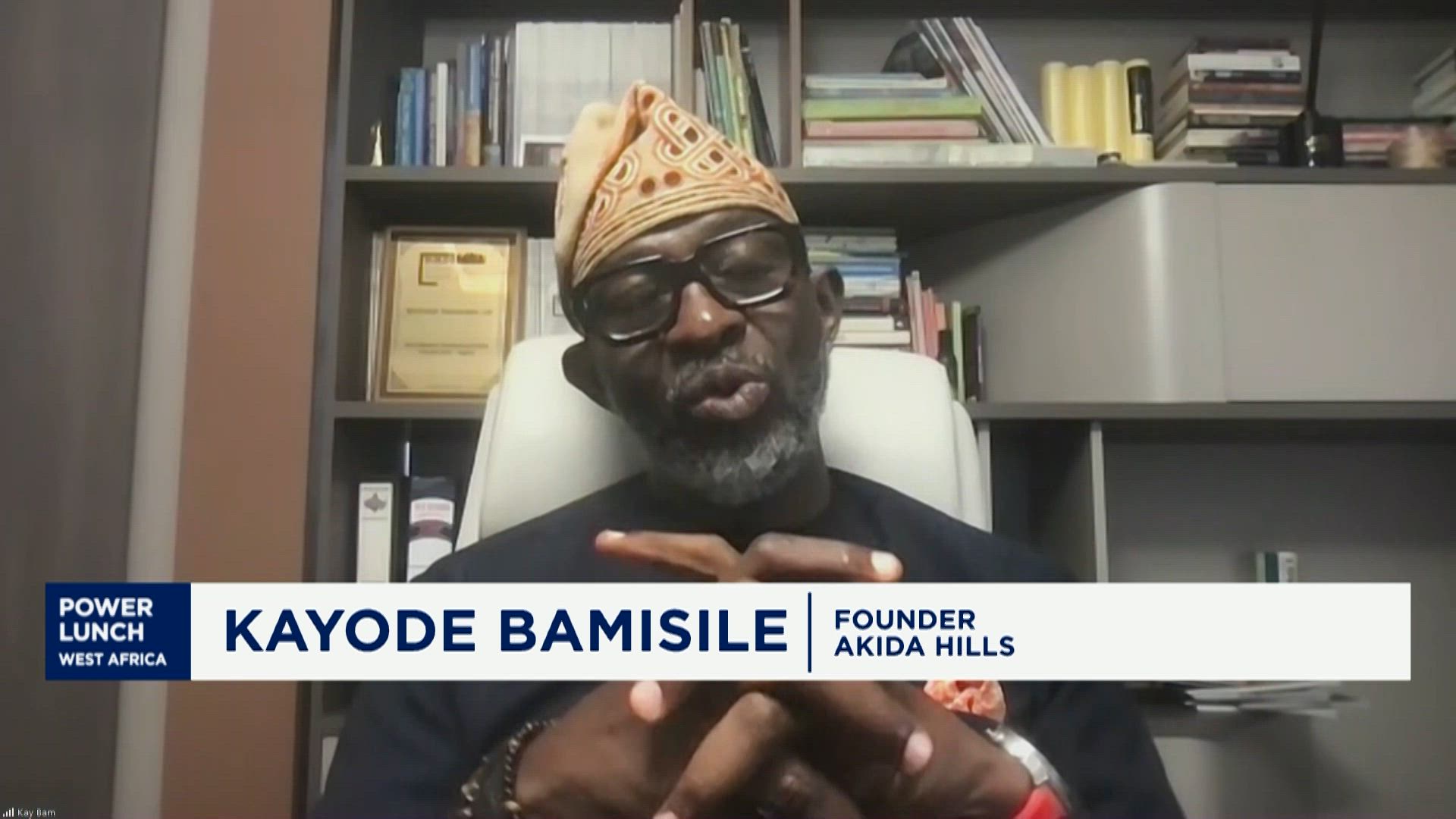
Real estate and mixed-use developer, Akida Hills, plans to invest 40 million dollars in transforming Jabi Lake Waterfront into landmark leisure and tourism in Nigeria’s Federal Capital. Kayode Bamisile, Founder, Akida Hills says the vision is to establish Jabi as a defining waterfront destination for the continent. He joins CNBC Africa to discuss plans and timelines for the project.
Tue, 28 Jul 2026 12:31:27 GMT
Disclaimer: The following content is generated automatically by a GPT AI and may not be accurate. To verify the details, please watch the video
AI Generated Summary
Key Points:
- Akida Hills plans a $40 million redevelopment of Abuja’s Jabi Lake waterfront into a leisure and tourism hub.
- The first phase is scheduled for launch on Dec. 4 and will feature a 90-meter by 18-meter fountain show that the developer says will be the largest in West Africa.
- Founder Kayode Basile said the project is being financed as a phased long-term investment with interest from DFIs, banks, corporate organizations and individuals.
- The developer expects the project to create more than 250 jobs and later phases are set to add a museum, amphitheater, sports facilities and water-based attractions.
- Akida Hills said sustainability measures will include gas-powered generation, water recycling and continued public access, including free entry for visitors aged 65 and above.
Topics
Akida HillsAbujaJabi LakeNigeria tourismwaterfront developmentreal estatemixed-use developmentKayode Basileleisure investmentinfrastructure
- Akida Hills plans to invest $40 million to redevelop Abuja’s Jabi Lake waterfront into a leisure, culture and tourism destination.
- The project’s first phase, centered on a 90-meter by 18-meter fountain show that the developer says will be the largest in West Africa, is targeted for launch on Dec. 4.
- Founder Kayode Basile said the wider development is being financed as a phased long-term investment, with interest from development finance institutions, banks, individuals and corporate organizations.
- The company expects the project to support more than 250 jobs, while later phases are set to add a museum, sports facilities, food outlets and other attractions.
Real estate and mixed-use developer Akida Hills plans to invest $40 million in turning Abuja’s Jabi Lake waterfront into a landmark leisure and tourism destination, with the first phase scheduled to open in December as Nigeria pushes to deepen its domestic visitor economy.
Kayode Basile, founder of Akida Hills, told CNBC Africa the company wants to reposition one of Abuja’s best-known public assets into what he described as a defining waterfront destination for the continent. The project is being developed in phases rather than through a single build-out, with the initial rollout focused on a large fountain installation and public park access.
The first phase is due for launch on Dec. 4 He said that stage will feature a 90-meter by 18-meter water fountain show, which he described as the largest in West Africa
“Jabi Lake is one of Abuja’s most recognizable assets, and our aim as a company is to transform the surrounding waterfront and the landmass into a recreational, cultural, and entertainment tourist destination,” Basile said in the interview.
He said visitors should begin to access and use the park after the December launch, while the broader site will continue to expand over time. Basile framed the investment as a long-term development program, saying the company is deliberately staggering capital deployment across phases.
That approach is also shaping the financing strategy. Basile said Akida Hills is in discussions with a range of potential funding partners, including development finance institutions, banks, individuals and corporate organizations.
“We’re investing, and the investment pattern is one that is not a clean sweep again. It’s a long-term investment,” he said. “We’re looking to DFIs, we’ve got individuals also and even corporate organizations approach us. Banks have approached us as well to invest in this development.”
The company is betting that Jabi Lake’s existing commercial and recreational activity gives the project a built-in economic base. Basile said the area already has an ecosystem around it, and that Akida Hills intends to preserve and build on that as it repurposes the park.
A key challenge for new tourism projects in Nigeria is turning opening-day curiosity into repeat traffic. Basile said Akida Hills is trying to address that by designing the park around multiple attractions rather than a single headline feature.
In addition to the fountain, he said the site plan includes sporting activities, food offerings, a museum and an amphitheater for cultural performances, plays and dance events. The goal, he said, is to create a destination with enough programming and variety to encourage return visits rather than one-off attendance.
“The park itself has a life of its own and it would not just be a one-time visit but a repeat destination,” Basile said.
Akida Hills also expects the project to generate jobs. Basile said more than 250 Nigerians would be employed across different activities within the park, although he did not give a timeline for when that full employment figure would be reached.
The employment pitch comes as developers and policymakers increasingly present tourism-linked infrastructure as a route to broaden urban services activity and create work beyond the oil sector. Abuja, like Lagos and other major Nigerian cities, has been trying to expand its appeal for events, hospitality and lifestyle spending, especially during peak travel periods such as the year-end “Detty December” season.
Waterfront projects often draw scrutiny over environmental impact and public access, especially where commercial development overlaps with open civic space. Basile said sustainability has been built into the Jabi Lake plan, citing power, water reuse and irrigation systems.
He said the park will use gas-powered generation rather than relying entirely on the main grid. He also said water within the park will be recycled and reused for irrigation.
“Everything we do within this park is sustainable, self-sustainable,” Basile said, adding that the company sees no negative environmental impact from the development.
On public access, Basile said the developer is still refining affordability and entry models but intends to keep the space accessible to Abuja residents and visitors. He said people aged 65 and above would have free access to the park.
“That has been carefully taken care of and we’re still carefully looking at it as well, where people will definitely still have access,” he said.
The next phase of development is expected to begin actively next year, Basile said. That stage is set to include a museum focused on art, culture and fashion, along with a community hub, library, restaurants and food outlets.
He said later additions are also planned to include water sports such as jet skiing and boat rides, as well as basketball courts, paddle courts, football facilities, horse riding, skating, bowling alleys, golf simulators and multi-level parking.
The longer-term ambition stretches beyond Abuja. Basile said Akida Hills is already looking at how the model could be replicated in other Nigerian states with waterfront potential, and eventually elsewhere in West Africa and across the continent.
In a five-year view, he said success would mean the Jabi Lake project — referred to as Rivera — reaching its full potential, while the company expands into at least four Nigerian states and establishes a footprint elsewhere in Africa.
For now, the near-term milestone for investors and prospective visitors is the Dec. 4 phase-one launch, which will test whether Abuja’s $40 million waterfront bet can translate into sustained tourism, community use and private-sector interest.
ChooseCNBC Africaas your preferred in business news
Join readers across the continent. It’s free, and you can unsubscribe at any time.


