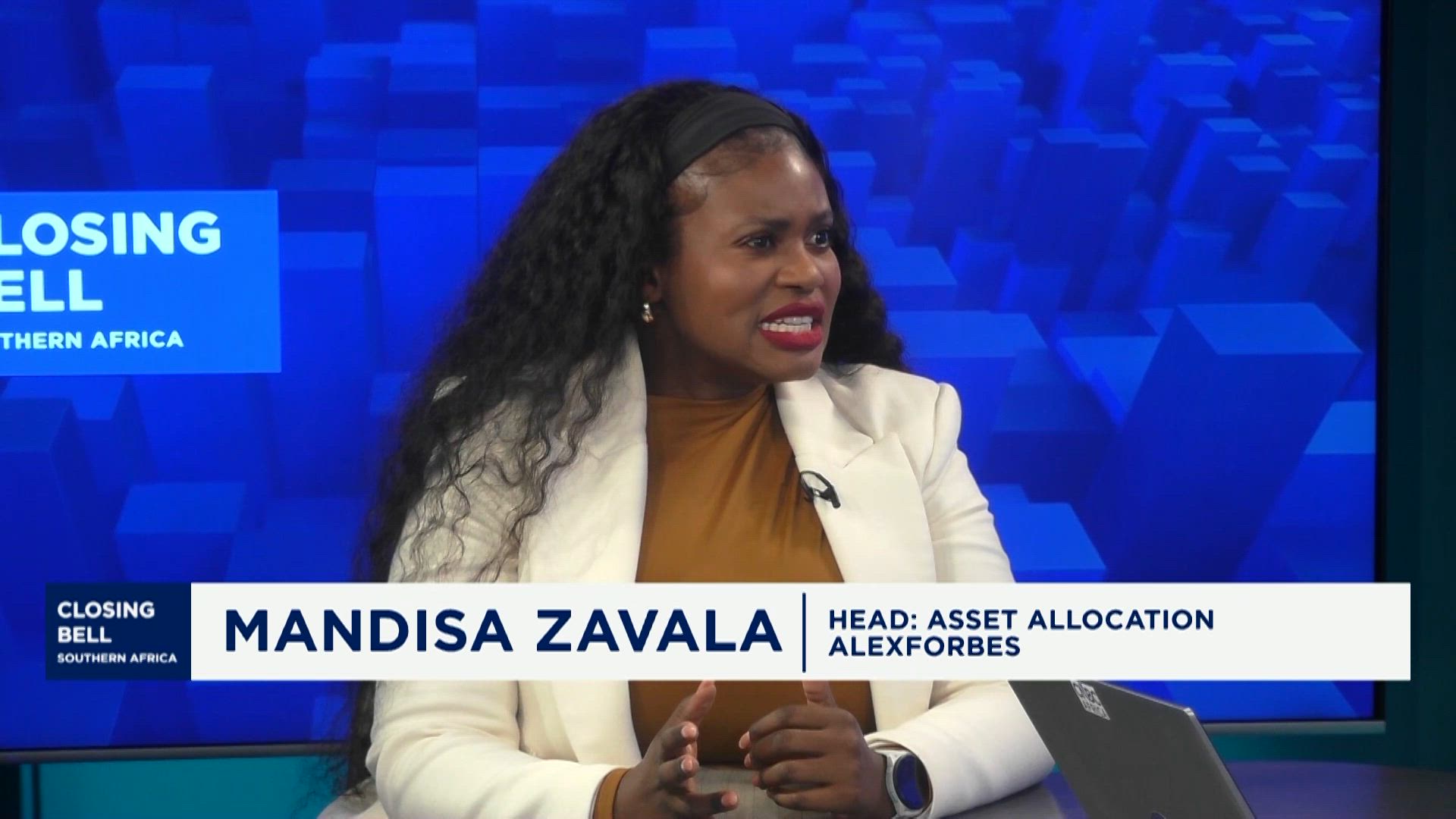
Uncertainty continues to rule, in the markets. From global equities influenced by the Middle East war and mega AI stock valuations; to South African markets operating around a low growth environment, with increased confidence; but a constrained consumer. Joining CNBC Africa with insight, on how Alexforbes is navigating this environment; is Mandisa Zavala, Head of Asset Allocation at Alexforbes.
Tue, 28 Jul 2026 16:49:35 GMT
Disclaimer: The following content is generated automatically by a GPT AI and may not be accurate. To verify the details, please watch the video
AI Generated Summary
Key Points:
- Alexforbes has become more cautious on South African equities in the second half of the year after a more bullish stance in the previous year.
- The firm sees stronger opportunities in financials, especially banks and insurers, as support from gold and broader resource stocks fades.
- The rand remains relatively resilient, supported by stable trade dynamics and confidence in the South African Reserve Bank’s inflation credibility.
- Alexforbes is neutral to cautious on listed property and expects returns of around 10% to 11% rather than outsized gains.
- Globally, the firm is wary of concentration in AI-linked stocks and prefers diversified exposure through utilities, commodities, healthcare and other indirect beneficiaries.
Topics
AlexforbesMandisa ZaalaSouth Africa marketsasset allocationbondsrandSouth African Reserve BankJSEglobal equitiesAI stocksbankslisted property
- Alexforbes says it has become more cautious on South African equities in the second half of the year, even as confidence in the domestic backdrop has improved.
- The investment firm sees better relative value in financials, especially banks and insurers, while expecting less support from resource stocks than in the previous year.
- Alexforbes remains selective on global equities, warning that elevated expectations around AI-linked stocks could leave portfolios exposed to sharp corrections.
- On listed property, the firm is neutral to cautious and expects returns of around 10% to 11%, rather than outsized gains.
Alexforbes has turned more cautious on South African equities for the second half of the year, as geopolitical risks, fading support from reet-allocation decisions, Mandisa Zaala, head of asset allocation at Alexforbes, said
Speaking in a CNBC Africa interview, Zaala said the market environment has become harder to navigate because investors are now dealing with variables that were historically not seen as primary market drivers. She pointed to geopolitical risk as a factor that has become prominent enough to influence sentiment and asset prices more directly.
“We are in an environment where there are variables that historically were not considered market-defining variables,” Zaala said. “A lot more volatility, a lot more unknowns.”
She said one of the biggest new uncertainties is the broader direction of U.S. policy, alongside the growing realization among investors that military conflict can rapidly alter market sentiment. That has made conviction calls more difficult and increased the need for portfolio diversification across geographies and sectors.
On the rand, Zaala said the currency has remained relatively resilient despite periods of volatility, helped in part by South Africa’s terms of trade. While gold had provided meaningful support, she said that tailwind is no longer as strong as it was previously.
Still, she said broader trade data remains relatively stable even when gold is excluded, suggesting the currency’s backdrop has not deteriorated sharply. She also noted that the U.S. dollar is not currently in a phase of indiscriminate strength, offering some relief for emerging-market currencies including the rand.
Zaala said the South African Reserve Bank’s most recent decision caused a brief wobble in the currency because it caught many market participants off guard. But she said the rand later regained some ground as investors continued to assign credibility to the central bank’s inflation-fighting stance.
“What the most important factor going forward is what will inflation dynamics be,” Zaala said, referring to the inflation differential between South Africa and the U.S. She said there is still “quite a lot of credibility” attached to the South African Reserve Bank’s ability to keep inflation contained.
That view is feeding directly into Alexforbes’ domestic asset allocation. Zaala said that, compared with last year, when the investment case for local markets appeared more straightforward, the firm is now taking a more selective approach in the second half.
Last year’s more constructive call was supported in part by rea said Alexforbes does not expect gold to repeat that performance, meaning investors need to reassess where returns in South African equities are likely to come from
As a result, the firm sees more opportunity in financials. Zaala said banks tend to look attractive when markets begin to anticipate a softer rate environment, while insurers also stand to benefit in the current setup.
“We’re a little bit more cautious now going into the second half of the year,” she said. “We see that more under financials, in particular your banks. Perhaps maybe you’re getting it also from insurers.”
Zaala also addressed the outlook for consumer-linked sectors, saying the picture is more balanced than outright negative. She said South Africa is not starting from an environment in which inflation is already exceptionally high and still accelerating, which offers some support.
Even so, she acknowledged that the consumer remains constrained and that hoped-for interest-rate relief would have helped materially. Retailers, in particular, may have benefited more if cuts had arrived sooner.
Zaala said inflation at around 4% to 5% would not necessarily place the consumer under extreme strain, though she added that the view should be held with caution. The risk for investors, she suggested, is that sticky inflation could still delay the recovery in rate-sensitive parts of the market.
On listed property, Zaala said Alexforbes is neutral to cautious after a strong rebound in the sector. South African property stocks have outperformed the broader all-share index, but she said much of that move appeared to reflect a relief rally after an earlier sharp sell-off.
Property is a hybrid asset class, she said, and must be assessed through both its income stream and the prospect of valuation reratings. In an environment where rates are stable or falling, that can support stronger performance. Without that backdrop, however, investors need to identify clearer catalysts for value creation.
That challenge is particularly relevant in South Africa because much of the listed property sector is tied to retail footprints, linking its fortunes to consumer demand. Zaala said Alexforbes does not expect “massive double-digit returns” from the asset class at this stage.
“You’re probably going to be lucky if you get about 10% to 11% within property,” she said.
Globally, Zaala said Alexforbes remains constructive on equities, but is increasingly wary of concentration risk in the U.S. market, where AI-linked stocks have driven a large share of returns. She said the firm does not believe the market is firmly in bubble territory, but it does see signs of optimism that may be difficult to justify in some names.
Rather than chasing the most crowded AI trades, Alexforbes is looking for second-order beneficiaries of the theme. Zaala highlighted utilities, energy-related businesses, select commodities and healthcare as areas that could benefit indirectly from the build-out of AI infrastructure and changing demand patterns.
She also pointed to U.S. small caps as an area of interest, saying the segment has outperformed the broader index as investors identify sectors that support AI expansion rather than only the technology companies at the center of the narrative.
The broader concern, she said, is that portfolios can become overly concentrated in one theme. In that environment, even a modest earnings miss relative to elevated analyst expectations can trigger an outsized fall in share prices.
“Analysts’ expectations are so high when it comes to some of these AI companies that we tend to be a bit more cautious,” Zaala said.
For the second half of the year, that leaves Alexforbes with a more selective playbook: cautious on South African equities relative to last year, more constructive on local financials than on reuities beyond the most obvious AI winners
With the Federal Reserve’s next policy decision and South Africa’s inflation trajectory still in focus, Zaala said market direction will likely remain sensitive to both macro signals and geopolitical developments in the months ahead.
ChooseCNBC Africaas your preferred in business news
Join readers across the continent. It’s free, and you can unsubscribe at any time.












/health-and-multilateral-partnerships-(hmp)/participants-in-domestic-leadership-in-health-financing.tmb-768v.jpeg?sfvrsn=112a9c15_1 "Civil Society Urges Boost in Domestic Health Funding")