Wednesday, 29/7/2026, 13:04 (GMT+7)
DTO/NDO- In the current context, cultural identity, the quality of the living environment, tourism appeal and creative capacity are increasingly becoming the decisive factors underpinning a city’s competitiveness. In other words, what was once regarded as the “heritage of the past” is gradually becoming the “re
For many years, when discussing economic development, people have tended to think of industry, infrastructure, urbanisation, investment or technology. Although culture and heritage have always been recognised as the spiritual foundation of society, in practice they have often been viewed as areas requiring preservation rather than as re
Against this backdrop, the issuance of Resolution No. 80-NQ/TW by the Politburo on January 7, 2026, on the development of Vietnamese culture, and the adoption by the National Assembly of Resolution No. 28/2026/QH16 on the development of Vietnamese culture, which came into effect on July 1, 2026, are of particular significance. The core message of these two resolutions is the clear establishment of the principle that culture is not only a development goal but also a driving force for development; not only a spiritual asset but also an economic resource; and not only something to be preserved but also something to be harnessed and promoted to create new value for society.
For Viet Nam’s heritage cities, this represents a major opportunity. Resolution No. 28 of the National Assembly introduces a number of breakthrough mechanisms, including ensuring investment reital transformation, encouraging innovation, and piloting the heritage city model with appropriate preferential policies
This demonstrates that culture is no longer being managed under the mindset of merely “preserving the status quo”, but is instead being placed within a new development ecosystem in which culture is closely linked with tourism, technology, education, media, the night-time economy, the creative industries and the digital economy.
This is precisely the path that many developed countries have chosen. World-renowned cities such as Kyoto in Japan, Gyeongju in the Republic of Korea, Florence in Italy and Quebec in Canada have all transformed their heritage into the foundation for developing tourism, the creative industries, education, the arts and urban branding. Many cities in Viet Nam are fully capable of following the same path.
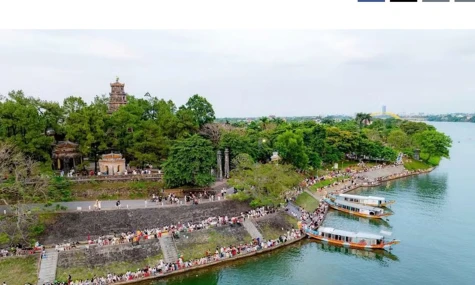
Hue, in particular, as a centrally governed city, possesses an exceptionally rich system of tangible and intangible cultural heritage, including eight UNESCO-recognised heritage titles, thousands of historical relics and scenic sites, hundreds of festivals, traditional craft villages and traditional dishes, together with a vast repository of historical archives. More importantly, these values are not only being preserved but can also become key inputs for the cultural industries.
The production of Hue ao dai can be developed into a creative economic ecosystem. Hue cuisine can become an internationally recognised cultural brand. Nha nhac (Vietnamese court music), royal court tuong, ca Hue and other traditional performing arts can provide inspiration for a wide range of contemporary artistic works. Historical monuments can be transformed into spaces for creativity, education and cultural experiences. Historical archives can be digitised to develop digital content, digital museums, smart tourism and products applying new technologies.
However, opportunities will not automatically translate into achievements. What heritage cities need most at present is a fundamental shift in development thinking. There is a need to move decisively from the mindset of “static preservation” to “preservation for development”; from viewing heritage as a burden on the state budget to recognising it as an investment ree of a creative cultural ecosystem
This should be accompanied by the establishment of special mechanisms for heritage cities, the promotion of public-private partnerships in preserving and promoting heritage values, the development of creative human reof creative spaces, and the attraction of businesses to invest in the cultural sector
In the twenty-first century, the most sustainable competitive advantage of any city lies in values that cannot be replicated: its cultural identity, historical memory and depth of heritage. Resolution No. 80-NQ/TW of the Politburo and Resolution No. 28 of the National Assembly have established an important political and legal framework enabling localities to unlock these values. The remaining question is whether each heritage city possesses the vision, determination and capacity to turn these opportunities into reality.
If this is done successfully, heritage cities will become new growth poles for the country. And Hue, with its exceptional advantages, is well placed to become a national model for heritage urban development in the new era.