

Beyond Strait of Hormuz & Red Sea: This Asian waterway is the world’s most critical trade chokepoint – BusinessToday
Search
Advertisement
Business News
world news
Beyond Strait of Hormuz & Red Sea: This Asian waterway is the world’s most critical trade chokepoint
Beyond Strait of Hormuz & Red Sea: This Asian waterway is the world’s most critical trade chokepoint
Developing Asian economies now handle well over half of the world’s container traffic, while China has become both one of the world’s largest exporters and importers of maritime freight.
For months, global attention has been fixed on the Strait of Hormuz and the Red Sea, where conflicts have repeatedly threatened to disrupt oil supplies and commercial shipping. But when it comes to the arteries that keep Asia — and much of the global economy — running, neither is the region’s most critical maritime chokepoint.
That distinction belongs to the Taiwan Strait.
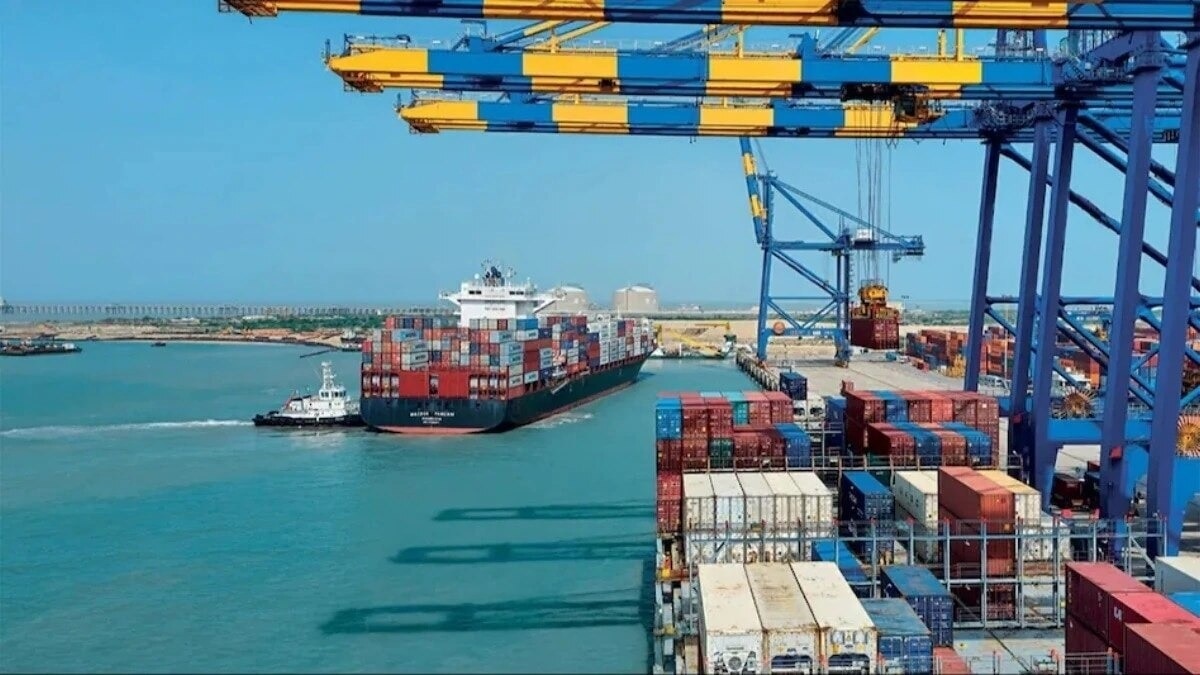
Every day, a vast stream of container ships carrying everything from smartphones and automobiles to industrial machinery and semiconductor components passes through the narrow waterway separating Taiwan from mainland China.
More than one-fifth of the world’s maritime trade transits this corridor, making it one of the most consequential pieces of geography in modern commerce. Unlike Hormuz, which is primarily an energy chokepoint, the Taiwan Strait sits at the heart of the manufacturing and technology supply chains that power the global economy.
Research by independent journalist Yannic Rack argues that while flashpoints such as the Strait of Hormuz and the Red Sea dominate headlines, the world’s economic lifelines are concentrated in a handful of maritime chokepoints whose disruption could send shockwaves across industries and continents.
The Taiwan Strait tops that list, thanks to its central role in global shipping and its proximity to Taiwan, which produces more than 90% of the world’s most advanced semiconductor chips.
The lesson is becoming increasingly clear: in an era of geopolitical tensions and fragile supply chains, geography — not technology — continues to dictate the resilience of global trade.
The shipping revolution that reshaped the world
The dominance of maritime trade wasn’t inevitable. For much of history, cargo was loaded and unloaded manually, making international shipping slow, labour-intensive and expensive.
That changed with the arrival of standardised shipping containers in the mid-20th century. The innovation dramatically reduced transportation costs, allowed cargo to move seamlessly between ships, trucks and railways, and made global supply chains economically
Today, more than 80% of global merchandise trade by volume travels by sea. International shipping expanded from roughly 2.6 billion tonnes in 1970 to more than 11 billion tonnes before the pandemic era, turning oceans into the backbone of global commerce.
Why Asia sits at the centre of global trade
As manufacturing shifted toward lower-cost economies, Asia emerged as the epicentre of container shipping.
Developing Asian economies now handle well over half of the world’s container traffic, while China has become both one of the world’s largest exporters and importers of maritime freight. The concentration of manufacturing has also increased dependence on a handful of strategic sea routes that connect Asian factories with global markets.
That growing concentration has made certain waterways indispensable to the world economy.
The chokepoints that matter most
According to Yannic’s research, among the most strategically important is the Taiwan Strait, through which more than one-fifth of global maritime trade passes. The waterway is especially critical because Taiwan produces over 90% of the world’s most advanced semiconductor chips, making it essential not only for consumer electronics but also for artificial intelligence, defence systems and data centres.
Other major bottlenecks include:
- Strait of Hormuz, the gateway for roughly one-quarter of global seaborne oil trade, along with significant volumes of fertilizers, aluminium, sulphur and helium.
- Strait of Malacca, connecting the Indian and Pacific Oceans and serving as one of the busiest shipping lanes on Earth.
- Korea Straitand Bohai Strait, both vital for trade involving China, Japan and South Korea.
- Suez Canal, the shortest maritime link between Europe and Asia.
European chokepoints such as the Dover Strait, Strait of Gibraltarand the Bosporus, which funnel enormous volumes of freight every year.
Because alternatives are often limited or significantly longer, disruptions can ripple across industries far beyond shipping.
The vulnerability became impossible to ignore in March 2021, when the Ever Given container vessel became wedged across the Suez Canal.
The blockage lasted just six days, yet it stalled an estimated $9.6 billion worth of goods every day and disrupted supply chains across the globe. The incident demonstrated that a single operational accident — not even a military conflict — could temporarily choke international trade.
More recently, tensions around the Strait of Hormuz and attacks on commercial shipping in the Red Sea have reinforced similar concerns, with businesses and governments increasingly treating maritime chokepoints as strategic risks rather than merely logistical ones.
For decades, companies optimised supply chains around efficiency, minimizing inventories and relying on predictable shipping schedules. But that efficiency has come with a trade-off: greater dependence on a small number of routes that have few practical substitutes.
Countries have already begun responding. China’s Belt and Road Initiative, for instance, was partly motivated by reducing its dependence on the Strait of Malacca, a vulnerability Chinese leaders have long described as the “Malacca dilemma.”
ABOUT THE AUTHOR
Business Today brings you the latest news, views and analysis from the world of finance, economy, markets, corporates, startups, tech, and the digital economy. You can find everything from breaking news to deep dives to immersive essays and more on a variety of subjects across all formats – online, magazine, television, data visualisation, et al.
Published on:Jul 28, 2026 5:45 AM IST
