

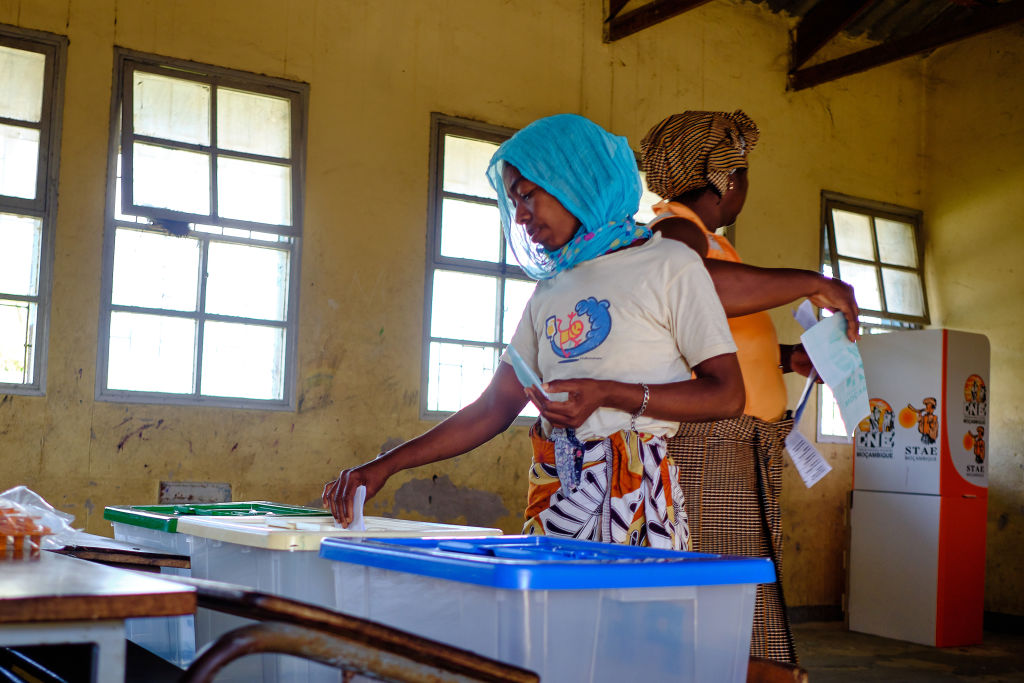
The continent’s political campaigning landscape seems to be more technologically advanced, so why aren’t citizens returning to the ballot box?
African political campaigns have never been more sophisticated. Across the continent, a growing number of political parties now employ data analysts, behavioral researchers, digital strategists and campaign professionals, in ways that were rare even a decade ago.
Yet, despite this growing professionalism, millions of eligible Africans are choosing not to cast a ballot.
In South Africa, voter turnout fell to less than 60% in the 2024 general election. In Ghana, it dropped from, reportedly, nearly 80% in 2020 to about 61% in 2024. And, in Nigeria, only about one in four registered voters cast a ballot in the 2023 presidential election, according to results published by the country’s electoral commission.
This contradiction raises an uncomfortable question. If political campaigns are becoming ‘smarter’, why are so many citizens switching off?
“Winning elections is no longer about who shouts the loudest; it is about who understands the voter best,” says Glen Mpani, Head of the International Centre for Political Campaigns (ICPC), an African-based political campaign advisory, research and training organization.
Loading…
“For decades, political campaigns in Africa were driven largely by political instinct, personalities and spectacle. Success was measured by the size of rallies, media attention and political rhetoric. That model is becoming less effective because voters are more informed, more fragmented and, increasingly, choosing not to participate at all.”
Understanding voters begins with recognizing they are not all disengaging for the same reasons.
Young voters, in particular, are at the heart of that challenge. According to a 2024 report by Afrobarometer–an independent pan-African survey research network–the youth are less likely than older citizens to vote, despite being committed to democracy.
Dr Delta Milayo Ndou, Research and Programmes Lead at the Political Campaigns Re
explains that “young Africans are not a monolithic group with a single reason for not voting and the mistake most political campaigns make is treating them as if they are.”
Ndou argues that different barriers to voting require different solutions. A young person who cannot afford transport to a polling station would need practical support. Someone who has lost faith in politics would need a reason to believe their vote can still make a difference. Treating each group the same, she argues, is where many campaigns go wrong.
Understanding voters is only the first step. Reaching them is the next.
“Technology can help us find the missing voter, but cannot on its own solve the ‘missing voter’ problem,” cautions visual political communication specialist, Munyaradzi Tsunga of UNDA Africa, a political communications agency based in Johannesburg.
“For too long,” he argues, “political parties have been counting crowds instead of verified registered voters.”
Social media has brought political leaders closer to voters, but it has also fueled misinformation, disinformation and polarization.
“The challenge isn’t simply whether social media is helping or hurting political campaigns,” says Dimpho Lekgue, Lead Anchor of the Campaign Pulse podcast. “It’s understanding under what conditions it builds trust and under what conditions it erodes it.”
“You can’t design authentic campaigns for young people without young people being in the room helping to shape them.”
Campaign communications specialist, Cynthia Manjoro
is clear that better campaigning alone cannot solve Africa’s participation crisis.
“The missing voter is proof that the model is broken. Elections pass, governments form, but the chasm between citizen and leader remains. We can’t fix this with smarter PR or better data; we need a radical reimagining of governance,” she says.
“Campaigns should therefore not be viewed as events that end on election day. They are the first stage of governance.”
Related Topics:#Africa, #Featured, #News Letter, #newsletter, #Nigeria, #South Africa.
