

- Skip to main content
- Skip to navigation
How could BuzzBallz, a rising star in pre-mixed cocktails, redesign its packaging for improved recyclability – and how should local recycling infrastructure evolve to improve its recycling rates? Tim Sykes makes his case.
This content was originally sent to Packaging Europe members in The Bulletin – a weekly newsletter that includes articles like this, as well as lots more original content. To receive a brand-new edition of The Bulletin every week, plus an exclusive range of reports, briefings and events, click here to become a member.
Here at Packaging Europe headquarters, we’ve been sweating our way through multiple heatwaves. Temperatures have soared as high as 32°C in some cases, and as our colleagues spend their free time soaking up the sun (and gasping for fresh air), they’ve noticed an influx of empty cans and bottles strewn across the ground.
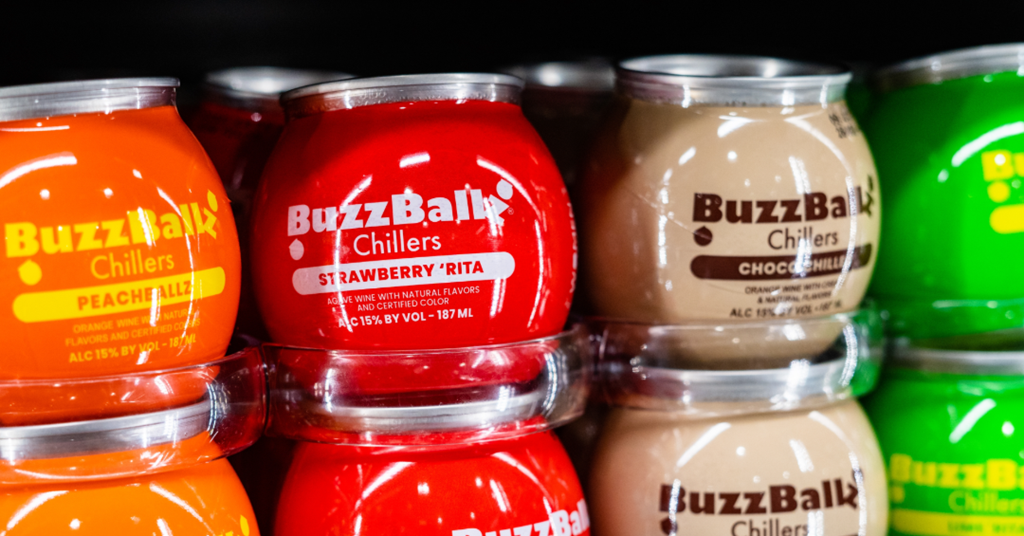
Anecdotally speaking, our digital content manager has identified a surge in the distinctly colourful and spherical containers for BuzzBallz pre-mixed cocktails. We often find them littering our public spaces, from the high street to local parks.
I won’t get on my soapbox and preach that the median consumer is woefully ignorant and we, the enlightened few, know so much better. Finding an empty BuzzBall at a considerable distance from the nearest bin is one thing, but I don’t think consumer laziness is the end of the story.
Without ever having bought one myself, I’ve always wondered how, or if, one can separate the plastic body from the metal clasp. Would the same question even occur to a consumer with only a passing knowledge of designing for recyclability?
Now an investigation has revealed that the PET and aluminium components cannot be taken apart before their disposal, and that BuzzBallz’s claim to recyclability design may solve that problem; both materials are widely recycled in their own right, and revisiting its spherical shape to avoid them rolling on the conveyor belts at sorting facilities could make a difference
Yet as the climate heats up and those of us without air conditioning flock outdoors for relief, public waste receptacles fill up quickly. Sometimes there aren’t simply enough to accommodate all the extra rubbish. Even in a hypothetical future where these cocktails-in-a-can are 100% recyclable, can we trust every single consumer to carry their waste to the next available point of disposal – especially if that means walking long distances in challenging weather?
I wonder whether our local authorities could better prepare for the circumstances by installing more bins, introducing separate bins for different waste streams where this isn’t already happening, and by rewarding recycling behaviours. Even in the gruelling heat, deposit return schemes might incentivize consumers to make the extra effort – but none of that will help much if we don’t design our packaging for circularity in the first place.
I’m curious to see how legal developments like the Packaging and Packaging Waste Regulation impact BuzzBallz’s popularity on European markets. Given that the company is American, it could redesign its packaging for continued access to international customers. Maybe it will settle for the continued income from regions with less stringent laws.
I understand that all my suggested solutions are easier said than done, especially as global warming throws unexpected curveballs our way. There likely isn’t one foolproof way to eliminate litter, either. Nonetheless, we should take advantage of unprecedented times like these and find new approaches to the problems they raise.
If you liked this story, you might also enjoy:
The ultimate guide to packaging innovation in 2026
Packaging and Packaging Waste Regulation: what to know in 2026
Everything you need to know about global packaging sustainability regulation
Strategic learnings from the Sustainable Packaging Summit
