India is building the next layer of DPI around AI, multilingual services, trusted data and sector-specific ecosystems
CategoriesBiometrics News | ID for All | In Depth
India’s digital public infrastructure (DPI) ambitions are entering a new phase. While the country’s identity and payments architecture is now being piloted in 25 countries, up from 23 earlier this year, discussions at last month’s India DPI Summit showed New Delhi increasingly focused on building AI, multilingual interfaces, trusted data sharing and sector-specific digital infrastructure on top of those foundational rails.
India’s G20 Presidency focused on digital public infrastructure, reaching a consensus on a common definition, a voluntary deployment framework, and the creation of the Global Digital Public Infrastructure Repository (GDPIR).
Early pilot initiatives include France Connect, Singapore National Digital Identity (SingPass), Oman National Payments Systems and the Australian Government’s Digital ID System (AGDIS).
India’s MEA established a specialized division in 2020 called New, Emerging and Strategic Technologies, or NEST, which handles technology diplomacy, foreign policy and international regulations around new technologies.
India would facilitate the Global South in DPI development by technology transfer and knowledge sharing, as well as support the adoption of open- is coordinating with the Indian missions abroad through the MEA
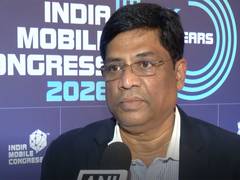
The India DPI Summit shows where the country is heading next. Rather than focusing solely on identity and payments, speakers described AI, multilingual interfaces, trusted data and sector-specific infrastructure as the next layer of India’s digital public infrastructure. MeitY secretary S. Krishnan said AI is already reshaping how DPI is delivered. He cited AgriStack and how the app, which is intended for farmers, is becoming voice-first, with vocal-led communication. The secretary explained that the official language, of government and parliament, is rarely the language that people normally speak.
AI is allowing Indians to communicate and benefit from DPI
AI has enabled real-time communication, helping inclusivity, and improving service delivery by understanding and communicating with the diverse peoples of India, a country with many languages, dialects and vernaculars. This capability of AI, the language component, “has changed the way DPI operates or can operate,” Krishnan said.
The other opportunity the secretary highlighted is in the huge volumes of data all-digital transactions throw up. But the benefits can be felt even by a small vendor, as a record of financial transactions can be shown to demonstrate they’re eligible for credit access.
“I think greater credit penetration in India’s economy would be one of the biggest changes that we could actually see,” Krishnan said, adding that although great strides have been made in financial inclusion, credit penetration is lagging.
“The way all this data can be analyzed using this overlay of DPI can really make a difference.”
Visualization is another AI benefit and Krisnan said MeitY is looking at an AI orchestration layer which would enable a connect between all the databases without necessarily sharing any of the data but using the reasoning ability of the models to figure how the data gets analyzed and how it works.
The significance of sovereign capabilities came up. The MeitY secretary brought up two reasons why he thinks it’s “very very significant.” Firstly, sovereign capacity is needed to be linguistically and culturally specific to the country’s needs, with sufficient language data and the ability to control it. Secondly, it’s about control and “kill switches.”
The technology secretary put his faith into the potential of homegrown Indian AI technology. “We have the talent to actually develop technology of our own which is as good as anything else in the world,” Krishnan said. “And I think that’s the challenge the Indian industry has to really meet.”
Bhashini is leading the multilingual charge, healthcare as DPI
India’s DPI has Aadhaar for identity, UPI for payments, ONDC is in the process of solving for commerce, and Bhashini is for inclusion, so said Amitabh Nag, CEO at Digital India Bhashini.
Part of the solution for solving India’s digital divide is about something more fundamental, and that’s the language divide and the literacy divide. Nag believes Bhashini is the voice-first environment that will bridge all of that.
In one use case, for a public grievance portal, a mic button that appears on screen is the entire user interface, which the user can click on to start talking to file their complaint. The system will detect the language the user is speaking, detecting named entities, categorizing and filing the complaint all automatically. “The entire journey is a voice journey,” Nag summarized.
Digital India Bhashini recently signed off on what will be its first international assignment, with Nepal, which will be the start-up’s launch pad for going global. At home it’s also engaged in proofs of concept with health organizations for last-mile challenges, and for the future it’s looking at developing multilingual conversations.
Speaking of healthcare, Kiran Gopal Vaska, joint secretary and mission director at Ayushman Bharat Digital Mission (ABDM), spoke on taking inspiration from UPI to build UHI, a unified health interface, and other aspects of DPI such as digital identity and data principles. Digital health rails, data consent and AI-ready infrastructure are part of the mission.
ABDM has built 18 apps, collectively called the Personal Health Record app, where health data can be stored. AI has been used to provide nudges to keep healthy. Previously, UIDAI tapped the UK’s “nudge unit” to boost Aadhaar biometric updates for children. ABDM is looking to use new technologies for auto adjudication, tools for speech to text and multilingual translations through Bhashini. The mission director said the whole thing is built under the DPI framework.
DPI moves into sector-specific ecosystems like healthcare and pensions
Sivasubramanian Ramann, chairperson at Pension Fund Regulatory and Development Authority (PFRDA), spoke on how India’s pension system is being rebuilt on digital rails to dramatically expand access.
A new Star NPS platform mirrors the BSE Star mutual fund system. This creates a seamless digital channel that connects pension agents, mutual‑fund distributors and the vast CSC network, whose 600,000 village‑level entrepreneurs already deliver Aadhaar and PAN services. These CSC operators are expected to become the country’s biggest NPS distributors, especially for the informal sector.
A second rail uses UPI, which reaches around 900 million people. UPI apps can prompt users to open an NPS account, and NPCI’s infrastructure allows onboarding in just a few clicks by using existing bank KYC and the fused mobile‑number–bank‑account identity layer. The BEAM platform will let users start an NPS account by paying ₹1,000 through their bank, without fresh documentation.
The current system has about 20 million NPS subscribers and 80 million under APY, but the ambition is to grow NPS to 250 million by leveraging DPI. Distribution remains the hardest challenge, yet digital rails and nationwide networks are expected to solve scale and reach. Pension funds are being encouraged to offer more scheme choices.
India should now institutionalize DPI
Ajay Rajan, MD and CEO at Protean eGov Technologies, ended the India DPI Summit arguing that India must now institutionalize its digital public infrastructure, changing from a collection of successful projects to a permanent, resilient architecture of the state. As he put it, “heroic efforts built the first chapter. Institutions will have to carry the next one.”
He highlighted “One Nation, One KYC” as the clearest expression of DPI’s purpose — citizens should prove their identity once and reuse that trust everywhere. The model captures the philosophy behind India’s digital rails.
Rajan stressed that India’s DPI success has come from state–private partnership, with the government setting rules and rails while private players innovate on top. He identifies trust as the true infrastructure, built over decades through reliable systems, consent‑centric design, and invisible operational work like uptime and reconciliation. Protean, he notes, has been a long‑time custodian of this trust through PAN issuance, NPS record‑keeping, e‑sign, e‑KYC and Aadhaar authentication.
He turned to digital sovereignty in the age of AI, arguing that sovereignty now means control over data, identity and intelligence. India’s choice to build public, interoperable digital infrastructure — Aadhaar, UPI, DigiLocker, Account Aggregator — has ensured that a billion Indians have digital identities and payment instruments as citizens, not corporate customers.
AI, he says, will be DPI’s “greatest amplifier,” enabling unprecedented personalization and inclusion in public services. But safeguards must be built into the architecture: consent by design, audit by design, privacy by design. The DPDP Act provides the legal foundation, and industry must now supply the technical muscle. Protean is focusing on population‑scale consent management, AI‑ready identity infrastructure and security designed for intelligent attackers.
Finally, Rajan frames India’s DPI vision for 2047, describing the next chapter as building sovereign intelligence on top of the digital rails, with AI trained on Indian data, governed by Indian laws, speaking Indian languages. India intends to share its DPI globally as a model of digital democracy, and Protean aims to be a vehicle for that mission.
Article Topics
biometrics | digital government | digital inclusion | digital public infrastructure | digital sovereignty | government services | India | Protean