July 27, 2026 by Raymond Mordi, Deputy Political Editor
‘Indiscipline, not corruption, is Nigeria’s real problem’
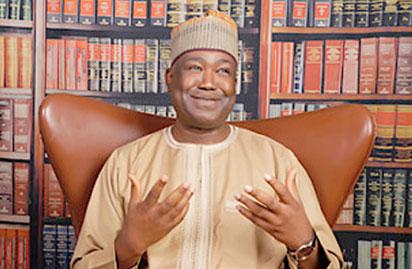
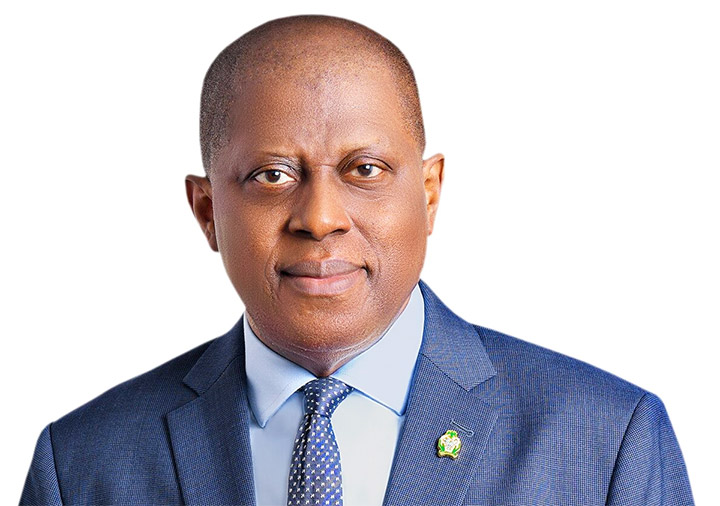
Businessman-turned-politician, Mr Kevin Okechukwu, has disclosed plans to bypass the upcoming 2027 general elections to build a new ideological political movement targeted at the 2031 and 2035 electoral cycles.
Speaking during an interactive session with reporters in Lagos, Okechukwu rejected existing major political platforms, including the ruling All Progressives Congress (APC) and opposition parties, describing them as ideological “special purpose vehicles” designed strictly for power grabbing rather than national development.
Unveiling his blueprint for national reformation, the politician argued that Nigeria’s lingering socioeconomic crises are rooted in deep-seated national “indiscipline” rather than mere corruption. He maintained that until the Nigerian state rebuilds its institutional capacity to punish bad behaviour and enforce law and order, systemic reform will continue to fail.
“Most people always say the problem is corruption, but I don’t want to use the word ‘corruption’ because it is just a small part of it,” Okechukwu said. “When we talk of corruption, people only look at the politicians, civil servants, and those in government. But when I talk of indiscipline, it encompasses all of us—every Nigerian, both the leaders and the led.”
Dismissing widespread calls by human rights advocates for prison decongestion, Okechukwu offered a radical counter-proposal, insisting that Nigeria urgently requires an expanded penal system with more prisons, courtrooms, magistrates, and police officers to deter crime.
Citing official statistical data as of June 29, 2026, which put Nigeria’s inmate population at 82,195 against an estimated national population of over 240 million, Okechukwu described the figures not as an indicator of lawfulness, but as a glaring failure of law enforcement.
He lamented that out of the roughly 82,000 inmates nationwide, approximately 50,000 are individuals awaiting trial who remain presumed innocent by law, leaving a mere 30,000 convicted criminals nationwide.
“How can a country function effectively when you can only convict 30,000 people in a population of over 200 million?” he queried. “People commit severe crimes and do not get punished. What you cannot attempt in decent countries, people do in Nigeria and go scot-free.”
Decrying the severe insecurity resulting from this institutional weakness, Okechukwu admitted that, like millions of ordinary Nigerians, he is currently unable to visit his hometown in Orumba North Local Government Area of Anambra State freely. “Anytime I visit my village, I have to sneak in and sneak out,” he lamented, insisting that a functioning society is one where criminals fear the state.
Addressing current macroeconomic interventions by President Bola Ahmed Tinubu’s administration—such as the removal of petrol subsidies and the unification of foreign exchange rates—Okechukwu defended the economic theories behind the policies, stating that they were structurally correct.
He, however, noted that these reforms have caused massive inflation and hardship because they were implemented within a fundamentally weak institutional system that lacks effective law enforcement and infrastructure.
Using a culinary metaphor which he termed the “rule of proportionality,” Okechukwu explained: “If you are cooking soup and things are not proportional, it will not be palatable. You can kill an entire cow and put all the meat in the soup, but if you don’t put the right proportion of water, salt, and other ingredients, nobody can eat it.”
He argued that Nigeria’s severe shortage of electricity, magistrates, healthcare professionals, and well-equipped police officers reflects a system out of proportion, demanding deliberate institutional scaling rather than simplistic political fixes.
Okechukwu also condemned Nigeria’s traditional unwritten rules of “zoning” and political power rotation, dismissing them as superficial agendas driven by regional elite battles over the national treasury.
Rather than joining the impending rush for 2027 tickets, Okechukwu confirmed he has initiated extensive grassroots organising to recruit citizens into a self-funded political bloc that will champion strict systemic discipline and reform ahead of the 2031 general elections.
TAGS:
REA, SAPZ sign power pact to boost agro-industrial processing, rural economy9 minutes ago
Namadi launches five-year development plans for 27 LGAs, orders budget alignment11 minutes ago
PFIPC probe: Response to State House on alleged fake presidential council hijacked – OAGF11 minutes ago


NDC candidate Alabi dismisses claims over primary, cites video evidence of victory12 minutes ago


37-year-old to die by hanging for robbing Ekiti varsity students19 minutes ago