

Scientists explain how El Niño, climate change and heat are driving extreme fires
Dubai: The flames racing across southern Europe this summer are not unusual. Their scale is.
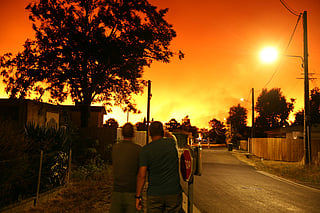
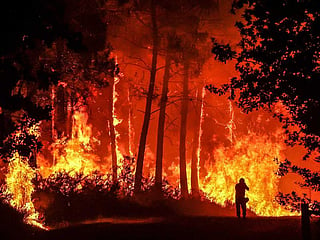
From France and Spain to Algeria and Tunisia, firefighters have battled wildfires that have forced thousands from their homes, destroyed forests and stretched emergency services across the Mediterranean.
Get updated faster and for FREE: Download the Gulf News app now – simply click here.
Temperatures approaching 50C in parts of North <a href="https://absafricatv9491.live-website.com/fifa-africa-office-opens-in-rabat-a-global-football-impact/” title=”FIFA Africa Office Opens in Rabat: A Global Football Impact”>Africa have compounded the crisis, drying vegetation into fuel and pushing electricity demand to record levels.
The fires come at a time when scientists are watching another development thousands of kilometres away in the tropical Pacific. Forecasts indicate that El Niño, the natural climate pattern that influences weather worldwide, is strengthening rapidly and could become one of the strongest events in decades.
That has prompted an obvious question: Is El Niño making this summer’s fires worse?
The short answer is: partly, but not directly.
El Niño can raise global temperatures and alter rainfall and wind patterns, but it does not by itself cause Europe’s wildfires. The immediate drivers are prolonged heat, drought, dry vegetation, strong winds and persistent high-pressure systems. Those conditions are becoming more severe because Europe is warming rapidly as greenhouse gas emissions continue to heat the planet.
Rather than starting the fires, El Niño may add extra warmth to a climate already primed for extreme heat and wildfire.
Recent weather has also created ideal conditions for fires. A relatively wet winter encouraged vegetation growth before summer drought and extreme heat dried grasses and shrubs into highly combustible fuel.
Firefighters have also had to contend with unpredictable winds, including those generated by the fires themselves, making some blazes more difficult to control.
What exactly is El Niño?
El Niño is a natural warming of the central and eastern tropical Pacific Ocean that develops every two to seven years and usually lasts nine months or longer.
Normally, trade winds push warm surface water towards Indonesia and Australia. During El Niño those winds weaken, allowing warmer water to spread eastwards. The shift changes rainfall, atmospheric pressure and circulation patterns that influence weather across much of the world.
“El Niño is a major climate system with influence across wide areas of the planet,” Ibrahim Al Jarwan, Chairman of the Emirates Astronomical Society and a member of the Arab Union for Astronomy and Space Sciences, told Gulf News. “It is not merely a local change in weather.”
Scientists track sea-surface temperatures in the Niño 3.4 region of the Pacific to determine whether El Niño or its cooler counterpart, La Niña, is developing.
Why scientists are watching this event
The World Meteorological Organisation said in June there was an 80 per cent chance of El Niño developing during June to August 2026, rising to more than 90 per cent through November. It later said the event was strengthening and could become strong during the second half of the year.
The US National Oceanic and Atmospheric Administration’s Climate Prediction Center likewise expects El Niño to strengthen through the Northern Hemisphere winter, with a 63 per cent chance of becoming very strong between November and January.
Even so, forecasts are still probabilistic, and El Niño’s impacts vary widely between regions. It can bring flooding to parts of South America, drought to Australia and Indonesia, and shifts in tropical storm activity. Its influence on Europe is generally weaker and less predictable.
Is El Niño behind Europe’s heat?
Not directly.
European heatwaves are primarily driven by regional weather patterns, especially persistent areas of high pressure that trap hot air over the same region for days or weeks.
El Niño can temporarily increase global average temperatures, typically by around 0.2C, but that effect is modest compared with the roughly 1.3C of long-term warming already caused by human greenhouse gas emissions since the pre-industrial era.
In practice, El Niño acts as an amplifier rather than the main driver. It may increase the likelihood or intensity of extreme conditions, but it acts on top of a climate that has already become significantly warmer.
How climate change increases wildfire risk
Scientists rarely say climate change directly causes individual fires because every wildfire still requires an ignition
Instead, researchers examine whether climate change made the surrounding conditions hotter, drier and more favourable for fires.
The evidence is strongest for heatwaves. As average temperatures rise, weather patterns that once produced hot conditions now generate much more extreme heat.
Europe is warming faster than the global average, increasing the likelihood of prolonged drought, dry vegetation and severe wildfire conditions. Land management, expanding development near forests and accidental ignitions also contribute, but climate change is making the background conditions increasingly favourable for large fires.
What could it mean for the Gulf?
El Niño’s influence on the Arabian Peninsula is indirect and varies by season.
Al Jarwan said it can weaken the Indian monsoon, warm waters in the Arabian Sea and alter the chances of tropical systems during autumn. It may also affect temperatures and humidity across parts of the Gulf, although day-to-day weather remains largely controlled by regional winds, sea temperatures and pressure systems.
The UAE’s National Centre of Meteorology has previously indicated a high likelihood of El Niño conditions during the second half of 2026.
A climate already under pressure
Europe’s fires are the result of several forces converging: intense heat, drought, dry vegetation, strong winds and a warming climate.
A strengthening El Niño may add further pressure by nudging global temperatures higher. But the Mediterranean has become increasingly vulnerable to extreme heat and wildfire even in years without a major El Niño.
The clearest way to understand the crisis is this: El Niño may press the accelerator, but climate change has already built the road.
Deadly wildfires force thousands from homes in Europe
France, Spain battle ‘monster’ wild fires
Europe’s heat crisis: Why ACs are becoming a lifesaver

Why is Europe hotter than the rest of the world?

Get Updates on Topics You Choose

El Niño to influence UAE weather through December

UAE July weather: This factor could push heat higher

Is ‘Super El Niño’ coming? UN warns of climate event
