

Mamabolo urges South <a href="https://absafricatv9491.live-website.com/10-african-countries-with-the-weakest-currencies-in-july-2026/” title=”10 African countries with the weakest currencies in July 2026″>Africans to register as IEC enters final countdown to Local Government Elections
July 29, 2026
0
– Advertisement –


Must read
Johnson testimony ends with a whimper: invokes right to silence, claims possible prosecution
Waste burning by households poses serious health risks to children, campaign warns
North West businessman Sulieman Carrim ordered to testify in person as Madlanga Commission sets August date
Property, agriculture and finance among worst B-BBEE performers as report flags slow transformation
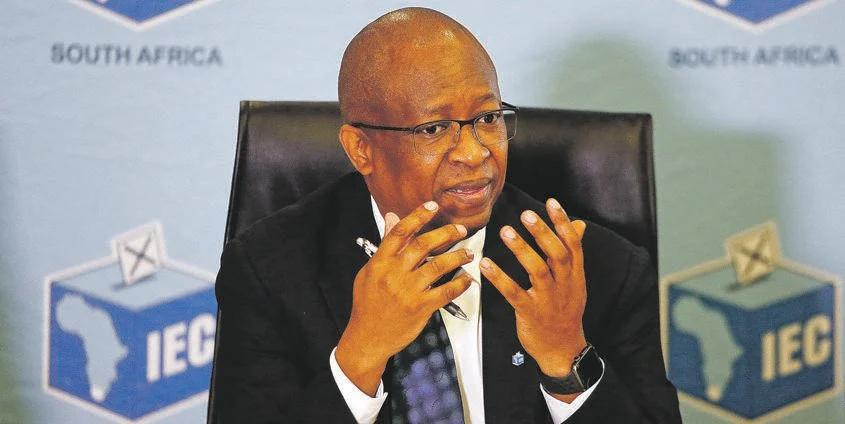
With fewer than 100 days remaining before South Africans vote in the 2026 Local Government Elections, Electoral Commission (IEC) Chief Electoral Officer Sy Mamabolo has urged eligible citizens to make use of the final voter registration weekend on 1 and 2 August, warning that no further registration opportunities will be available once the election date is officially proclaimed.
Addressing the media on Wednesday, Mamabolo said the Electoral Commission had completed preparations for the country’s final in-person voter registration drive. A total of 23,699 voting stations will be open nationwide from 08:00 to 17:00 on both Saturday and Sunday.
The IEC will deploy 48,212 trained electoral officials to assist voters with new registrations, updating residential addresses and verifying registration details ahead of the elections.
Mamabolo said the registration weekend would be the final opportunity for voters to register or amend their details before the Minister of Cooperative Governance and Traditional Affairs proclaims the election date.
“Once the election is proclaimed, the voters’ roll closes at midnight on that day. No further voter registrations or changes to existing registration details will be processed until after the elections,” he said.
He added that the Commission would immediately suspend all voter registration activities and deactivate its Online Voter Registration Portal once the proclamation is made.
Mamabolo said the election proclamation also triggers several key electoral processes, including the implementation of the Electoral Code of Conduct, the opening of candidate nominations and the publication of the official election timetable.
He emphasised that the Electoral Code of Conduct is intended to promote political tolerance, free campaigning and credible elections, warning that so-called “no-go zones” undermine the electoral process.
“The Commission wishes to indicate that ‘no-go’ zones go against both the letter and spirit of the Electoral Code of Conduct. All registered political parties, their leaders, office bearers, candidates and independent candidates are bound by the Code,” Mamabolo said.
The IEC has also activated its Online Candidate Nomination System (OCNS), allowing political parties and independent candidates to prepare their nominations ahead of the official nomination period.
According to the Commission, 620 political parties are currently registered. It said 238 political parties and prospective independent candidates have already completed nationwide training on the electronic nomination system.
So far, 76 political parties and 39 independent candidates have begun capturing candidate information on the online platform.
Mamabolo said the Commission was steadily moving from election planning to full implementation of its electoral programme.
The IEC hopes to build on the success of the first voter registration weekend held in June, during which more than three million voter registration transactions were processed nationwide.
Digital voter registration also continues to grow.
Since June, the Commission has recorded more than 815,000 voter registration transactions, with 603,572, or 74%, completed through the data-free Online Voter Registration Portal.
The highest levels of online registration have been recorded in Gauteng, KwaZulu-Natal and the Western Cape.
Women account for 61% of online registration activity, while people aged 16 to 29 make up 50% of all online transactions, the majority of which are first-time registrations.
Mamabolo said the increasing use of digital registration showed that more young South Africans were embracing technology to participate in the country’s democratic processes.
Although the upcoming weekend marks the final opportunity for in-person registration, the IEC confirmed that its data-free Online Voter Registration Portal will remain available until the election is officially proclaimed.
Mamabolo urged eligible citizens not to delay registering, warning that voter registration channels typically come under significant pressure as electoral deadlines approach.
He also reminded voters that local government elections differ from national and provincial elections because residents may only vote in the ward where they are registered and ordinarily reside.
“Register where you live. Vote where you are registered,” he said.
To support the registration campaign, the Department of Home Affairs will align its operating hours with the IEC registration programme to assist citizens who require identity documents during the registration weekend.
Mamabolo said the Electoral Commission remained committed to delivering elections that are free, fair, transparent and credible while ensuring every eligible South African is able to exercise their constitutional right to vote.
Previous articleWaste burning by households poses serious health risks to children, campaign warns
Next articleJohnson testimony ends with a whimper: invokes right to silence, claims possible prosecution