Interview: Phelan Green on Scaling eSAF and the Future of Sustainable A
George Orwell28-Jul-2026
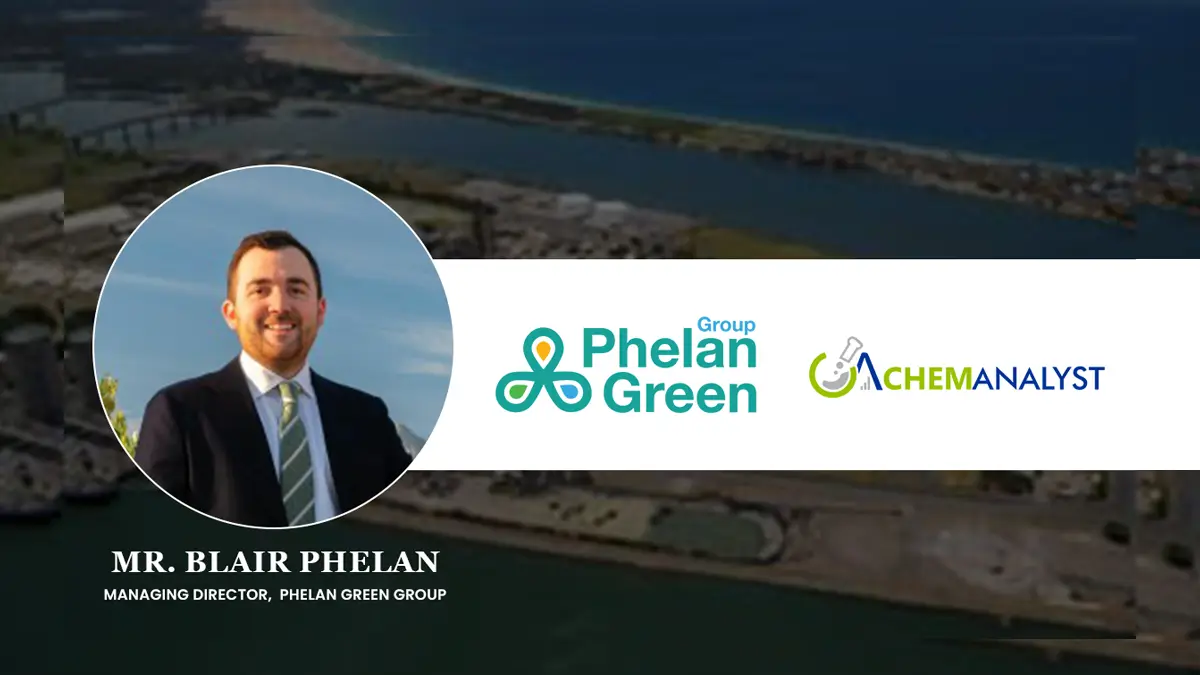
ChemAnalyst interviewed Blair Phelan, Managing Director of Phelan Green Group, on advancing commercial-scale eSAF production and accelerating aergy integration.
He highlighted South Africa’s strategic advantages, technology partnerships, and supportive policy frameworks as key drivers for scaling sustainable a
ChemAnalyst Talks with Mr. Blair Phelan, Managing Director, Phelan Green Group
Phelan Green Group is a leading clean energy developer with over two decades of experience in renewable energy and sustainable fuels. Through its subsidiary, Phelan eFuels, the company is advancing large-scale green hydrogen, eFuels, and industrial decarbonization projects, including one of the world’s most significant commercial-scale electro-sustainable aviation fuel (eSAF) developments at Saldanha Bay, South Africa. ChemAnalyst spoke with Mr. Blair Phelan, Managing Director, Phelan Green Group, about the company’s vision for scaling eSAF production and accelerating the transition toward low-carbon aviation. Drawing on his leadership experience, Mr. Phelan highlighted the strategic importance of integrating renewable energy with advanced fuel technologies, the role of strong technology partnerships, and the need for stable policy frameworks to unlock commercial-scale investment. He also discussed South Africa’s competitive advantages in green hydrogen production, sustainable carbon sourcing, and the long-term outlook for eSAF as a key pillar of global aviation decarbonization.
Complete Interview with Mr. Blair Phelan
Q1. Could you briefly share your professional journey and tell us what inspired you to pursue large-scale green hydrogen and eSAF developments through Phelan Green Group?
Blair Phelan: I joined Phelan Green Group immediately after graduating from university and have now been with the business for <a href="https://absafricatv9491.live-website.com/africa-wants-more-than-digital-inclusion-it-wants-digital-influence/" title="Africa wants more than digital inclusion. It wants digital influence”>more than eight years. As a family-owned company, our journey has always been driven by a long-term commitment to renewable energy. The business was founded by my father, Pascal Phelan, following our family’s move from Ireland to South Africa, where renewable energy offered significant opportunities.
We initially focused on utility-scale solar energy and successfully developed projects across South Africa and India. As the energy transition evolved, we recognised that renewable electricity alone would not decarbonize hard-to-abate sectors such as aviation and heavy industry. That led us to expand our focus into green hydrogen, e-fuels, and sustainable aviation fuels. Today, we are developing projects across South Africa, India, Egypt, Spain, and Ireland, with South Africa serving as our flagship development due to its exceptional renewable energy resources and our extensive experience in the market.
Q2. The Saldanha Bay project is among the world’s first commercial-scale eSAF facilities. What convinced you that now is the right time to invest in synthetic a
Blair Phelan: The primary driver is the need to decarbonize one of the most challenging sectors—ahe European Union and the United Kingdom, which create a clear commercial framework for projects like ours. These regulations encourage fuel suppliers and airlines to secure sustainable a
As a family-owned business with a long-term investment approach, we have been able to progress the project despite the uncertainty that existed during the early stages of policy development. We have always believed that being an early mover creates a strategic advantage. We took a similar approach when developing some of South Africa’s first utility-scale solar projects, and we see the same opportunity today in the eSAF sector.
Q3. What strategic role does the Saldanha Bay eSAF project play within Phelan Green Group’s broader vision for renewable energy, green hydrogen, and industrial decarbonization?
Blair Phelan:The Saldanha Bay project represents the next phase of our renewable energy journey. While we remain committed to solar energy and battery storage, we see green hydrogen and e-fuels as critical solutions for decarbonizing sectors where direct electrification is not practical.
Our experience in developing large-scale renewable energy projects provides a strong foundation for this transition. Producing synthetic fuels requires expertise in both renewable power generation and advanced fuel processing, bringing together two traditionally separate industries. Our long-term objective is to become a global leader in cost-effective e-fuels by combining world-class renewable ret execution
Q4. Could you provide an overview of the Saldanha Bay eSAF project and highlight the key milestones expected before construction begins?
Blair Phelan: The Saldanha Bay project integrates three major technology platforms across the eSAF value chain. The first is green hydrogen production using alkaline electrolyser technology supplied by Sungrow, a long-standing technology partner with whom we have worked for many years in the renewable energy sector.
The second stage involves synthesis gas production and Fischer-Tropsch technology licensed from Johnson Matthey, while Honeywell will deliver the integrated modular processing plant, including its proprietary refining technology. The modular approach enables construction in a controlled manufacturing environment before installation on-site, improving quality, reducing construction risk, and accelerating project delivery.
With our technology partnerships now established, the project is progressing toward construction, positioning us to deliver the first phase of commercial eSAF production according to our planned development timeline.
Q5. Phelan Green has selected technologies from Sungrow, Johnson Matthey, and Honeywell for different stages of the project. What were the key considerations behind choosing these technology partners?
Blair Phelan: Selecting the right technology partners was one of the most important decisions for the project. We chose Sungrow for our green hydrogen production because of our long-standing relationship spanning more than 15 years in the renewable energy sector, combined with their strong track record in delivering reliable alkaline electrolysis technology.
For the downstream processing, Johnson Matthey’s reverse water-gas shift and Fischer-Tropsch technologies offered proven expertise in synthetic fuel production. Honeywell complements this by providing the integrated modular processing plant, including its proprietary refining technology. Their modular construction approach enables much of the plant to be fabricated in a controlled environment before being transported to site, improving construction efficiency, reducing execution risks, and accelerating project delivery. Collectively, these partnerships bring together trusted technologies with proven industrial experience.
Q6. Many eSAF projects worldwide remain at the feasibility stage. From your perspective, what are the biggest technical, financial, and regulatory challenges in moving from concept to commercial-scale execution?
Blair Phelan: Commercial-scale eSAF projects bring together two highly specialised industries—renewable energy and fuel refining—which creates significant technical complexity. Managing large-scale renewable power generation while operating continuous fuel production processes requires expertise across both sectors.
From a financial perspective, these projects require substantial investment well before construction begins. Development costs are significant, and reaching financial close demands extensive technical, commercial, and regulatory preparation. At Phelan Green, we have been fortunate to fund much of this development internally, allowing us to progress despite market uncertainty.
On the regulatory side, greater policy certainty has been a positive development. The recent reinforcement of European SAF mandates has strengthened confidence across the industry and provides a much clearer pathway for commercial investment.
Q7. The facility is expected to eventually produce around 140,000 tonnes of eSAF annually through multiple phases. What factors will determine the success of future expansion?
Blair Phelan: Our immediate priority is the successful delivery of the first 35,000-tonne production phase. Demonstrating reliable commercial operation will provide the foundation for the subsequent expansion phases.
South Africa offers outstanding renewable energy reader policy environment and the level of support available for emerging green industries. As we expand both within South Africa and internationally, we will continue evaluating locations that offer the most favourable conditions for long-term investment
Successfully commissioning the initial phase will significantly reduce development risks and position us to accelerate construction of the remaining phases toward our long-term production target of approximately 140,000 tonnes per year.
Q8. Green hydrogen and renewable electricity are central to the economics of eSAF production. How do you assess South Africa’s potential to become a globally competitive producer of green hydrogen, and what role will electricity pricing play in long-term competitiveness?
Blair Phelan: Renewable electricity represents more than 60% of the production cost of green hydrogen and e-fuels, making energy economics fundamental to project competitiveness. South Africa possesses some of the world’s best renewable energy ren production
For the initial phase of our project, a significant portion of the renewable energy will be generated alongside the production facility, helping optimise costs. As future phases expand, grid infrastructure and transmission costs will become increasingly important. Continued efforts to improve grid efficiency and reduce associated costs will strengthen South Africa’s position as a globally competitive producer of green hydrogen and synthetic fuels.
Q9. Securing sustainable CO2 feedstocks is another critical component of synthetic fuel production. How is Phelan Green approaching carbon sourcing for this project?
Blair Phelan: Our approach focuses on creating a sustainable and locally available carbon species, which are legally required to be removed from land across South Africa because of their environmental impact
These biomass reaptured for use in eSAF production. This approach not only provides a long-term and sustainable carbon Alongside additional carbonthetic fuel production
Q10. Your initial production is expected to serve the European Union and UK markets. Do you believe the current global pipeline of eSAF projects will be sufficient to meet SAF demand by 2030?
Blair Phelan: Based on current industry projections, I do not believe supply will fully meet mandated demand by 2030. Independent market forecasts already indicate a significant supply gap, and we expect some obligated parties to face compliance costs if additional production capacity is not brought online.
One of the reasons for this shortfall has been uncertainty around policy and market signals, which delayed investment decisions across the industry. However, the recent strengthening of SAF mandates in Europe and the UK has improved confidence considerably. We are already seeing greater engagement from fuel suppliers and other market participants, which should accelerate project development. Our objective is to help close that supply gap by delivering reliable commercial-scale eSAF to international markets.
Q11. How do you see eSAF complementing or competing with other sustainable a, over the coming decade?
Blair Phelan: Different SAF pathways will all play an important role in supporting the aes such as HEFA and Alcohol-to-Jet are expected to contribute significantly over the coming years and will help meet near-term demand
However, I believe eSAF represents the most sustainable long-term solution. Many conventional SAF pathways rely on biomass or agricultural feedstocks, which can eventually face resource constraints or raise concerns around land use and food security. eSAF, by contrast, is produced using renewable electricity, green hydrogen, and captured carbon, offering a scalable pathway that is not dependent on finite biological feedstocks. As renewable energy capacity continues to expand globally, I see eSAF becoming a cornerstone of sustainable aviation over the long term.
Q12. Today, eSAF remains significantly more expensive than conventional jet fuel. How will the costs of green hydrogen, renewable electricity, and captured CO2 influence the long-term production cost and commercial competitiveness of eSAF?
Blair Phelan: Renewable electricity is the single largest input cost in eSAF production, but it has become increasingly competitive over the past decade. Looking ahead, I believe the greatest opportunity for cost reduction lies across the broader production chain, particularly through improvements in equipment, process efficiency, and economies of scale.
As production capacity expands and technologies mature, manufacturing costs are expected to decline. The current policy framework has been designed to stimulate early market development while allowing the industry to scale. Over time, higher production volumes and continued technological advancement should improve the commercial competitiveness of eSAF.
Q13. Beyond capital investment, how important are government incentives, SAF mandates, airline offtake agreements, and carbon pricing mechanisms in making projects such as Saldanha Bay financially
Blair Phelan: Clear and predictable policy frameworks are fundamental to the success of projects like ours. While financial incentives can support early investment, long-term market demand ultimately depends on regulatory certainty.
SAF mandates provide the strongest commercial signal by creating sustained demand for low-carbon are essential for securing project financing, as lenders require confidence that production will have committed buyers over the life of the asset
Together, supportive policy, market certainty, and strong commercial partnerships create the conditions needed for large-scale investment in the eSAF industry.
Q14. Conventional aom a commercial standpoint, how do fluctuations in crude oil prices influence the long-term business case for synthetic a
Blair Phelan: Unlike conventional ant investments, with relatively predictable operating costs over their lifetime. This creates greater certainty around long-term production costs and allows producers to structure stable pricing agreements with customers
Crude oil markets, by comparison, remain highly volatile and can experience significant price fluctuations due to geopolitical events and changing market conditions. The ability to offer more predictable fuel pricing over long-term supply agreements represents one of the key commercial advantages of synthetic areater cost certainty
Q15. If we were having this conversation in 2030, what milestones would demonstrate that the global eSAF industry has successfully moved beyond the early-adoption phase and achieved true commercial scale?
Blair Phelan: By 2030, success would mean that the industry is producing sufficient eSAF to meet mandated demand without significant supply shortages or compliance penalties. It would also mean that financing commercial-scale projects has become more straightforward as lenders gain confidence in the technology and its long-term performance.
The renewable energy sector followed a similar trajectory. In its early years, projects required significant effort to demonstrate their commercialclass. I believe the eSAF industry will follow a comparable path as more projects reach successful commercial operation
Q16. Finally, what message would you like to share with policymakers, airlines, investors, and technology providers working to accelerate the global transition toward sustainable a
Blair Phelan: My key message is the importance of policy certainty. Developing commercial-scale eSAF projects requires years of planning, investment, engineering, and collaboration. Long-term confidence in regulations and market frameworks enables companies to make those investments with greater certainty.
The recent strengthening of SAF mandates has provided a much clearer direction for the industry, and we are already seeing increased momentum as a result. Continued collaboration between policymakers, technology providers, investors, fuel suppliers, and airlines will be essential to scaling production and meeting future demand. We believe the industry is now moving in the right direction, and we look forward to supplying commercial volumes of eSAF as our project progresses.
Related Products::
Tags:


Track Real Time Prices
Jet Kerosene
Industry Report
Jet Kerosene Market Analysis: Industry Market Size, Plant Capacity, Production, Operating Efficiency, Demand & Supply, End-User Industries, Sales Channel, Regional Demand, Company Share, Manufacturing Process, 2015-2032
Track Prices of 1000+ Chemicals
Download the app





Popular News
We use cookies to deliver the best possible experience on our website. To learn more, visit our
Privacy Policy.
By continuing to use this site or by closing this box, you consent to our use of cookies.
More info.