

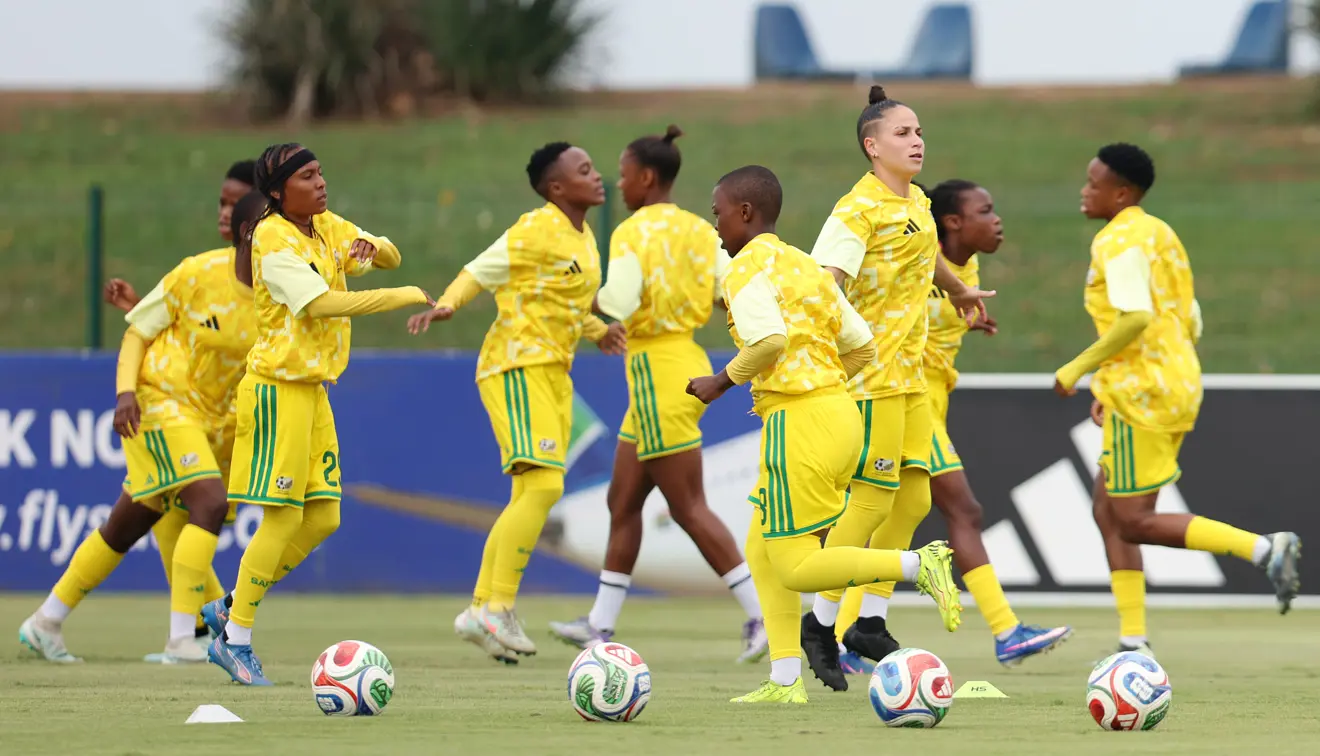
South Africa under scrutiny against hungry Tanzanians
Champions in 2022, the Banyana Banyana open their tournament against a Tanzanian side they already know well. This will be their third meeting in the final stage, and the second consecutive time that the draw has brought them together. The historical record clearly favors South Africa: a 2-1 win in their first clash in 2010, followed by a 1-1 draw in 2024 in Oujda, which remains to this day the only point Tanzania has earned in the competition.
On paper, South Africa seems more than prepared for this opening match. The only team, along with Nigeria, to have competed in all fourteen editions of the tournament, they are also part of the exclusive club of African champion nations, alongside Nigeria and Equatorial Guinea. Their recent momentum also works in their favor: the South Africans have not lost an opening match since 2014, and remain unbeaten in their last four tournament openers. On the bench, Desiree Ellis, herself a finalist as a player at CAN 2000, starts her fifth consecutive tournament as team manager, a first in the team’s history. To qualify, the Banyana Banyana had to battle DR Congo, only finding the breakthrough at the very end of the second leg thanks to a decisive goal from Thembi Kgatlana.
On the other side, Tanzania approaches this challenge determined to confirm the promise shown in their last campaign. The Twiga Stars have only competed in two final stages, in 2010 and 2024, but this is the first time in their history that they’ve qualified two times in a row. Their qualifying campaign was something of a fairy tale, knocking out former African champions Equatorial Guinea in the first round. Still, their first win in the final stage is still out of reach, with the Tanzanians’ record showing five losses and just one draw in six matches played at CAN.
Ivory Coast returns to CAN against a Burkina Faso seeking firsts
The second match of the evening has all the makings of a major event: never in the history of the competition have Ivory Coast and Burkina Faso faced each other. This first meeting also coincides with the highly anticipated return of the Elephantes to the continental stage, twelve years after their last appearance.
Absent since 2014, the Ivorian team had only taken part in two previous editions, in 2012 and 2014, peaking in that latter tournament, which ended with an unexpected third-place finish. Striker Inès Nrehy remains the team’s attacking reference point, with seven career goals at CAN (4 in 2012, 3 in 2014), including a stunning hat-trick in their very first match in the competition. A major change for this campaign: French coach Reynald Pedros took charge of the team in January 2025, ending Clémentine Touré’s thirteen-year tenure. Pedros is no stranger to the Women’s CAN: he led Morocco to the 2022 final, a historic achievement for the Lionesses of the Atlas.
Burkina Faso, for its part, has only one previous participation, in 2022, when the Étalons Dames finished third in their group after two initial defeats and a point snatched at the last minute against Uganda. It’s clear that this return to the finals, after missing the previous edition, is shaping up to be another challenge for a team still chasing its first thrills: they have never opened the scoring or led in a match in the competition, and their first continental win remains to be achieved. The Burkinabè qualified by beating Togo in the second round of the qualifiers, under coach Pascal Sawadogo, who was also in charge during the 2022 campaign and is now entering his second Women’s CAN.
