

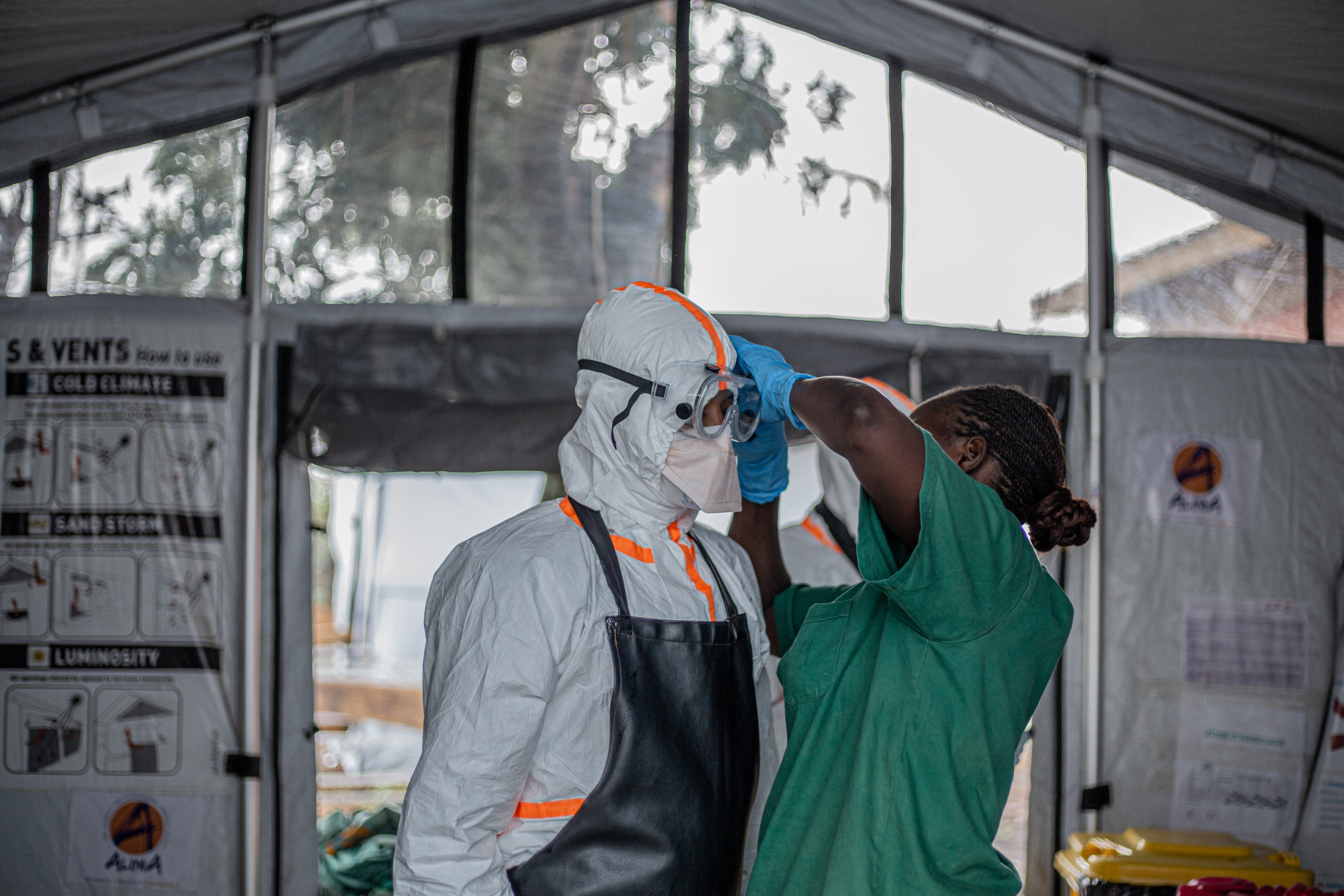
Uganda declared itself officially free of Ebola on Tuesday, closing the book on a 74-day outbreak that infected 20 people and killed two — while the virus continues its record-breaking rampage across the border in the Democratic Republic of Congo, where a crisis with no approved vaccine or treatment is racing toward the worst Ebola toll ever recorded. Exchange rates as of July 28, 2026; currency conversions are approximate.
Health Minister Dr. Chris Baryomunsi made the announcement Tuesday morning in Kampala, confirming that Uganda had completed the mandatory 42-day surveillance period with no new infections at the Uganda Media Centre. “Uganda is officially Ebola-free,” Baryomunsi told reporters in Kampala. “The country is open for business, tourism and all socio-economic activities.”
The declaration comes as the DRC’s outbreak grows faster than any Ebola emergency in recorded history, with over 3,200 confirmed cases and at least 1,405 deaths as of July 26 — figures the World Health Organization warns may represent only a quarter to a half of the true toll, according to Al Jazeera reporting on WHO’s assessment. With confirmed deaths approaching the 2018–2020 eastern DRC outbreak’s record of 2,287 and confirmed cases closing in on its 3,444, the question is no longer whether this will be the worst Bundibugyo outbreak ever recorded. It will be. The question is by how much.
Uganda’s Containment: Speed, Precision, and a Head Start
Uganda’s success came down to three factors that set it apart from the catastrophe next door: every infection was traceable, geographic containment held, and institutional muscle memory — built across repeated Ebola emergencies — kicked in immediately.
The DRC confirmed the outbreak on May 15, 2026, when two Congolese nationals who had crossed into Uganda seeking hospital care in Kampala tested positive for Bundibugyo ebolavirus per WHO’s Disease Outbreak News report. The Uganda Ministry of Health characterized the 2026 outbreak as arising from a “fully documented importation event” — a phrase with specific epidemiological significance, as the official Uganda Media Centre declaration makes clear. Unlike community transmission events where the source is unknown and contact rings are incomplete, a fully documented importation means authorities could identify the source patient, reconstruct transmission chains from the start, and account for every exposed person.
Of the 20 confirmed Uganda cases, 15 were directly imported from DRC and five were secondary infections among contacts and healthcare workers, Eagle Online reported on the declaration. All were confined to the Kampala and Wakiso districts within the Kampala metropolitan area; no community transmission was ever documented outside that network. The Ministry confirmed that all identified contacts were institutionally quarantined and completed the mandatory 21-day follow-up without evidence of further transmission.
The last confirmed Uganda case was identified on June 21. The 42-day countdown began on June 16 — the date of the last confirmed Ugandan national’s discharge from the Mulago National Referral Isolation Centre. A separate Congolese national, whose movements inside Uganda were limited and whose contacts could not be established, was discharged on July 16 and handled under different epidemiological protocols, as AllAfrica’s Nile Post coverage explains. Tuesday’s declaration completes the 42-day WHO surveillance requirement, which represents two complete Bundibugyo incubation cycles, ensuring no latent infections remain.
This is not Uganda’s first time here. In 2022–2023, the country contained a Sudan ebolavirus outbreak in 69 days — also without an approved vaccine — by deploying mobile laboratories, digital contact tracing, and trained rapid-response teams that had been built and refined across multiple prior emergencies, as WHO Africa documented. Uganda’s cross-border response this time included two mobile laboratories stationed in Aru and Kasenyi on the DRC side of the border, along with an 80-bed Ebola Treatment Unit established in border areas, SoftPower Uganda reported.
Congo at the Edge of History
The DRC’s situation is the inverse of Uganda’s in almost every dimension. The same virus, the same fundamental lack of an approved vaccine, and a completely different response environment.
Bundibugyo ebolavirus (BDBV) is one of four Orthoebolavirus species that cause Ebola disease in humans. It was first identified in Uganda’s Bundibugyo District in 2007–2008, where it caused 149 cases. A second outbreak in Isiro, DRC, in 2012 produced 57 cases, as CDC epidemiological records show. Those prior outbreaks were small enough that no pharmaceutical company ever built a vaccine or therapeutic for the strain — there was no commercial case for doing so. That structural market failure is what has left the current outbreak — the third BDBV outbreak ever recorded, by far the largest — without any approved countermeasure, a point TechTimes first reported in depth in June.
The only licensed Ebola vaccine in the world, Ervebo (rVSV-ZEBOV), targets a different species: Zaire ebolavirus, responsible for the 2014–2016 West Africa epidemic that killed more than 11,000 people. WHO reviewed the available evidence on cross-protection and concluded it is insufficient to recommend Ervebo’s use in the current outbreak, as the agency’s outbreak situation page states. The DRC’s response is therefore limited to the same tools that worked for Uganda — case isolation, contact tracing, and supportive clinical care — in a region where executing those tools is far harder.
Ituri Province, at the heart of the outbreak, is a high-traffic commercial and migratory hub that shares borders with Uganda, South Sudan, and the DRC’s own internally displaced populations — and has been destabilized by armed conflict involving the Allied Democratic Forces (ADF) and other militia groups for years, as the 2026 Ebola epidemic Wikipedia entry documents. That conflict restricts humanitarian access, limits health worker movement, and has historically fueled community mistrust of outside responders. In May, protesters in Rwampara set fire to Ebola treatment tents; in a separate incident, 18 suspected patients escaped a treatment center after a tent was burned. More than 100 healthcare workers have been infected since the outbreak began, Al Jazeera reported July 27.
The DRC’s outbreak was formally declared on May 15, 2026, on the same day that Uganda confirmed its first imported cases. WHO declared a Public Health Emergency of International Concern on May 17 per the WHO announcement, and the Africa Centres for Disease Control and Prevention declared a Public Health Emergency of Continental Security on May 18 per Africa CDC’s announcement. By the time those declarations were made, the virus had already been circulating undetected in Ituri for an estimated three weeks — because the GeneXpert diagnostic platforms most widely deployed in DRC had been configured for Zaire ebolavirus only, and returned false-negative results on every initial Bundibugyo test. TechTimes covered this diagnostic blind spot in detail. That three-week head start set the pace for everything that followed.
The current outbreak surpassed 1,000 confirmed cases within 40 days of response activation, according to the CDC’s outbreak summary — a pace the WHO’s Health Emergencies Programme executive director Dr. Chikwe Ihekweazu called “the fastest growth in a single month since the outbreak started and of all the Ebola outbreaks we have managed,” as UN News reported. More than 80 percent of new cases are now being found outside known transmission chains, per WHO data cited in TechTimes’ prior coverage. Africa CDC Director-General Dr. Jean Kaseya put it plainly at the June launch of the joint response plan: “Ebola moves fast. Africa must move faster.” Africa CDC confirmed the quote.
What the Numbers Don’t Capture
The official case count of over 3,200 confirmed infections and at least 1,405 deaths likely understates the actual scale of the crisis. WHO has warned that the true toll may be two to four times higher than reported data — a reflection of the diagnostic capacity gaps, the community deaths that occur before anyone reaches a treatment center, and the active-conflict zones where health workers cannot operate freely, Al Jazeera reported from WHO’s assessment. WHO chief Dr. Tedros Adhanom Ghebreyesus noted that approximately two-thirds of deaths are occurring in communities — among people who never reached a health facility — making it impossible to enforce safe burial practices that would interrupt transmission, as Al Jazeera’s July 25 reporting on the outbreak’s pace documented.
The crisis has a human dimension that the aggregate numbers obscure. Doctors, nurses, and support staff at the Elikya Ebola Treatment Center in Bunia — the Ituri city at the outbreak’s epicenter — walked off the job in late July, demonstrating outside the facility and demanding wages that had not been paid since the emergency was declared in May, TechTimes reported. A similar action had occurred the prior week at Bunia General Hospital, where workers told the Associated Press they had not received a single payment since the outbreak began, also documented in TechTimes’ coverage. A payment backlog of this scale, during an active Ebola outbreak, is not a payroll problem — it is a containment problem.
The outbreak has also crossed borders beyond Uganda. In May, Dr. Peter Stafford, a US physician working in Ituri, was evacuated to Charité University Hospital in Berlin after testing positive for Bundibugyo virus, as TechTimes reported at the time. In late June, an ALIMA physician based in France flew commercially from Kinshasa to Paris before symptoms appeared and was isolated immediately on arrival; the French Ministry of Health confirmed the case on June 24, per the ECDC’s outbreak tracking page. In July, a second US humanitarian worker tested positive on July 10 and was evacuated to Germany on July 13, TechTimes reported. All three imported cases were contained without onward transmission.
Both WHO and the CDC have now confirmed that the DRC’s outbreak is the fastest-growing in Ebola’s documented history. The CDC maintains a Level 3: Reconsider Nonessential Travel advisory for DRC’s Ituri, North Kivu, South Kivu, Haut-Uélé, and Tshopo provinces; US travelers returning from DRC, Uganda, or South Sudan are required to enter through one of four designated airports — Washington Dulles, Atlanta Hartsfield-Jackson, Houston George Bush Intercontinental, or JFK — for enhanced screening under restrictions extended through approximately August 12.
First Bundibugyo Vaccine Ever Reaches Human Trials
There is one development the grim statistics do not capture: the emergency has produced the fastest vaccine development mobilization in Bundibugyo’s recorded history.
On July 24, a 37-year-old Oxford volunteer named Ed Hunt became the first person in history to receive a vaccine specifically designed for the Bundibugyo strain, Oxford University announced. The candidate, known as ChAdOx1 BDBV, uses the same chimpanzee adenovirus vector platform as the Oxford/AstraZeneca COVID-19 vaccine. The engineering principle that makes it work — and that makes it particularly suited for deployment in resource-limited settings — is straightforward: many people already carry antibodies against common human adenovirus vectors, which the immune system attacks before the vector can deliver its vaccine payload. A chimpanzee adenovirus sidesteps this pre-existing immunity problem. The vector has been modified to be replication-incompetent, meaning it cannot spread beyond the initially infected cells.
The genetic payload it delivers is the gene encoding Bundibugyo’s glycoprotein — the protein the virus uses to attach to and enter human cells. After vaccination, the recipient’s cells briefly produce this protein, training the immune system to recognize and respond rapidly to the real virus. The vaccine is also stable at standard refrigeration temperatures of 2–8°C (36–46°F), rather than requiring ultra-cold storage infrastructure that does not exist in Ituri Province.
The Coalition for Epidemic Preparedness Innovations (CEPI) committed $8.6 million to the Oxford/Serum Institute of India partnership, as the Oxford press release confirmed. The Serum Institute manufactured approximately 620,000 doses in two weeks — a manufacturing speed enabled by the chimpanzee adenovirus platform’s modularity: only the antigen insert changes, not the backbone. The current Phase I trial, named BD-Ebov, is enrolling 50 healthy adults in Oxford, UK, to assess safety, tolerability, and immune response; efficacy testing comes in later phases.
CEPI has also fast-tracked two additional vaccine candidates: IAVI’s rVSV-based candidate ($3.2 million committed), which demonstrated 100% protection in nonhuman primate studies with a single dose; and Moderna’s mRNA platform ($50 million committed), applying the same technology as its COVID-19 vaccine, per TechTimes’ coverage of the three programs. None of these will be available for the current outbreak — regulatory approval requires Phase II and Phase III trials — but the pace of development reflects how differently the scientific community has mobilized compared with the neglect that followed the 2007 and 2012 BDBV outbreaks.
An experimental therapeutic trial, PARTNERS, is also already enrolling patients in DRC and Uganda, testing remdesivir and two monoclonal antibody candidates, as TechTimes’ July 20 report documented.
International Response and the Funding Gap
WHO and the Africa CDC launched a joint six-month continental response plan on June 5, seeking $518 million to fund surveillance, treatment infrastructure, community engagement, and cross-border preparedness through November 2026 — the full plan details are on the Africa CDC website. As of the plan’s launch, pledges of approximately $315 million had been made — but Africa CDC Director Kaseya noted that less than $2 million had actually reached affected countries at that point.
The UK pledged £20 million (approximately $27 million USD, at the July 28, 2026 mid-market rate of £1 = $1.33 USD) on May 21, as the 2026 Ebola epidemic record confirms. The EU committed €15 million (approximately $17 million USD, at the July 28, 2026 rate of €1 = $1.14 USD), per the European Commission’s outbreak page. The United States committed $112 million in bilateral assistance on May 28, as the State Department announced, and has since signaled an intent to fund up to 50 Ebola clinics — though that proposal met resistance from Uganda and triggered public backlash in Kenya, as TechTimes reported.
The outbreak has occurred in a context that made an inadequate response more likely from the start. US humanitarian aid to DRC had fallen sharply under the current administration, with HHS funding dropping substantially in fiscal year 2025 compared to fiscal year 2024. The CDC programs and USAID community surveillance networks that had been built up over years in eastern DRC — the early-warning infrastructure designed to flag unusual illness clusters before they become outbreaks — had been substantially dismantled. A senior State Department official disputed that those cuts hampered the response; the epidemiological record of a three-week undetected spread before WHO was alerted speaks to the consequences.
Uganda’s Vigilance Continues
Despite the celebration, Ugandan health officials were careful not to declare total victory. The Ministry appealed to border communities to remain alert and report unauthorized crossings or suspicious symptoms. The border surveillance infrastructure — mobile labs, rapid-response teams, cross-border coordination with DRC health authorities — will remain active, SoftPower Uganda confirmed.
As long as the DRC outbreak continues at its current pace, Uganda’s Ebola-free status is conditional. The virus that entered Kampala twice in ten weeks this spring will be looking for another opportunity as long as it is burning through Ituri unchecked.
Frequently Asked Questions
How did Uganda stop Ebola in 74 days while Congo’s outbreak keeps growing?
Uganda’s success rested on a specific epidemiological advantage: every confirmed infection was traceable to a documented importation event, with fully reconstructed transmission chains. That made it possible to identify and institutionally quarantine every contact before secondary transmission could escape Kampala’s hospital networks. The DRC, by contrast, faced an outbreak that had already been spreading undetected for an estimated three weeks before the first positive test — because the GeneXpert diagnostic platforms most widely deployed in Ituri had been configured for Zaire ebolavirus, not Bundibugyo, and returned false-negative results on initial testing, as TechTimes documented when the blind spot was first confirmed. By the time DRC declared the outbreak on May 15, the virus had already spread through multiple health zones in Ituri and into North Kivu. Uganda didn’t just respond faster — it responded to a smaller and fully-mapped fire, as Eagle Online’s declaration coverage explains.
Why does Ebola have an approved vaccine for some strains but not for Bundibugyo?
The absence of an approved Bundibugyo vaccine is a market failure, not a scientific one. The prior two BDBV outbreaks — Uganda in 2007–2008 (149 cases) and DRC in 2012 (57 cases) — were simply too small to generate the commercial demand that pharmaceutical companies require to justify the cost of vaccine clinical development, as TechTimes’ earlier reporting on the market failure established. The entire post-2014 Ebola investment cycle was concentrated on the Zaire strain that had just killed more than 11,000 people in West Africa. As a result, no Bundibugyo-specific vaccine ever reached clinical trials — until July 24, 2026, when Oxford University’s ChAdOx1 BDBV candidate enrolled its first human volunteer. CEPI has now committed more than $60 million across three parallel vaccine programs, but approval requires Phase II and Phase III trials; none of these will be available for the current outbreak.
Is there any treatment for the Congo Ebola outbreak?
No approved treatment or vaccine exists for Bundibugyo ebolavirus. WHO explicitly recommended against using Ervebo (rVSV-ZEBOV) — the only licensed Ebola vaccine in the world — in this outbreak, because it targets a genetically distinct species (Zaire ebolavirus) and cross-protection against Bundibugyo is insufficient, per WHO’s outbreak situation page. Response strategies rely on supportive clinical care, isolation, contact tracing, and safe burial practices. An experimental therapeutic trial, PARTNERS, is currently enrolling patients in DRC and Uganda to test remdesivir and two monoclonal antibody candidates, as TechTimes reported. The case fatality rate in the current outbreak among confirmed cases is approximately 44% — within the 25–50% historical range for Bundibugyo, but higher than the Zaire strain’s rates in the 2014–2016 West Africa epidemic where hospital care and Ervebo were available, per the CDC’s current Ebola situation summary.
Should Americans avoid travel to DRC or Uganda right now?
The CDC maintains a Level 3: Reconsider Nonessential Travel advisory for DRC’s Ituri, North Kivu, South Kivu, Haut-Uélé, and Tshopo provinces — the provinces with active transmission, as the CDC travel notice confirms. For other parts of DRC and for Uganda, the CDC recommends taking precautions and monitoring for symptoms for 21 days after departure. Uganda’s Ebola-free declaration does not eliminate all risk for travelers to border areas. Americans returning from DRC, Uganda, or South Sudan must enter through one of four designated airports — Washington Dulles, Atlanta Hartsfield-Jackson, Houston George Bush Intercontinental, or JFK — for enhanced health screening, under restrictions extended through approximately August 12.
ⓒ 2026 TECHTIMES.com All rights reserved. Do not reproduce without permission.
