

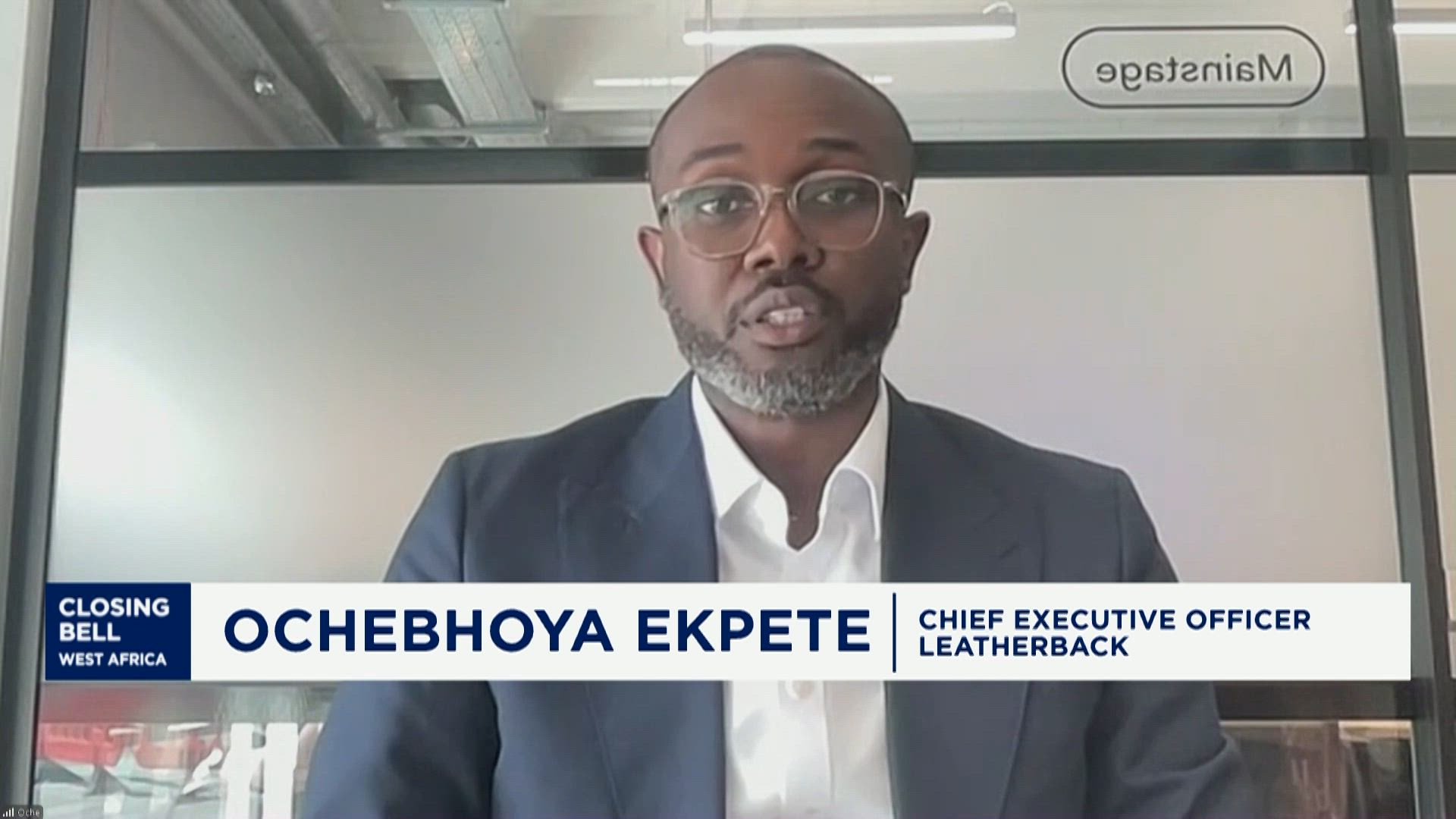
Nigerian financial services group, Zedcrest has acquired UK-based cross-border fintech firm, Leatherback after about four years of backing the fintech company. Ochebhoya Ekpete, Chief Executive Officer at Leatherback, joins CNBC Africa to discuss the significance of this acquisition.
Tue, 28 Jul 2026 15:21:25 GMT
Disclaimer: The following content is generated automatically by a GPT AI and may not be accurate. To verify the details, please watch the video
AI Generated Summary
Key Points:
- Nigerian financial services group Zedcrest has acquired U.K.-based cross-border fintech Leatherback after backing the company since inception.
- Leatherback CEO Oche Emete said Zedcrest had earlier committed a $10 million pre-seed investment and is now deepening its support through long-term capital and governance.
- The business is prioritizing Nigeria, Ghana, South Africa, Kenya, Canada and the U.K. because of strong remittance, trade and customer-driven payment flows.
- Leatherback said customers should expect no immediate changes to pricing, products or partner relationships following the acquisition.
- The company sees technology, regulation and new payment infrastructure as key forces shaping African cross-border payments over the next five years.
Topics
ZedcrestLeatherbackcross-border paymentsfintechNigeriaAfrica fintechremittancesdigital paymentsfinancial servicesacquisitions
- Nigerian financial services group Zedcrest has acquired U.K.-based cross-border fintech Leatherback after backing the company from inception.
- Leatherback CEO Oche Emete said Zedcrest had previously committed a $10 million pre-seed investment and that the deal deepens long-term capital, governance support and institutional backing.
- The company is prioritizing Nigeria, Ghana, Kenya, South Africa, Canada and the U.K. as key payment corridors tied to remittances, trade and customer demand.
- Leatherback said products, services and partner relationships will remain unchanged in the near term, while the business focuses on scaling trust, market access and cross-border infrastructure.
Nigerian financial services group Zedcrest has acquired U.K.-based cross-border fintech Leatherback, consolidating a relationship that the firms say began about four years ago, as both companies look to expand across African and diaspora payment corridors.
Speaking in a CNBC Africa interview, Leatherback CEO Oche Emete said the transaction builds on Zedcrest’s earlier backing of the company, including a $10 million pre-seed investment made at the start of Leatherback’s journey. He framed the acquisition as a strategic move rather than a fresh funding round.
“This is not just another funding round,” Emete said. “This is essentially a long-term strategic partnership that will help us unlock better value for our customers and also essentially for our partners as well.”
Emete said the timing reflects Zedcrest’s conviction in the long-term opportunity in cross-border payments, a market he described as still significantly underpenetrated despite strong demand from businesses and individuals moving money across jurisdictions.
He said the opportunity aligns with Zedcrest’s broader investment thesis of supporting a global payments and financial services platform with deep links to Africa. Leatherback, he added, has already built products used by businesses and customers to move money and manage global finances across multiple markets.
“Businesses want to do business across their local markets, across borders,” Emete said, adding that even firms operating mainly domestically often have vendor obligations and payment commitments outside their home market.
The acquisition also gives Leatherback tighter access to Zedcrest’s institutional network, governance structure and long-term capital base He said those factors should help strengthen trust with customers and counterparties across African markets where credibility, compliance and correspondent banking relationships are central to scaling cross-border finance
From a customer perspective, Emete said there would be no immediate change to products, services or partner relationships. Instead, the immediate impact is expected to come through stronger institutional support.
“What does change is the level of trust and the level of governance, the level of support and long-term capital that Zedcrest Group then puts behind Leatherback,” he said.
The company said it is positioning itself as a global payments business that uses relationships and correspondent banking links in markets such as the U.K. and, potentially, the U.S. in future, to serve customers in Africa and the broader Global South.
That strategy helps explain why Nigeria, Canada and Kenya are among the markets currently being prioritized. Emete said Canada, the U.K. and eventually the U.S. are important because they represent major
He added that Leatherback recently opened a West Africa hub in Nigeria, reflecting the scale of flows into Nigeria and Ghana as well as outbound transactions from both countries. Remittances between Nigeria and Canada, and between Nigeria and the U.K., are key demand drivers, he said, alongside growing trade activity across those corridors.
South Africa is also a significant market for the business, Emete said, describing it as another important hub in the bank-led payments space. Kenya, by contrast, presents a different payments dynamic because mobile money is a primary driver of transactions there.
Emete said Leatherback’s push into Kenya is partly customer-led, with clients asking the company to open more corridors connected to that market. “We’re essentially following the requests of our customers,” he said.
The comments point to a broader theme in African fintech, where cross-border payment providers are trying to capture rising consumer remittances, small-business trade flows and treasury needs from companies operating in multiple jurisdictions. While domestic payments in many markets have improved significantly, cross-border transfers remain more fragmented, slower and costlier.
Emete said that gap should create room for growth over the next five years, particularly as technology reshapes the payments landscape. He pointed to the Pan-African Payment and Settlement System, blockchain-related innovation and artificial intelligence as areas likely to influence how global payments evolve.
He also said regulation will play a bigger role in determining how quickly the sector matures. According to Emete, many local payment challenges have already been addressed in several markets, but cross-border transactions still face inefficiencies that could ease as regulators catch up with innovation and standards become more aligned.
“When it comes to cross-border transactions, there’s still a lot of inefficiencies,” he said.
The acquisition underscores a wider push by African financial groups to combine capital, regulatory expertise and payments technology as they compete for a larger share of international money flows linked to the continent. For Zedcrest and Leatherback, the next phase will likely center on expanding corridors, deepening compliance infrastructure and building scale in the markets where remittance and trade demand are already strongest.
Over the medium term, investors and customers will be watching whether the combined business can translate that institutional backing into faster market expansion and a stronger foothold in Africa’s still-developing cross-border payments ecosystem.
ChooseCNBC Africaas your preferred in business news
Join readers across the continent. It’s free, and you can unsubscribe at any time.
