Overview
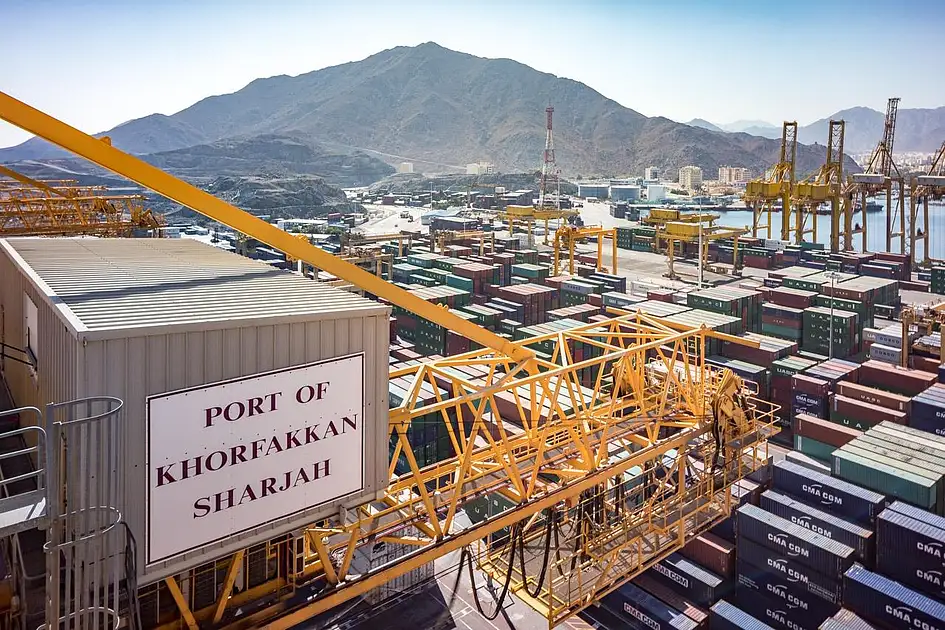
Since 28 February 2026, when US and Israeli strikes on Iran triggered the closure of the Strait of Hormuz, African economies
have absorbed a multidimensional shock across energy supply, food systems, export corridors, and financial conditions.
Transmission channels of the shock
Despite a ceasefire announcement and a planned peace agreement, tensions persist and continue to affect supply chains through the strait of Hormuz. The supply shocks are likely to leave a lasting mark on the global economy. There are three major transmission channels that have the most impact for African economies: Energy, fertilizer and logistics.
The energy channel is the most visible. Brent crude oil rose from USD 71 per barrel before the conflict to a high of USD 123 by early April 2026, before easing to just above USD 100 per barrel after the ceasefire was announced.1 For net importers, where energy and transport carry 15-25% weight in Consumer Price Index (CPI) baskets, the pass-through is mechanical. Kenya, Nigeria, Tanzania, Ghana, and South Africa have all seen pump prices rise 15-35% since late February 2026. Electricity generation costs are expected to rise for systems that rely on thermal power plants.
Oil-producing economies sit in a paradoxical position. Nigeria, Angola, Algeria, Gabon, Congo, and Equatorial Guinea gain revenue from crude prices hovering above USD 100, but most remain net importers of refined products, so domestic pump prices are still expected to rise. The countries with more durable strategic upside are energy producers with downstream or liquefied natural gas (LNG) capacity, notably Nigeria through the Dangote Refinery, and Algeria and Mozambique through LNG exports. These assets can help fill supply gaps left by Gulf producers and create longer-term opportunities.
The fertilizer channel may be underweighted, yet it presents one of the most material risks. Gulf countries supply approximately 35% of global urea, 47% of sulfur, and 24% of ammonia. The Strait of Hormuz dry bulk traffic collapsed by 83% between February and March, according to AXS Marine. The timing makes this particularly significant: March to May is the primary planting season across East and Southern Africa, and fertilizer accounts for 10–20% of grain production costs. Yield drops of 20-30% on maize, wheat, and rice are now plausible for Kenya, Ethiopia, Tanzania, Mozambique, Sudan, and Somalia. The resulting food-price shock would land in Q3 2026 with a three-to-four-month lag, precisely when energy prices might start to ease.
From a rapidly evolving technology landscape, to new tax policy developments, geopolitical change, economic fluctuations, and new ways of working, the need to transform the tax function is more important than ever.
Navigate the future of tax: pressing business issues and opportunities facing tax and business leaders today.
Request for proposal
KPMG combines our multi-disciplinary approach with deep, practical industry knowledge to help clients meet challenges and respond to opportunities. Connect with our team to start the conversation.