

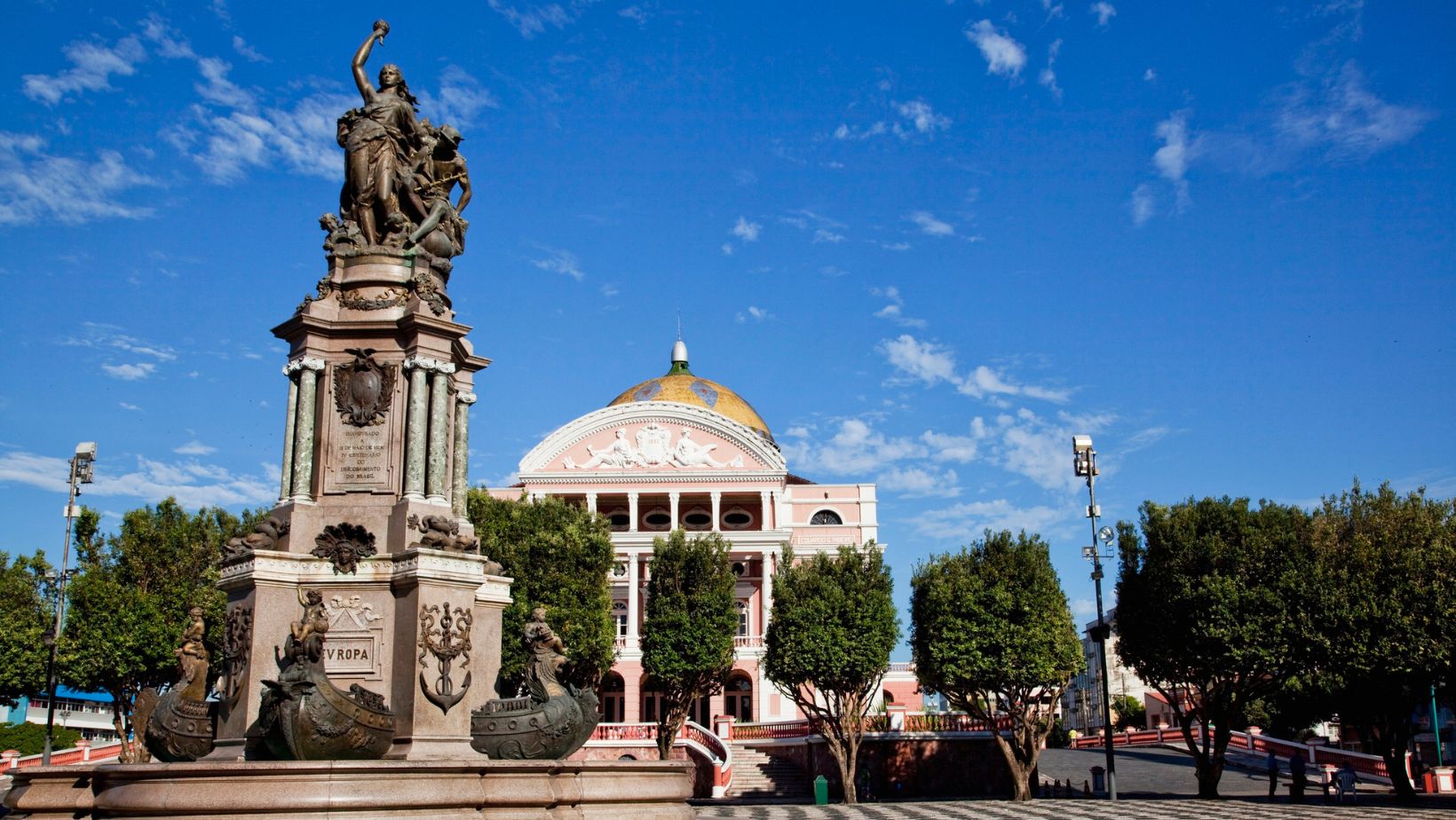
UNESCO’s World Heritage Committee recently voted to grant World Heritage status to two of the most improbable architectural achievements in the history of Latin America, the Teatro Amazonas in Manaus, built in 1896, and the Theatro da Paz in Belém, built in 1878, both constructed in the heart of the Brazilian Amazon using European styles and materials at a moment when the region was flush with rubber money and determined to prove it belonged among the cultural capitals of the world. The decision was made during the organization’s annual assembly in the South Korean city of Busan, and it marks the first time a cultural site located in the Brazilian Amazon has been added to the World Heritage list.
The Brazilian delegation present at the assembly described the inscription as having particular importance precisely because of that historical first, and the president of Brazil’s National Institute of Historical and Artistic Heritage, Deyvesson Israel Alves Gusmão, called it a historic achievement that recognizes the Amazon as a producer of cultures, memories and identity rather than simply a natural and environmental paradigm. He described the sites as showing the world the richness of the cultural diversity of the Brazilian Amazon, a framing that places the two opera houses within a much larger argument about how the region understands and presents itself to the international community.
How Two Opera Houses Ended Up in the Middle of the Amazon
The story of how the Teatro Amazonas and the Theatro da Paz came to exist at all is inseparable from one of the most dramatic economic booms in South American history. During the late nineteenth century, global demand for latex transformed the Amazon into one of Brazil’s primary economic engines, generating wealth at a scale that allowed the region’s two largest urban centers to reproduce the cultural and architectural refinement of Europe in the middle of the tropical rainforest.
Everything required to build these theaters had to arrive by ship across the Atlantic and then up the Amazon River, since the region was isolated and surrounded by jungle with virtually no local supply of the materials needed for European-style construction. The sheer logistical audacity of the undertaking inspired Werner Herzog’s 1982 German film “Fitzcarraldo,” whose protagonist is consumed by the dream of building an opera house in the jungle, a fictional echo of something that had actually happened decades before.
The result was two buildings that became magnets for European opera companies, orchestras and artists who traveled to the Amazon drawn by the region’s wealth, transforming both theaters into genuine sites of cultural exchange between the Americas and Europe across the nineteenth and twentieth centuries. They were never simply decorative symbols of colonial aspiration. They functioned as active cultural institutions that connected a remote and extraordinary region to the broader currents of world culture.
What UNESCO’s Recognition Actually Means
The World Heritage designation places the two Amazon theaters in the company of the most culturally and historically significant sites on the planet, and the decision carries particular resonance at a moment when the Amazon continues to be at the center of global conversations about environmental preservation, Indigenous rights and the future of one of the world’s most biodiverse regions.
Gusmão’s framing of the inscription as recognition of the Amazon’s cultural production rather than solely its natural heritage is a deliberate and meaningful distinction. The Amazon has long been understood internationally through the lens of its ecosystems, its rivers and its biodiversity, categories that are real and important but that can obscure the depth and complexity of the human cultures that have existed within the region for centuries. Placing two nineteenth-century opera houses on the World Heritage list is a way of insisting that the Amazon’s cultural history deserves the same global attention as its natural one.
The theaters today host a range of performances that extends well past the European opera repertoire that justified their construction, including carimbó dance, jazz and cinema, reflecting the layered cultural life of a region that has never been as simple as any single narrative about it suggests. UNESCO’s recognition of that complexity, formalized through the vote in Busan, is the clearest international acknowledgment yet that the Amazon’s story is cultural as much as it is ecological, and that both dimensions deserve to be preserved.
