

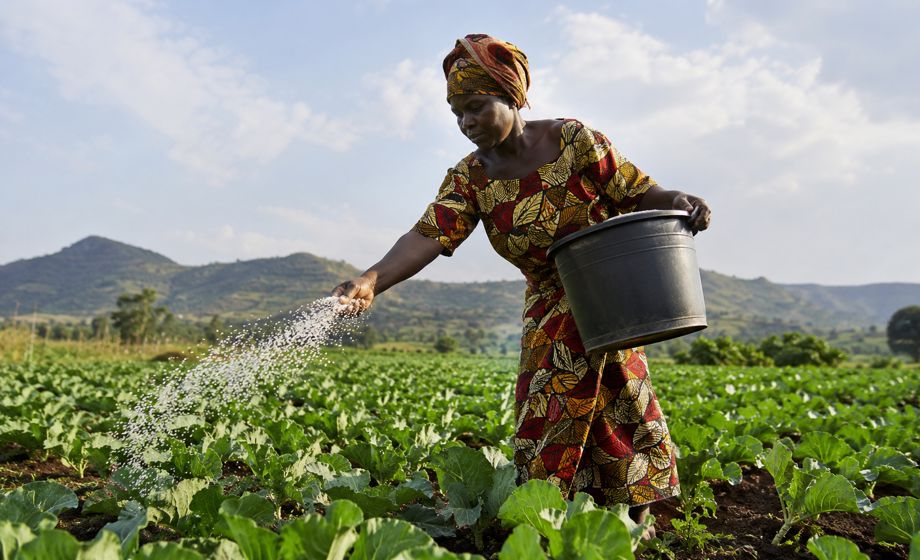
Africa’s fertilizer challenge is less about producing more fertilizer and more about building resilient regional markets, stronger supply chains, better financing and coordinated policies that ensure farmers receive affordable inputs despite global disruptions. The report urges governments, development partners and private investors to prioritize regional cooperation, infrastructure, finance and soil health over self-sufficiency, making fertilizer security a cornerstone of Africa’s long-term food security and economic resilience.
Africa’s fertilizer challenge is no longer simply about producing more fertilizer, it is about ensuring that farmers have reliable access to affordable agricultural inputs despite growing global uncertainty. A report by the African Development Bank (AfDB) and the Africa Fertilizer Financing Mechanism (AFFM) argues that fertilizer should now be viewed as strategic infrastructure for food security rather than just another industrial product. The report concludes that “fertilizer sovereignty” should not mean complete self-sufficiency. Instead, it should focus on building resilient regional markets, stronger supply chains, better financing and smarter agricultural policies that protect African farmers from global disruptions.
Why Fertilizer Security Has Become a National Priority
Africa holds nearly 65% of the world’s remaining arable land, yet the continent continues to import large quantities of food because agricultural productivity remains low. Although Sub-Saharan Africa produces around 30 million tonnes of fertilizer each year, nearly 80–90% of the fertilizer used by African farmers is still imported. This exposes countries to global price shocks, supply chain disruptions and geopolitical tensions.
The COVID-19 pandemic, the Russia-Ukraine war and recent tensions around the Strait of Hormuz have demonstrated how quickly fertilizer supplies can be disrupted. Since roughly 25% of global ammonia trade and more than one-third of seaborne urea shipments pass through this important shipping route, any disruption immediately affects fertilizer prices and availability worldwide. For African governments, fertilizer has therefore become closely linked to food security, inflation, rural livelihoods and economic stability.
However, the report also warns that producing more fertilizer alone will not solve Africa’s problem. Many countries lack the natural relizer requires natural gas, while phosphate and potash depend on mineral deposits found mainly in Morocco and a few West African countries. As a result, complete national self-sufficiency is unrealistic for most African economies
Building Markets Instead of Just Building Factories
The report argues that fertilizer security depends as much on efficient markets as on industrial production. Nigeria illustrates this challenge. The country’s urea complex near Lagos has an annual production capacity of about 3 million tonnes, making it one of the world’s largest fertilizer plants. Yet around 37% of its production is exported, showing that increased manufacturing does not automatically guarantee affordable fertilizer for domestic farmers.
Institutional capacity also remains uneven across Africa. A 2025 assessment of twelve countries found that only Tanzania, Nigeria and Kenya had well-developed fertilizer policies, quality standards and functioning dealer networks. Many countries still lack strong regulatory institutions, making fertilizer distribution inefficient even where production exists.
Rather than encouraging every country to build expensive fertilizer plants, the report recommends that governments strengthen distribution systems, improve storage facilities, modernize transport networks and support competitive private markets. Investments in logistics, quality control and farmer access may deliver greater benefits than production alone.
Countries are already adopting different strategies. Senegal is expanding phosphate processing and fertilizer production while investing in technical education and research. Ghana has commissioned a $3.5 million fertilizer blending plant with an annual capacity of 385,000 tonnes, producing fertilizer blends suited to local soils while serving regional markets. These examples show that countries can contribute to Africa’s fertilizer security in different ways depending on their resources and comparative advantages.
Regional Cooperation Can Reduce Africa’s Import Dependence
One of the report’s strongest messages is that fertilizer security cannot be achieved by individual countries acting alone. During the 2024 African Union Fertilizer and Soil Health Summit, African leaders committed to tripling local fertilizer production by 2033, backed by an estimated $15 billion in private investment. They also agreed to strengthen continental research and coordination through the African Centre for Fertilizer Development.
The African Continental Free Trade Area (AfCFTA) could become a major driver of this transformation. Easier cross-border trade, harmonized fertilizer standards, improved transport corridors and regional procurement systems would allow fertilizer produced in one country to move quickly and efficiently across the continent. Joint purchasing could also reduce costs and improve Africa’s bargaining power during global shortages.
The report highlights emerging technologies as another opportunity. Renewable-energy projects such as geothermal-powered and solar-powered green ammonia plants could reduce dependence on imported natural gas while supporting cleaner fertilizer production. Although these technologies are still developing, they could strengthen Africa’s long-term resilience against future energy shocks.
What Governments, Development Partners and Businesses Should Do Next
The report provides several important lessons for policymakers and development partners. Governments should focus on improving fertilizer regulations, strengthening quality standards, expanding soil testing services, supporting agricultural research and improving rural infrastructure. Instead of relying mainly on fertilizer subsidies, they should promote Integrated Soil Fertility Management, which combines mineral fertilizers with organic inputs, improved seeds and better farming practices to increase productivity sustainably.
Development partners, including multilateral development banks and donor agencies, have an opportunity to support regional transport infrastructure, warehouse facilities, soil laboratories, digital advisory services and institutional reforms. Financing should increasingly target the entire fertilizer value chain rather than manufacturing plants alone.
For the private sector, opportunities extend beyond fertilizer production. Investment potential exists in fertilizer blending, logistics, warehousing, transport, digital agriculture, renewable energy, agricultural finance and supply-chain management. At the same time, businesses continue to face challenges such as fragmented regulations, weak infrastructure and limited access to working capital. Financial mechanisms such as the Africa Fertilizer Financing Mechanism can help reduce investment risks and attract more private capital into the sector.
Ultimately, the report argues that fertilizer sovereignty should be measured by one simple outcome: whether African farmers can consistently obtain quality fertilizer at affordable prices and when they need it. Achieving that goal will require stronger regional cooperation, better financing, efficient supply chains and coordinated action by governments, development partners and private investors. If these reforms are implemented successfully, fertilizer can become a foundation for higher agricultural productivity, stronger food security and more resilient economic growth across Africa.
- FIRST PUBLISHED IN:
- Devdiscourse
