- Share
- Tweet
Chocolate City Group has opened applications for the first edition of its Founders Fund Africa Creative Economy Accelerator Programme, offering funding of between $20,000 and $50,000 to selected startups operating in Africa’s creative industries.
The accelerator is designed to support early-stage businesses in music, film and media, design, and creative technology by providing mentorship, investor readiness training, strategic partnerships, and access to funding.
The programme is part of the $1 million Founders Fund Africa, which was unveiled during Chocolate City Group’s 20th anniversary celebration in October 2025. The initiative was launched by the Minister of Arts, Culture, Tourism and Creative Economy, Hannatu Musa Musawa, and is being implemented in partnership with Argentil Capital Management Limited and Co-Creation Hub.
According to the organisers, 10 high-potential startups will be selected to participate in an intensive accelerator programme aimed at strengthening their business models, improving investment readiness, and connecting them with investors, industry experts, and experienced entrepreneurs.
Speaking on the launch of the application process, Co-founder and Executive Chairman of Chocolate City Group, Audu Maikori, said the initiative was established to address the challenges many African creative entrepreneurs face in accessing growth support.
“Founders Fund Africa was created to unlock opportunities for the next generation of creative entrepreneurs. Across Africa, we’re seeing founders build innovative businesses that are redefining music, film, design and technology, yet many still struggle to access the support they need to scale,” Maikori said.
He added that the programme is seeking founders with bold ideas, strong execution capabilities, and the ambition to build businesses that will shape the future of Africa’s creative economy.
Co-founder and Executive Vice Chairman of Chocolate City Group, Paul Okeugo, said the accelerator draws from the company’s experience of building one of Africa’s leading independent entertainment businesses.
“It takes the right guidance, meaningful partnerships and people who believe in your vision. Founders Fund Africa is about giving creative founders access to that support so they can build businesses that endure,” he said.
Also commenting on the initiative, Managing Partner of Argentil Capital Management Limited, Gbenga Hassan, described Africa’s creative economy as an increasingly attractive destination for investment. He noted that the accelerator will prioritise startups with scalable business models, strong fundamentals, and the capacity to create long-term economic value.
Applications are open to startups operating in music, film and media, design, and creative technology. Entries will be evaluated based on innovation, market opportunity, execution capability, business sustainability, and growth potential.
Applications close on August 28, 2026, and interested founders are encouraged to submit their entries through the Founders Fund Africa application portal.
NLNG Exports 6,000 LNG Cargoes, Earns $150bn Revenue
How Nigerian Farmers Can Register for Free Government Farm Inputs


Business
FG Registers 500,000 MSMEs in National Database, Disburses Over N600bn


The Federal Government has registered more than 500,000 Micro, Small and Medium Enterprises (MSMEs) in a national database aimed at strengthening industrial development, improving policy planning, and expanding support for businesses across Nigeria.
The Minister of Industry, Trade and Investment, Dr. Jumoke Oduwole, disclosed this during the 17th National Council on Industry, Trade and Investment held in Enugu. She said the initiative is part of the Federal Government’s strategy to drive industrialisation, attract investment, and boost non-oil exports under the Renewed Hope Agenda.
According to Oduwole, the national MSME database will provide the government with reliable data to design targeted interventions, improve access to finance, and develop policies that better address the needs of businesses across the country.
She noted that the initiative forms part of broader efforts to build a more competitive, inclusive, and data-driven economy.
Nigeria is estimated to have more than 40 million MSMEs, many of which operate in the informal sector. Collectively, the sector contributes about 48 percent of the country’s Gross Domestic Product (GDP) and accounts for approximately 86 percent of national employment. Despite its importance, the sector continues to face an estimated N13 trillion financing gap, alongside challenges such as inflation, unreliable electricity supply, and limited access to affordable credit.
Highlighting the administration’s recent achievements, Oduwole said Nigeria has secured more than $50 billion in Foreign Direct Investment (FDI) commitments, recorded $6.1 billion in non-oil exports, and disbursed over N600 billion through the Bank of Industry (BOI) to support businesses operating in key sectors of the economy.
She also revealed that nearly 300,000 Nigerians have benefited from government-backed skills development programmes designed to improve workforce capacity and enhance industrial productivity.
According to the minister, these milestones reflect progress toward the Federal Government’s goal of building a $1 trillion economy through increased production, investment, exports, and job creation.
She said the ministry will continue to prioritise the development of industrial clusters, expansion of local manufacturing, investment promotion, digital trade, and the implementation of the National Single Window to reduce the cost of doing business in Nigeria.
Oduwole further identified stronger intellectual property protection and deeper participation in the African Continental Free Trade Area (AfCFTA) as key priorities for improving Nigeria’s export competitiveness and enabling local businesses to access wider African markets.
She urged agencies under the ministry to ensure that resolutions reached during the council meeting are supported by clear implementation plans, defined responsibilities, and measurable performance indicators.
Also speaking at the event, the Minister of State for Industry, Sen. John Enoh, reaffirmed the Federal Government’s commitment to implementing the Nigeria Industrial Policy 2025, which focuses on expanding affordable industrial financing, promoting value addition, increasing manufacturing capacity, and strengthening public-private partnerships to accelerate sustainable industrial development.
Business
NAFDAC Uncovers Illegal Sachet Alcohol Production, Warns Manufacturers of Tough Sanctions


The National Agency for Food and Drug Administration and Control (NAFDAC) has uncovered widespread violations of the Federal Government’s ban on alcoholic drinks packaged in sachets and plastic bottles below 200ml, following a nationwide enforcement operation that exposed illegal production facilities and fresh manufacturing activities.
NAFDAC Director-General, Prof. Mojisola Adeyeye, disclosed that several manufacturers were still producing the banned alcoholic beverages despite the expiration of the government’s moratorium and repeated regulatory warnings.
She described the continued production as a deliberate violation of federal regulations and warned that manufacturers, distributors, and retailers found culpable would face legal action.
According to Adeyeye, enforcement teams carried out inspections across Lagos, Ogun, and several other states, targeting businesses involved in the production, distribution, and sale of sachet alcohol and alcoholic beverages packaged in PET bottles smaller than 200ml.
The operation revealed that some manufacturers had secretly continued production by relocating equipment to unregistered facilities and removing company signboards to avoid detection.
“Our teams revisited factories whose products were traced to markets where banned products were still circulating. In multiple cases, those factories were found to be actively producing in direct violation of the ban. These were not leftover stocks,” she said.
NAFDAC officials recovered large quantities of banned 100ml PET bottles and packaging materials for sachet alcohol bearing production dates as recent as July 23, 2026, indicating that illegal production continued after the ban came into effect.
Investigators also found newly manufactured products and packaging materials positioned close to active production lines.
Adeyeye explained that the ban follows Senate resolutions directing NAFDAC not to extend the moratorium on sachet alcohol and small-volume alcoholic beverages. She added that the National Alcohol Policy, signed by the Coordinating Minister of Health and Social Welfare, Prof. Ali Pate, on July 2, 2026, provides the framework for enforcing the restrictions.
She noted that the policy was introduced after nationwide awareness campaigns conducted by NAFDAC in collaboration with the National Orientation Agency (NOA) and the Federal Competition and Consumer Protection Commission (FCCPC).
According to the agency, the ban aims to reduce underage drinking and substance abuse by restricting access to inexpensive, portable alcoholic products that are easily accessible to children and adolescents.
Adeyeye also condemned attacks on NAFDAC officials during the enforcement exercise in Lagos, revealing that one officer narrowly escaped being stabbed, while another was physically assaulted while carrying out official duties.
She described the attacks as criminal acts against public officers and vowed that those responsible would be identified and prosecuted.
The NAFDAC boss reaffirmed that the ban on sachet alcohol and alcoholic beverages packaged in PET bottles below 200ml remains in force and said the agency would continue its nationwide mop-up exercise until the products are completely removed from the market.
She warned that factories found producing the prohibited products would be shut down, while distributors and retailers involved in their sale would face sanctions.
Adeyeye also urged Nigerians to stop purchasing the banned products and to report manufacturers, distributors, and retailers that continue to produce or sell them, stressing that the agency remains committed to protecting public health and reducing alcohol abuse among young people.
Business
GAIN, ECOWAS Launch West Africa Agrifood Innovation Challenge for Youth-Led Startups


The Global Alliance for Improved Nutrition (GAIN), in partnership with the Economic Community of West African States (ECOWAS) and other partners, has launched the NourishNext West Africa 2026: Youth Agrifood Innovation Challenge to support youth-led startups developing solutions that improve access to nutritious food across the region.
The initiative will identify and support innovative agrifood businesses in Nigeria, Senegal, Côte d’Ivoire, and Benin, offering selected participants mentorship, expert assessment, increased visibility, and seed funding to help scale their solutions.
The programme will conclude with a regional finale in Dakar, Senegal, where finalists will pitch their businesses for additional seed funding.
Speaking on the launch, GAIN Nigeria Country Director, Michael Ojo, said the challenge builds on the organisation’s efforts to strengthen nutritious food value chains and support small and medium-sized enterprises across the region.
According to him, the programme is designed for youth-led businesses that have progressed beyond the idea stage and already have a prototype, pilot project, or early market traction.
“It builds on GAIN Nigeria’s ongoing work to strengthen nutritious food value chains, support small and medium enterprises, and create the market linkages and ecosystem support that help promising solutions become scalable businesses,” Ojo said.
GAIN Benin Country Director, Francoise Sayi, noted that the initiative will help young entrepreneurs commercialise value-added agricultural products, access school feeding and public procurement opportunities, and remove barriers limiting access to nutritious foods.
Also speaking, Programme Manager for Food Systems at the Swiss Agency for Development and Cooperation (SDC), Amanda Ammann, described young people as key drivers of innovation and sustainable development in West Africa.
She said the innovation challenge will provide entrepreneurs with mentorship, technical expertise, and strategic partnerships needed to transform promising ideas into scalable businesses capable of strengthening regional food systems.
The organisers noted that although West Africa’s agrifood sector employs more than 60 percent of the region’s workforce and contributes nearly one-third of regional GDP, fruit and vegetable consumption remains significantly below recommended levels, while youth and women continue to face high unemployment.
The challenge is seeking startups developing solutions in four priority areas:
- Value addition and food processing
- Integration of locally produced fruits and vegetables into school feeding and other public nutrition programmes
- Market access and supply chain innovations
- Consumer awareness and healthy diet behaviour change
To qualify, applicants must be based in Nigeria, Senegal, Côte d’Ivoire, or Benin, be 18 to 35 years old (or up to 40 years for women-led enterprises), and have progressed beyond the idea stage with a prototype, pilot, or early market validation.
Applications for the NourishNext West Africa 2026 Youth Agrifood Innovation Challenge opened on July 8, 2026. The programme aims to strengthen West Africa’s innovation ecosystem, accelerate agrifood solutions, and improve access to healthier diets across the region.

Business4 years agoBREAKING: CBN announces New Withdrawal Policies, Pegs ATM Withdrawals Limit at N20,000 daily, N100,000 weekly

Business6 years agoFirst Bank Nigeria Joins SME Finance Forum
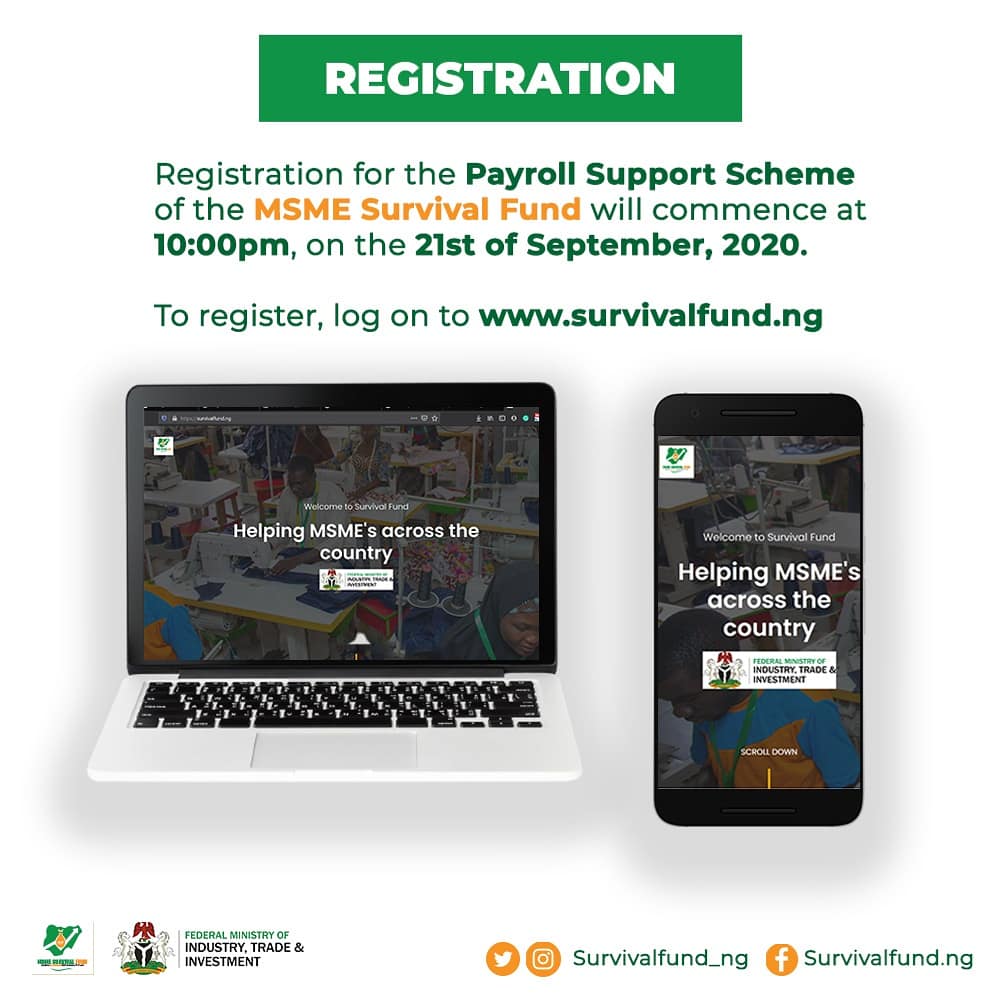
Business6 years agoFG Opens Application Portal for N75 Billion MSME Survival Fund 10pm Today, Releases Time-table for Payroll Support Scheme for different sectors

Business3 years agoCall for Applications: MTN ICT and Business Skills Training (N90 Million Grant for 300 Participants)

Business6 years agoHow to apply and benefit from free CAC Business Name Registration for 250,000 MSMEs

Business4 years agoCall for Applications: Rural Youth Skill Acquisition Programme for Nigerian Youths (receive N50,000 monthly stipend)

Articles & Resources6 years agoHow to put your house in order for tax purposes

Business4 years agoCall for Applications: Tony Elumelu Foundation Entrepreneurship Programme 2023 for African Entrepreneurs (get $5,000 seed funding)