


28/07/<a href="https://absafricatv9491.live-website.com/americas-richest-families-2026/” title=”America's Richest Families 2026″>2026
Open Letter
Morocco
enfr
- Human Rights Defenders


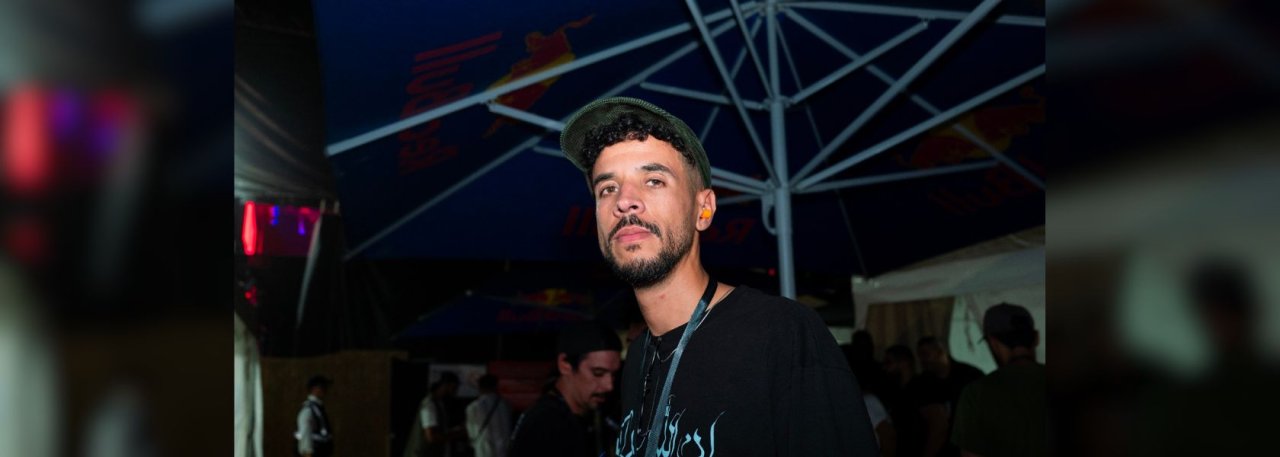
Detained since 13 July 2026 following a travel ban whose legal grounds have not been made public, Moroccan filmmaker and musician El Mahdi Lyoubi is at the centre of a case that raises serious concerns about freedom of expression and artistic freedom in Morocco. The International Federation for Human Rights (FIDH) and the World Organisation Against Torture (OMCT), within the framework of the Observatory for the Protection of Human Rights Defenders, together with a collective of cultural institutions, professional associations, journalists, academics, writers, artists, and human rights defenders, call on the Moroccan authorities to immediately release him.
28 July 2026.El Mahdi Lyoubi was born in 1992 in Salé. Based in Marseille since 2017, he studied documentary filmmaking at the University of Aix-Marseille and at La Fémis. For nearly a decade, he has been building a body of cinematic work that has garnered international attention. His short film “Marseille, July 14th” has screened at several major festivals: New Directors/New Films at MoMA in New York, Sheffield DocFest, the Kerala Film Festival, Escales Documentaires, the Franco-Arab Film Festival in Noisy-le-Sec, the Tarifa African Film Festival, and the Thessaloniki Film Festival. His first feature-length documentary, currently in production, was also a 2025’s grantee by the Arab Fund for Arts and Culture (AFAC). Under the name Mehdi Black Wind, he also made a name for himself in the Moroccan music scene beginning in the 2010s, with a repertoire that directly addresses issues of social justice and freedom of expression. In September 2025, he performed in front of more than 50,000 people at the L’Boulevard festival in Casablanca.
On 10 July 2026, El Mahdi Lyoubi was at the Rabat-Salé airport preparing to return to Marseille after a family visit during which he had also been scouting locations for his upcoming documentary. In the airport’s departure section, he was prevented from leaving the country: he was served with a travel ban, without being given any reason. Taken to the Salé police station, he received no further explanation there. The officers on duty were also unaware of the reasons for this measure. He was eventually handed a summons to appear on 13 July before the National Judicial Police Brigade in Casablanca.
This document, too, did not mention either the motives for the investigation or the name of the officer in charge. He was questioned all day before being placed in police custody that same evening. According to his relatives, who were notified belatedly, his arrest may be linked to posts he made on social media, though this has not been confirmed at this stage. He is scheduled to appear before the prosecutor on 15 July, likely without a lawyer, as the royal kingdom’s bar associations are currently on strike. It is the lack of any stated grounds, as well as the absence of procedural safeguards, that has led us to reach out to you today.
This case is part of a period of heightened tensions surrounding civil liberties in Morocco, which began in the fall of 2025 with the Gen Z 212 movement. Born out of the deaths of eight pregnant women who died due to a lack of renline—advocated for public health, education, the fight against corruption, and freedom of expression
The authorities’ response was marked by more than 1,000 arrests—with some sentences reaching fifteen years in prison—and by the deaths of three young protesters, who were killed by police on the night of October 1-2, 2025, in Lqliaâ, near Agadir. One cannot help but see this as an echo of earlier episodes in recent Moroccan history, from the February 20 Movement in 2011 to the Rif’s Hirak in 2016-2017, whose handling by the authorities also raised concerns among human rights organisations at the time.
Other recent cases reinforce this observation. Film distributor Zineb Kharroubi, a French resident and an activist with the Gen Z 212 movement, was arrested in February 2026 at the Marrakech airport and then sentenced in June, in her absence, to a six-month probationary prison term. Journalist Ali Lmrabet, 67, was arrested in Tangier the day before El Mahdi Lyoubi’s arrest, upon his return from Barcelona, where he has been living in exile for several years.
These situations, each unique in its own right, collectively paint a picture of a climate that we believe is likely to undermine the exercise of freedom of expression and creativity in Morocco, including for people who, like El Mahdi Lyoubi, divide their time between the royal kingdom and abroad.
The Royal Kingdom of Morocco is a party to the International Covenant on Civil and Political Rights. Article 19 of this treaty protects freedom of expression, including in its artistic dimension, as specified in General Comment No. 34 of the Human Rights Committee (§11#12). Morocco has also ratified the 2005 UNESCO Convention on the Diversity of Cultural Expressions, which commits States to protecting free- dom of creation. These texts reiterate that a restriction on freedom of expression is legitimate only if it is provided for by a specific law, pursues a legitimate objective, and remains necessary and proportionate. In fact, as early as 2016, the United Nations Human Rights Committee had called on Morocco to review certain provisions of its Penal Code, including Article 179, which were deemed too broad in light of these requirements.
Because we believe that the freedom to create and express oneself is inseparable from a vibrant cultural and democratic life, we call on the Moroccan authorities to :
– Immediately and unconditionally release El Mahdi Lyoubi;
– Guarantee him effective access to a lawyer and respect for the guarantees of a fair trial;
– Publicly disclose the specific reasons for his travel ban and his placement in police custody, and;
– Ensure, beyond this specific case, that the Kingdom of Morocco upholds its commitments regarding freedom of expression and creativity.
We will closely monitor developments in this case and remain open to any constructive dialogue with the Moroccan authorities on this matter.







 "10 countries with the weakest passports in Africa in 2026, according to the latest rankings")

