

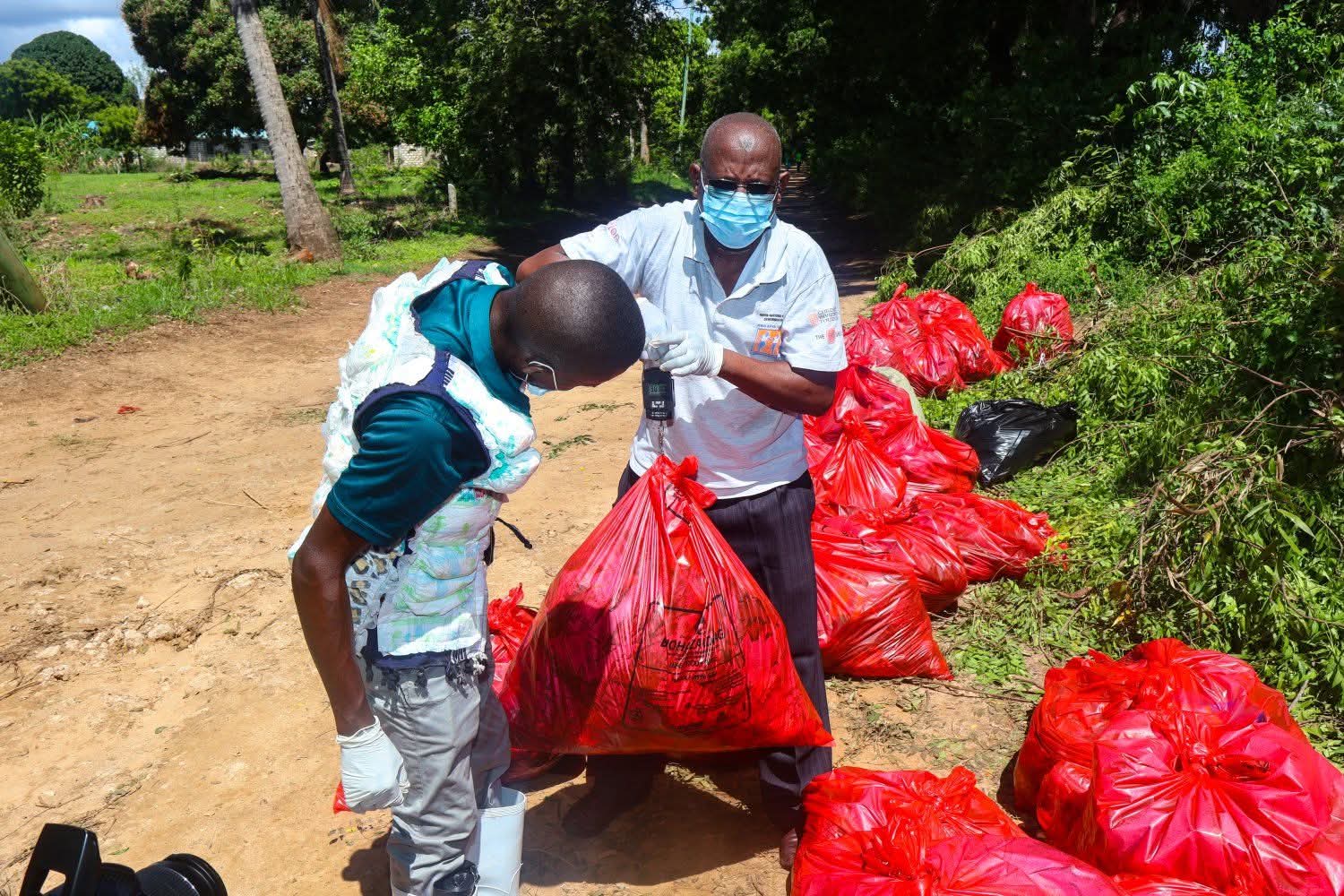
In Kenya’s rapidly growing towns, millions of used diapers are tossed into open fields, drainage channels and pit latrines every year.
They clog waterways during heavy rains, accelerate the filling of already overstretched sanitation facilities and contaminate the environment with human waste.
As floodwaters rise, pathogens travel with them, increasing the risk of diarrhoea, cholera and typhoid outbreaks, particularly among children.
Yet, despite becoming one of the fastest-growing household waste streams in urban Kenya, disposable diapers remain largely invisible in the country’s waste management plans.
“Use of disposable diapers have outpaced Kenya’s waste management systems. Households use an average of three disposable diapers a day, yet few municipalities have safe collection and disposal systems,” says Kevin Anungo, a Public Health Officer with Mtwapa Municipality and founder of the Safe Diaper Disposal Initiative (SDDI).
In Kilifi County, for example, the consequences are already measurable. An accountability study done by SDDI found that among the 938 urban households surveyed, researchers linked improper diaper disposal to widespread faecal contamination, blocked drainage systems, rapidly filling pit latrines and an estimated Sh1.22 million (US$9,322) in healthcare costs associated with sanitation-related illnesses.
The environmental burden is equally staggering. This is because disposable diapers are made from plastics and super-absorbent polymers, they do not readily decompose. Instead, they accumulate in dumpsites and sanitation systems, where they trap moisture and occupy valuable landfill space.
At the current rate of generation, diaper waste in the study area alone would occupy an estimated 3,380 cubic metres annually, requiring approximately 0.34 hectares of landfill space every year. Over a decade, this translates to three to four hectares of land permanently lost to non-biodegradable waste, leaving it unsuitable for agriculture, settlement, or other productive uses.
“The public health risks are equally alarming. A single used diaper contains about 75 grams of human fecal matter. Which can harbor pathogens that cause cholera, typhoid, shigellosis and other diarrheal diseases. When discarded in open spaces, these pathogens spread through runoff, flooding, flies and direct contact, contaminating water, food and households and fueling disease outbreaks, antibiotic use and preventable deaths,” he says.
These mounting public health and environmental challenges inspired Anungo to launch SDDI. This is a community-based programme that collects used disposable diapers before they reach the environment, preventing the spread of diseases while laying the foundation for a circular waste management system.
Working with Community Health Promoters (CHPs), the initiative places dedicated diaper collection bins at designated points in communities. Resident’s dispose of used diapers in the bins and municipal workers collect the waste once they are full, preventing it from ending up in open spaces, drainage channels, beaches and pit latrines.
Since January (2026), the initiative has recovered more than 13 tonnes of used diapers and the transformation has been visible. A village once notorious for indiscriminate diaper disposal has become a model for organised waste collection.
Parents who previously had no option but to dump diapers in open spaces now separate them from household waste, while community health promoters continue educating families on safe disposal.
“The initiative advances SDG 3 (Good Health and Well-being) by reducing disease risks associated with diaper waste, SDG 6 (Clean Water and Sanitation) by protecting waterd Communities) by promoting cleaner urban environments,” he says
It also advances SDG 12 (Responsible Consumption and Production) because apart from collection, those used diapers are safely incinerated under controlled conditions, destroying disease-causing pathogens while dramatically reducing waste volume. The resulting ash is then mixed with cement and murram and compressed using a Makiga block-making machine to produce durable construction blocks.
These are not intended for luxury housing. Instead, Anungo wants the blocks used where they can have the greatest public health impact, constructing and rehabilitating toilets in schools, health centres and public spaces. The same waste that once contaminated communities could become part of the infrastructure that protects them.
“The project’s concept envisions an integrated system of household collection, safe treatment, ash recovery and reuse to strengthen municipal sanitation while creating a replicable circular economy model for other towns,” he adds.
Though the idea has attracted growing interest, scaling it remains difficult. The reason being Kilifi County has no dedicated incinerator capable of processing the diapers safely. To produce the prototype blocks, Anungo relied on an incinerator from Siaya County through the support of a mentor.
He is now advocating not only for investment in treatment infrastructure but also for stronger policies requiring diaper manufacturers to share responsibility for the waste their products create through collection systems and community support. For him, the innovation has never been about blocks. It is about preventing disease before it starts.
“The building blocks are the end product, but my real goal is to protect communities from diseases caused by human feces and urine while safeguarding the environment,” he says.
