

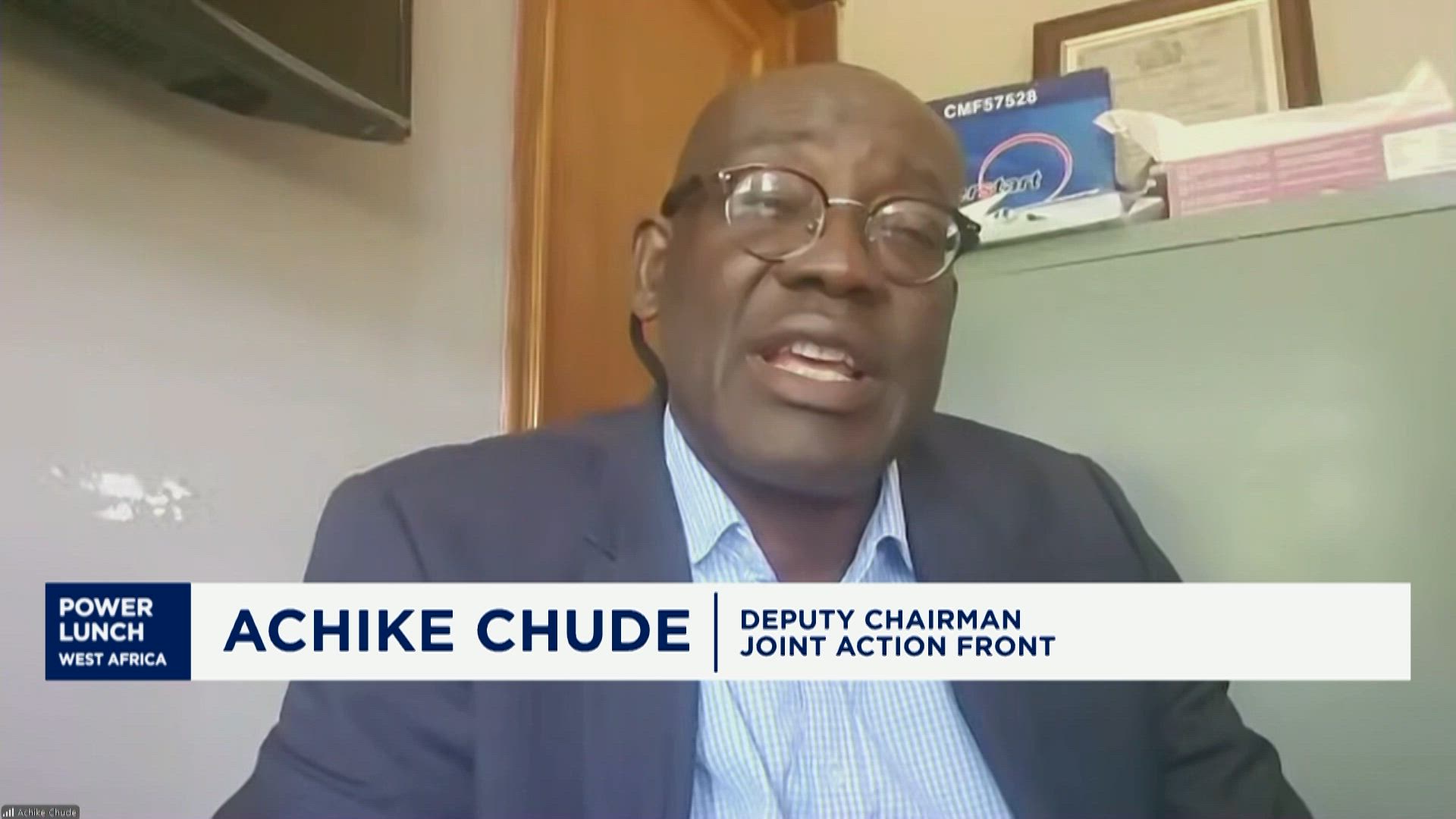
Nigeria’s Independent National Electoral Commission is awaiting a police report following an attack on a Permanent Voter Card collection centre in Osun State, where gunmen reportedly carted away PVCs and Bimodal Voter Accreditation System devices ahead of the governorship election in the state. Achike Chude, Deputy Chairman of the Joint Action Front, joins CNBC Africa for more.
Tue, 28 Jul 2026 12:52:56 GMT
Disclaimer: The following content is generated automatically by a GPT AI and may not be accurate. To verify the details, please watch the video
AI Generated Summary
Key Points:
- Nigeria’s Independent National Electoral Commission is awaiting a police report after gunmen attacked a Permanent Voter Card collection centre in Osun State and reportedly took PVCs and BVAS devices.
- Chike Chide said the violence appears specific to the Osun governorship race, which he described as more competitive and tense than recent off-cycle polls.
- He said Nigeria already has legal penalties for electoral offences, but enforcement by police and other agencies has been weak.
- Chide said INEC’s coordination with security agencies is established, though gaps remain because forces cannot be everywhere at once.
- He warned that logistics problems, vote buying and the lack of a full audit of the 2023 election failures continue to weigh on public trust in the electoral process.
Topics
INECOsun electionNigeria politicsPVC attackBVASelectoral violencegovernorship electionChike ChideJoint Action Frontvoter registration
- Nigeria’s Independent National Electoral Commission is awaiting a police report after gunmen attacked a Permanent Voter Card collection centre in Osun State and reportedly took PVCs and Bimodal Voter Accreditation System devices.
- Chike Chide, deputy chairman of the Joint Action Front, said the violence appears specific to the Osun governorship race, which he described as more keenly contested than recent off-cycle elections.
- Chide said the main problem is not the absence of electoral penalties, but weak enforcement by law enforcement agencies after offences are committed.
- He also said INEC must improve logistics and provide a fuller account of the failures seen in the 2023 election cycle if it wants to rebuild public confidence before future polls.
Nigeria’s Independent National Electoral Commission is probing an attack on a Permanent Voter Card collection centre in Osun State ahead of the governorship election, with the electoral body awaiting a police report after gunmen reportedly carted away PVCs and Bimodal Voter Accreditation System, or BVAS, devices.
The reported theft has pushed concerns about election security and voter access back into focus just before the Osun vote, one of Nigeria’s closely watched off-cycle state elections. The incident comes as authorities intensify preparations for the poll and as scrutiny grows over the protection of election materials and personnel.
Chike Chide, deputy chairman of the Joint Action Front, said the violence should not yet be read as a sign of a broader nationwide deterioration in the electoral environment. He argued instead that the Osun contest appears unusually tense because of the level of rivalry among the main political actors.
“These acts of violence are peculiar to Osun State at this particular point in time,” Chide said in a televised interview. He contrasted the situation with the recent Ekiti State election, where he said the stakes were lower and the opposition less competitive, reducing the incentives for violent disruption.
According to Chide, the likelihood of unrest tends to rise when rival camps are evenly matched and able to mobilize significant recan spill into intimidation and attacks on electoral infrastructure
The weakness, he suggested, lies less in Nigeria’s legal framework than in its implementation. Chide said the Electoral Act already contains penalties for offences including violence, voter inducement and vote buying, but that enforcement has often been weak after incidents occur.
“It’s not just about the severity of the punishment, but even the punishments that are already prescribed in the Electoral Act, how well are they being implemented,” he said.
He said INEC typically points to the police on criminal enforcement, while the police have often been accused by civil society groups of moving too slowly on election-related offences. That gap has helped fuel long-running calls for stronger and more specialized electoral-offence enforcement mechanisms.
Even so, Chide said institutional coordination before off-cycle elections is generally extensive. He said there are established channels of engagement among INEC, security agencies, civil society groups and the media, alongside special inter-agency structures set up around elections.
“The synergy is there,” he said, adding that off-cycle elections usually attract heavier security deployments than general elections. He said those deployments can include police, the Nigeria Security and Civil Defence Corps and other paramilitary agencies, with military personnel positioned around vulnerable areas.
Still, he cautioned that even a large security presence cannot guarantee coverage everywhere at once. That leaves openings that can be exploited by attackers targeting electoral materials, registration centres or communities deemed politically strategic.
The Osun incident also feeds into a wider debate over participation and disenfranchisement. While INEC has already closed voter registration, concerns remain that many eligible Nigerians could still be shut out of the process if they failed to complete registration or collect their cards in time.
Chide said responsibility should not rest solely with the election commission. He argued that late action by voters has been a recurring feature of Nigerian election cycles, often forcing INEC to extend deadlines or absorb last-minute pressure.
At the same time, he said the risk of disenfranchisement remains high and backed calls for flexibility where possible. “The probability of millions of people being disenfranchised is high,” he said, while adding that the pattern has been driven in part by voters leaving registration too late.
He also raised concerns over political party preparedness, after major parties struggled to meet deadlines for uploading candidate details. Chide said internal party weaknesses were part of the story, but he also pointed to legal disputes and what he described as perceived interference in opposition parties’ affairs.
Those disputes, he said, have forced some parties into a reactive posture and complicated compliance with administrative timelines. He urged INEC to show what he called magnanimity by allowing parties more room to complete candidate documentation where legally possible.
Beyond Osun, Chide used the interview to renew criticism of INEC’s handling of the 2023 election cycle, particularly the technology failures that became one of the most contentious issues of that vote. He said any future mock election exercises would have limited credibility unless the commission first publicly explained what went wrong.
“They have not done the proper audit of what happened in 2023,” he said. “They have actually not told us about what happened in 2023.”
That absence of a clear postmortem, he argued, risks deepening skepticism about INEC’s independence and technical readiness ahead of future elections, including 2027. Public confidence, he said, will depend not only on new test runs or pilot exercises, but on transparency around previous failures and visible corrective action.
If given the chance to press for one immediate reform, Chide said logistics would top the list. He described election-day logistics as a recurring weakness in INEC operations, despite long lead times and fixed electoral calendars.
“They’re still having logistics issues, and this has become a perennial problem with INEC,” he said.
He also said vote buying remains a significant threat, even as politicians and brokers become less overt in how they distribute inducements. Chide said agencies including the police and the Economic and Financial Crimes Commission, or EFCC, have not been sufficiently effective in detecting and punishing those practices.
For now, attention will remain on the police report into the Osun PVC centre attack and on whether election authorities can secure materials, reassure voters and contain tensions before polling. The handling of the incident may also serve as an early test of INEC’s ability to deliver a credible contest in a high-stakes state race while rebuilding trust ahead of bigger national votes.
ChooseCNBC Africaas your preferred in business news
Join readers across the continent. It’s free, and you can unsubscribe at any time.
